Only by better addressing issues of inequity can we create truly sustainable and livable communities. But is that even possible today?


“Addressing issues of inequity is a prerequisite to creating sustainable and livable communities.” This was the big message put forth recently by Robert Bullard—the proclaimed “father of environmental justice”—to a large group of landscape architects in Denver for the annual meeting of the American Society of Landscape Architects (ASLA). There was an unplanned timeliness to his talk, as it coincided with the explosive events unfolding in Ferguson, Missouri. While he did not directly reference them, the racially charged tensions brewing in the country at the time provided an unspoken and powerful subtext to his point that communities in this country are not treated equally.
Bullard is a sociologist by training and self-identifies as an “accidental environmentalist.” He is the Dean of the School of Public Affairs at Texas Southern University and has spent much of his career studying the demographics and geography of poverty, race, public health and environmental equity. His focus on this began in the late 1970s, when he was brought in as an expert witness on a lawsuit fighting a decision to put a city landfill in an overwhelmingly African American neighborhood in Houston. Along with his students, he mapped major landfills, garbage dumps and incinerators in the city and found that almost all had been located in such neighborhoods, even though blacks made up only a quarter of the population of the city at the time.
This is by no means an isolated incident. There are enough documented cases of eco-racism (or “PIBBY” – Put It in Blacks’ Backyards) to make it a systemic problem, especially in the South, which Bullard says is “the most environmentally degraded region in the nation.” It is also the most vulnerable. He backs all of this up in his 2000 book, Dumping in Dixie, which tackles the roots of race-based environmental justice.
One particularly sinister case he addresses took place in the early 1980s in Warren County, North Carolina – one of the poorest counties in the state, and the one with the highest percentage of African American residents. A decision was made to bury over 30,000 cubic yards of soil contaminated with a high concentration of toxic PCBs in a community that was, at the time, 84% black. The community protested, but the dumping occurred anyway. The soil remains today, and will likely leak into the drinking water at some point, making this not only an issue of social or environmental injustice, but also one of public health. “One of the most potent predictors of health,” Bullard says, “is zip code.”
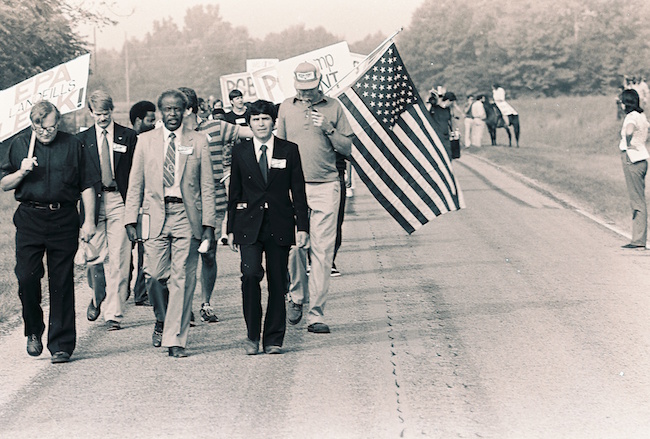
March in Warren County, NC in 1982 Photo by Matt Cooper
The origins of this issue in the South are obvious, yet the solutions are anything but. Although progress has been made on certain fronts, the fundamental dynamic persists. Since the 1970s, businesses have flocked to Southern states from other parts of the country in search of a cheaper workforce and lower taxes. While this has helped state economies, it has also exaggerated an existing societal and geographic stratification. White collar and other so-called “clean” industries have typically been sited out in the suburbs, while heavily polluting industries – paper mills, oil refineries, waste disposal facilities, chemical plants, and the like – have disproportionately ended up in or near poor, inner city neighborhoods that are often home to concentrated populations of African Americans trapped by poverty, a lack of access to public transportation and discriminatory housing policies.
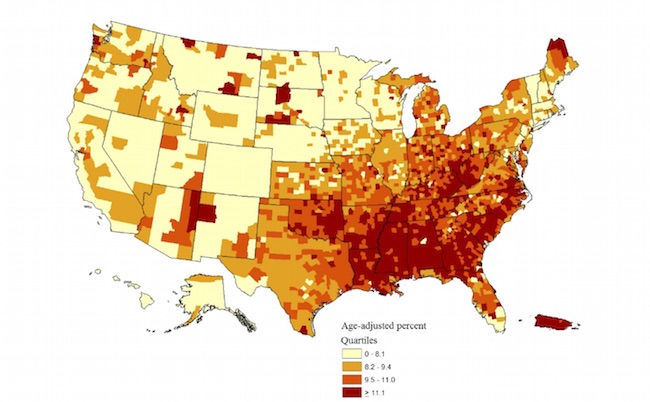
The Center for Disease Control has clearly documented how Southern states consistently rank among the least healthy, with high rates of heart disease, obesity, asthma, diabetes, cancer, and so on. It is hard to argue against the direct correlation that exists between the health of a community and the quality of the environment in which it is located. This is the reason you won’t find the “blackbelt” states – those aligned from the Carolinas to Louisiana – on the ubiquitous lists awarding the greenest, fittest, or most bike and pedestrian friendly cities in the country. Those cities are most often in Midwestern and Western states, where there is plenty of access to clean air, water, trees and quality open space. Place matters.
Bullard presented all of this information to a rapt audience in Denver. As a born, raised and resident Southerner, it was not all easy for me to hear. Nor, however, was it all that surprising. There was no grand epiphany at the end of his talk – no feel-good optimism that landscape architects could institute real change by just designing more parks. He left no easy way out.
His basic message about the unjust cycle of poverty was sadly – yet somehow comically – juxtaposed against the news that a strangely over-the-top floating park had been proposed in the Hudson River alongside Manhattan’s West Side. The bulk of the project's $170 million price tag will come from billionaire neighbors Barry Diller and Diane von Furstenberg, who commissioned the design. I have no problem with people spending their own money to help improve their neighborhood; a lot of obvious good comes with that. It is just that vanity projects like this hit home the fact that public space isn't quite as public as perhaps it should be. It, like everything else, is a commodity that can be sold to the highest bidder.

While the glorious transformation of the public realm continues in wealthy cities like New York, it is hard to believe meaningful change is anywhere on the horizon for poor communities in the South. States there continue to overwhelmingly elect politicians who deny the seriousness of a racial divide while championing a pro-business, small government ideology that is fundamentally at odds with the ideals set forth by the Affordable Care Act, affirmative action policies, and public assistance programs that so many people depend on. Gerrymandering and successful attempts at dismantling the Voting Rights Act are helping to ensure this course will likely not change any time soon.
The bottom line is that we live in a country where the haves will continue to have, and the have nots will continue to need. A certain element of that is, of course, unavoidable. However, as recent data prove, the gap between the two is growing.
I wonder whether perpetuating the myth that all Americans share an equal opportunity for success is, in some ways, making it harder to fix the problems of inequality. Not only does it instill a false hope for communities at the bottom of the scale, it also preserves a status quo that has failed to live up to a promise of justice—social, economic, and environmental—for all.

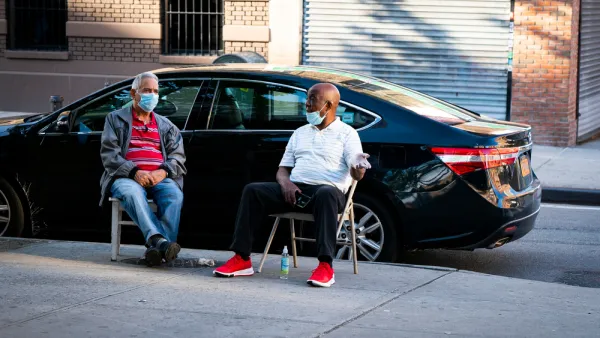
CDC Documents Racial Disparities of COVID-19 Illness
New data from the Centers for Disease Control and Prevention provides the federal government's most complete picture of the demographic data of COVID-19 illness.
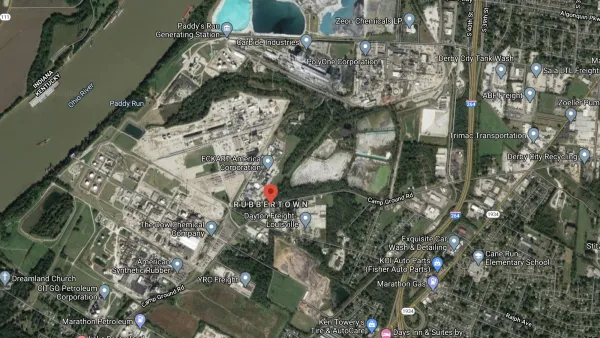
Pollution, Place, and the Unnecessary Tragedy of Premature Death: Lessons for COVID-19
In Louisville, scene of multiple instances of police violence in recent weeks, low-income and Black populations living in neighborhoods dealing with decades of industrial pollution are now suffering the worst public health outcomes of COVID-19.
Sunbelt Blues: Overlapping Poverty and Inequality
Poverty and inequality are bad things, but what happens when they coincide? A new study points to a startling increase in the number of U.S. counties suffering from both problems.

Planetizen Federal Action Tracker
A weekly monitor of how Trump’s orders and actions are impacting planners and planning in America.
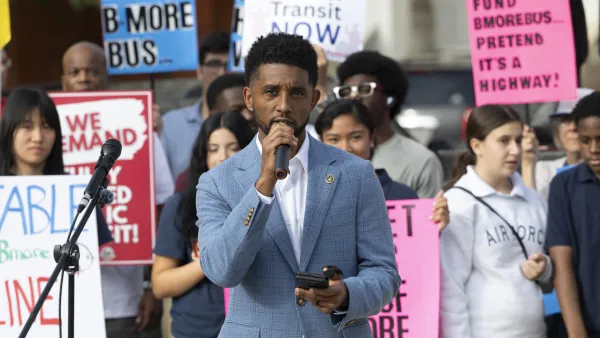
‘Going backwards:’ Baltimore mayor, students rally against state's transit funding plan
Maryland's proposed six-year plan provides no funding for Baltimore’s BMORE bus program and reduces its road maintenance funding.
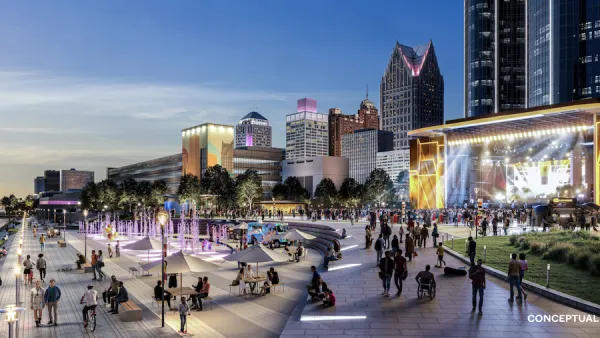
Detroit to transform waterfront with $2.2 billion investment
Developers will convert about 18 acres of unused parking lot space into civic spaces.

HUD modernizes 50-year-old manufactured housing framework
The Next Generation Manufactured Housing Action Plan establishes new energy-efficiency standards for manufactured homes, and new guidelines for anchoring them.

New CA housing laws tear down development red tape
Recently-signed legislation makes building starter homes and ADUs cheaper and faster in California.

Metrolink finishes first expansion in 20 years
The transit agency is now one of very few in the United States to connect two major airports.

FREE Course: Walkable City 1: Why Walkability?
After describing his path towards focusing on walkability as the essence of good planning, Jeff Speck marches through his five principal reasons for making more walkable places.
Reinventing Malls: Planning Alchemy—Turning Gray Fields Into Gold
The course focuses on the opportunities and imperatives that shape reinvention of mall sites.

One Hundred Miles
County of Mendocino
planning NEXT
The Architects Foundation
University of Cincinnati Online
Montrose County
Northern Illinois Transit Authority (NITA)
The Pocatello Development Authority

