New data from the Centers for Disease Control and Prevention provides the federal government's most complete picture of the demographic data of COVID-19 illness.


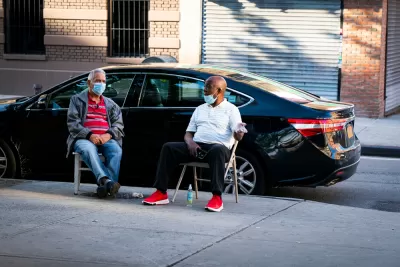
"African-Americans and Latinos are vastly overrepresented when it comes to coronavirus infections, according to an analysis released by the Centers for Disease Control and Prevention," reports Alexander Nazaryan.
The data released on June 15 is the "first from the federal government to fully describe the pandemic’s racial impact," according to Nazaryan. The news is not good for Black and Latino communities.
"African-Americans account for only 13.4 percent of the U.S. population, according to the Census Bureau, but the CDC says they accounted for 22 percent of coronavirus infections studied in the new analysis," reports Nazaryan.
"Latinos represent 18.3 percent of the population, according to the last census of the American population, conducted a decade ago. But the CDC found that they suffered 33 percent of the coronavirus infections in the cohort covered by the study."
As noted by Nazaryan, much of the available data on coronavirus infections does not include racial data, so an understanding of the demographics of infection is still incomplete.
FULL STORY: People of color account for majority of coronavirus infections, new CDC study says

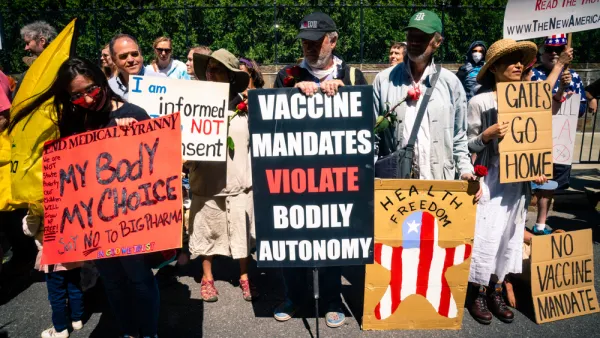
The Shifting Demographics of Covid-19
For most of the Covid-19 pandemic, Black Americans died at much higher rates than White Americans. That trend has reversed at times during the past year.

Racial Disparities in Life Expectancy Are a Place-Based Problem
New research from the Brookings Institution illuminates the racial disparities of public health outcomes both during and before the pandemic.

CDC Sued to Force Release Racial Demographic Data on Coronavirus Spread
Systemic racism is blamed for the glaring and tragic racial disparities of the COVID-19 illness in the United States.

Planetizen Federal Action Tracker
A weekly monitor of how Trump’s orders and actions are impacting planners and planning in America.

The state-sanctioned urbicide of Austin
People don’t kill cities. Freeways do.

US to reduce Colorado River water deliveries to Mexico
A new Colorado Treaty amendment reduces Mexico’s Colorado River water allocation by 250,000 acre feet.

Mamdani overhauls NYC's Vision Zero plan with 100 new policy goals
The overhaul aims to reduce traffic deaths and make streets safer for pedestrians, cyclists and drivers through lower speed limits, new safety infrastructure and more.

Amtrak not solely to blame for New Jersey commuter rail's unreliability, report finds
A new study from the Garden State Initiative found that NJ Transit’s budget grew 20% across a 4 year period, but reliability declined significantly over the same period.

EPA erases limits on planet-warming pollution from power plants
Under Monday’s plan, power plants would still have some limits on how much mercury, arsenic and other contaminants they can emit.

FREE Course: Walkable City 1: Why Walkability?
After describing his path towards focusing on walkability as the essence of good planning, Jeff Speck marches through his five principal reasons for making more walkable places.
Reinventing Malls: Planning Alchemy—Turning Gray Fields Into Gold
The course focuses on the opportunities and imperatives that shape reinvention of mall sites.

Eagle County Government
Harvard University Graduate School of Design
Nashville Planning Department
The Architects Foundation
University of Cincinnati Online
The Pocatello Development Authority
The Urban Renewal Agency of the City of Pocatello
Journal of the American Planning Association