Exclusives

BLOG POST
Autobiographical Writing: Fostering Critical Self-Reflection, Empathy, and Courage
Courtney Knapp of the Pratt Institute writes about a recent article in the Journal of Planning Education and Research
BLOG POST
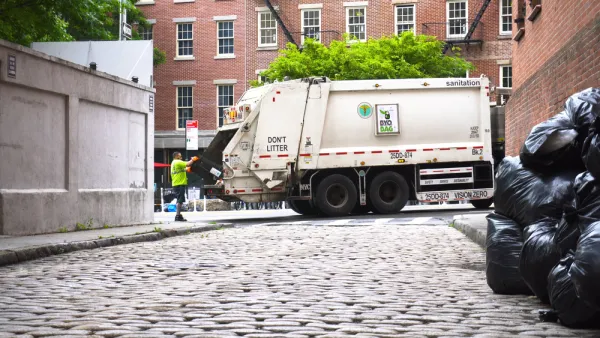
Waste Management Best Practices (And Their Impact on Urban Planning)
Urban planners can play a role in ensuring the best possible waste management practices are implemented whenever possible.
FEATURE
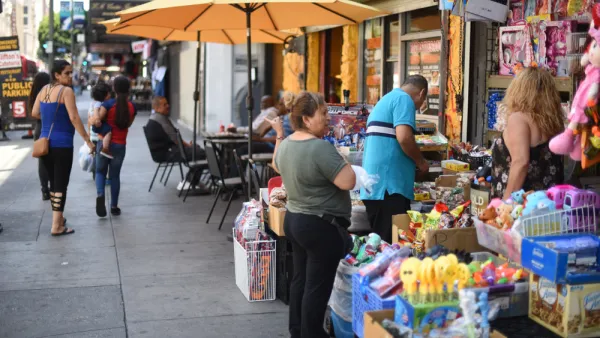
A Sprinkle of Stores: Wrestling With Jacobs's Uncertainty
Jane Jacobs used vague terms to describe the number of stores necessary for a safe and vibrant streetscape. Here, author Fanis Grammenos attempts to discover a more specific number to attach to this prescription.

BLOG POST
The 'Failure' of Gentrification?
Urban scholar Joel Kotkin says that gentrification has "failed" in Los Angeles. It's a curious notion, since gentrification is generally considered a bad thing. The reality is much more complex than Kotkin suggests.

BLOG POST
Seeing the Urban Forest for the Trees
It is important to focus on forests rather than individual trees when evaluating trade-offs between infill and sprawled development.

BLOG POST
More Evidence That New Housing Lowers Rents (Maybe)
Even if new housing reduces rents regionwide, scholars are divided as to when and whether new market-rate apartments reduce rents in nearby blocks. A new study seeks to answer this question.
BLOG POST
California's Commitment to Density Depends on Commitment to Common Destiny
Opponents of bills to promote transit oriented housing development throughout California need to do the math and develop some state pride.

BLOG POST
A Good Read for Planners and Peers: Why Old Places Matter
A recent book brings a common sense framework to historic preservation debates.

BLOG POST
No, Traffic Congestion Does Not Really Cost Every American $1,348 Annually
The INRIX Global Traffic Scorecard exaggerates congestion costs in order to enhance the value of its traffic monitoring services. A little skepticism is justified.
FEATURE
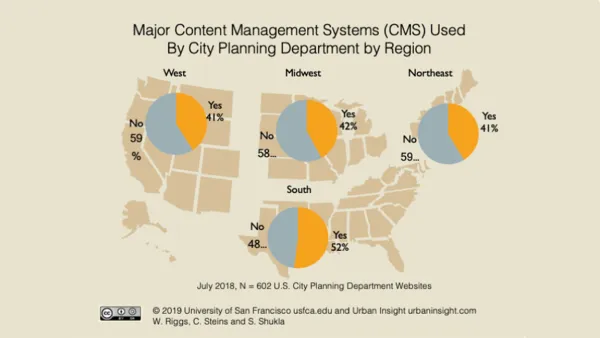
City Planning Technology, 2019 Benchmarking Study
A report on the current state of Internet technologies, policies, and content management systems adopted by 600 cities across the United States, including recommended steps cities should take to improve technology assets in 2019.
BLOG POST
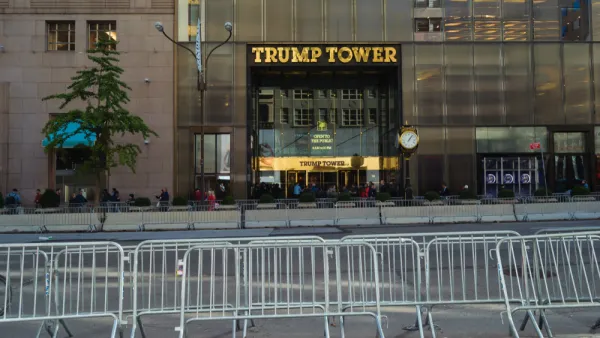
State of the Union: Infrastructure Week Is Finally Over
Infrastructure went from playing a major role in the State of the Union address a year ago. This year infrastructure warranted barely even a nod—about 62 words, in fact.
BLOG POST
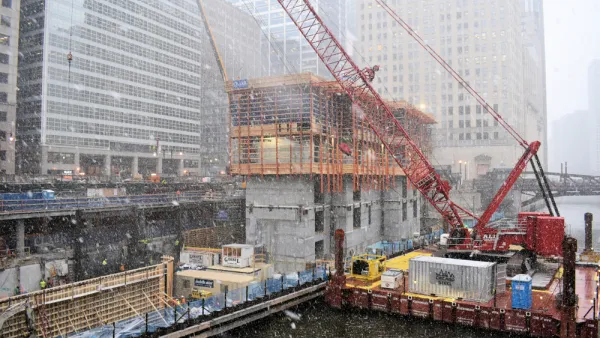
Can Upzoning Increase Housing Supply and Affordability?
Increasing allowable densities and reducing parking requirements are important strategies for achieving long-term planning goals, but to succeed they must be applied to large areas.
BLOG POST
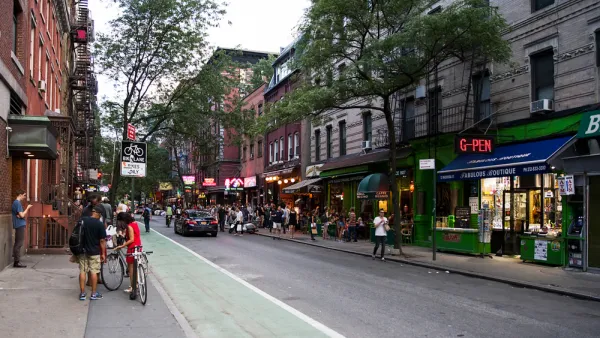
Historic Preservation And High Rents
Although individual old buildings may be less expensive than newer ones nearby, historic preservation may make both old and new buildings more expensive.
BLOG POST
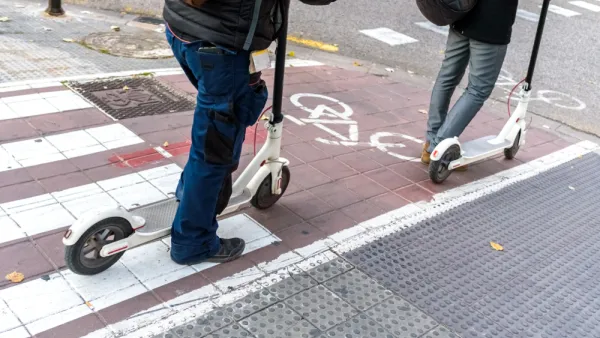
Scooter Media Brief: A Fork in the Road for Scooters
A few milestones stick out from the rest of the scooter news from January 2019.

FEATURE
Portland Throwing its Pioneering Neighborhood System Under the Bus
A muddled agenda of inclusion seems to be a rationale to eviscerate one of the Oregon city's most lauded civic assets.

BLOG POST
How the City Planners of Tomorrow Will Differ From City Planners Today
The world is changing, and city planners are changing along with it.

BLOG POST
Learning from the National Household Travel Survey
The Federal Highway Administration's National Household Travel Survey (NHTS) shows that transit use is rising and household vehicle miles traveled are declining—but other data sources paint a more ambiguous picture.
FEATURE
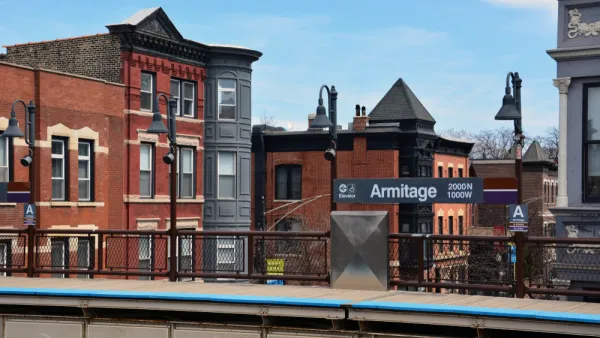
Lincoln Park and the Complicated History of Gentrification in Chicago
The following excerpt, written by Daniel Kay Hertz in the introduction to The Battle of Lincoln Park, challenges assumptions about the forces of gentrification in Chicago, with lessons for communities around the country.

BLOG POST
A Better Travel Experience
Transportation engineers sometimes treat people as objects to be moved as quickly and cheaply as possible from one location to another, but people have preferences and feelings which should be considered when planning transport systems.
Harvard University Graduate School of Design
KFH Group Inc.
Greater Baltimore Committee
The Architects Foundation
University of Cincinnati Online
The Pocatello Development Authority
The Urban Renewal Agency of the City of Pocatello

FREE Course: Walkable City 1: Why Walkability?
After describing his path towards focusing on walkability as the essence of good planning, Jeff Speck marches through his five principal reasons for making more walkable places.
Reinventing Malls: Planning Alchemy—Turning Gray Fields Into Gold
The course focuses on the opportunities and imperatives that shape reinvention of mall sites.