Exclusives

BLOG POST
Order Without Design: Pro-Housing, Pro-Infrastructure
In Order Without Design, Alain Bertaud takes a middle position between consistent supporters of suburbia and sprawl critics.

FEATURE
Asking for Forgiveness
In the age of new technology, is it better to ask for forgiveness, or beg for permission? Austin Brown and Kelly Fleming of UC Davis explore why companies have taken this approach and how policymakers and business leaders can improve the situation.

BLOG POST
How the Rise of Travel Apps Helps Local Economies
There are so many more ways to access local culture as a tourist or an urban explorer than ever before.

FEATURE
Many Norms, Few Plans: Urban Rubble Clearance in the Cities of the Global South
Michael Hooper of Harvard University writes about the complexity of urban rubble clearance, a growing challenge for cities.

BLOG POST
Scooter Media Brief: Safety, Security, and Business Models Raise Concerns
Recent news has revealed some cracks in the pavement below the speedy wheels of electric scooter share.

FEATURE
Preventing Crime, One Park at a Time
Deborah Marton, executive director of the New York Restoration Project, connects parks and open space to improved public safety.

BLOG POST
The Negligence Law Revolution That Wasn't
In 2017, New York's highest court held that cities could be held liable for failure to adopt traffic calming policies. Why hasn't this ruling led to safer streets?

BLOG POST
Autobiographical Writing: Fostering Critical Self-Reflection, Empathy, and Courage
Courtney Knapp of the Pratt Institute writes about a recent article in the Journal of Planning Education and Research
BLOG POST
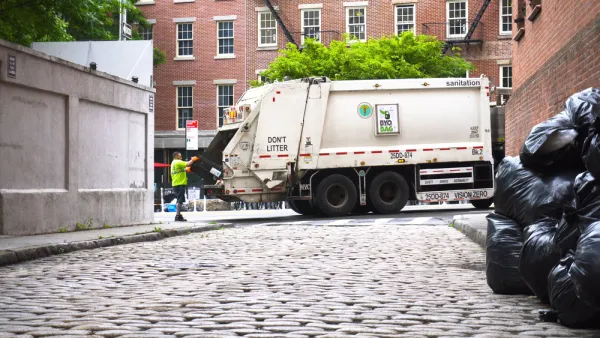
Waste Management Best Practices (And Their Impact on Urban Planning)
Urban planners can play a role in ensuring the best possible waste management practices are implemented whenever possible.

FEATURE
A Sprinkle of Stores: Wrestling With Jacobs's Uncertainty
Jane Jacobs used vague terms to describe the number of stores necessary for a safe and vibrant streetscape. Here, author Fanis Grammenos attempts to discover a more specific number to attach to this prescription.


BLOG POST
The 'Failure' of Gentrification?
Urban scholar Joel Kotkin says that gentrification has "failed" in Los Angeles. It's a curious notion, since gentrification is generally considered a bad thing. The reality is much more complex than Kotkin suggests.

BLOG POST
Seeing the Urban Forest for the Trees
It is important to focus on forests rather than individual trees when evaluating trade-offs between infill and sprawled development.

BLOG POST
More Evidence That New Housing Lowers Rents (Maybe)
Even if new housing reduces rents regionwide, scholars are divided as to when and whether new market-rate apartments reduce rents in nearby blocks. A new study seeks to answer this question.

BLOG POST
California's Commitment to Density Depends on Commitment to Common Destiny
Opponents of bills to promote transit oriented housing development throughout California need to do the math and develop some state pride.

BLOG POST
A Good Read for Planners and Peers: Why Old Places Matter
A recent book brings a common sense framework to historic preservation debates.

BLOG POST
No, Traffic Congestion Does Not Really Cost Every American $1,348 Annually
The INRIX Global Traffic Scorecard exaggerates congestion costs in order to enhance the value of its traffic monitoring services. A little skepticism is justified.
FEATURE
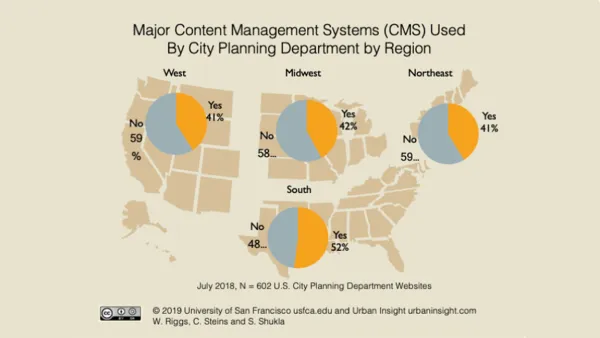
City Planning Technology, 2019 Benchmarking Study
A report on the current state of Internet technologies, policies, and content management systems adopted by 600 cities across the United States, including recommended steps cities should take to improve technology assets in 2019.
BLOG POST
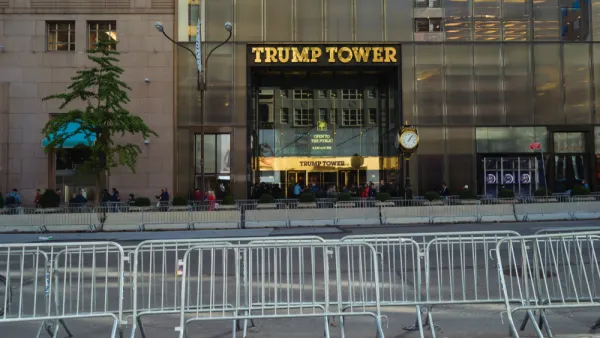
State of the Union: Infrastructure Week Is Finally Over
Infrastructure went from playing a major role in the State of the Union address a year ago. This year infrastructure warranted barely even a nod—about 62 words, in fact.
BLOG POST
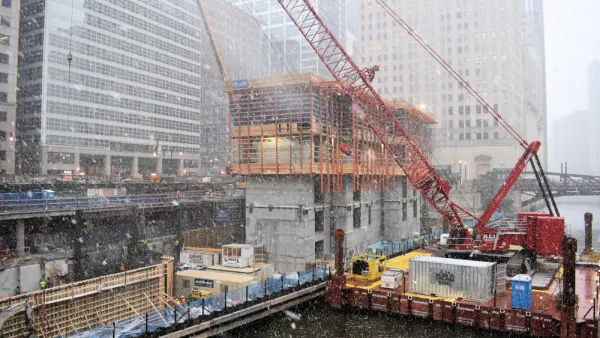
Can Upzoning Increase Housing Supply and Affordability?
Increasing allowable densities and reducing parking requirements are important strategies for achieving long-term planning goals, but to succeed they must be applied to large areas.
City of Rosemead
Rutgers University, Edward J. Bloustein School of Planning and Public Policy
One Hundred Miles
University of Michigan School for Environment and Sustainability (SEAS)
Hunter College, City University of New York (CUNY)
The Architects Foundation
City of Cambridge
Montrose County
The Pocatello Development Authority

FREE Course: Walkable City 1: Why Walkability?
After describing his path towards focusing on walkability as the essence of good planning, Jeff Speck marches through his five principal reasons for making more walkable places.
Reinventing Malls: Planning Alchemy—Turning Gray Fields Into Gold
The course focuses on the opportunities and imperatives that shape reinvention of mall sites.











