Exclusives

BLOG POST
Gentrification Studies Must Inspire Solutions
The study of gentrification took center stage at the recent conference of the Urban Affairs Association. It's up to planners to put all of that research to good use.

BLOG POST
The Practical Confessions of an Urbanist Pilgrim
After 12 days of walking the Portuguese Camino, the importance of many urban planning and development debates—from balanced growth to banning cars—became abundantly clear.

BLOG POST
Do You Believe in 'Ghost Apartments'?
"Ghost apartments" (empty apartments owned by rich foreign investors) have gotten a great deal of media coverage. But how common are they?

FEATURE
The Least Popular Planning Articles of 2019
An unscientific dip into Planetizen traffic data for the first three months of 2019 reveals the planning stories readers couldn't care less about.

BLOG POST
What the Market Can Bear: Defining Limits to Inclusive Housing Requirements
Inclusivity requirements should be used with caution. Increasing the portion of below-market housing units tends to reduce total housing production, particularly moderate-priced homes.

FEATURE
We Need More Words for Play
Could cities harness the power of play to build more healthy, resilient, and equitable communities, if only we had the words for it?

FEATURE
Who's to Blame for Gentrification? Planners, Apparently
Capital City casts planners as lackeys, serving the forces of capitalism.

BLOG POST
Reactions to Ontario's Subway Takeover Plan
Last week, Ontario Premier Doug Ford announced a plan to replace Toronto's subway expansion plans with a vision of his own. Reactions have been pouring in ever since.
FEATURE
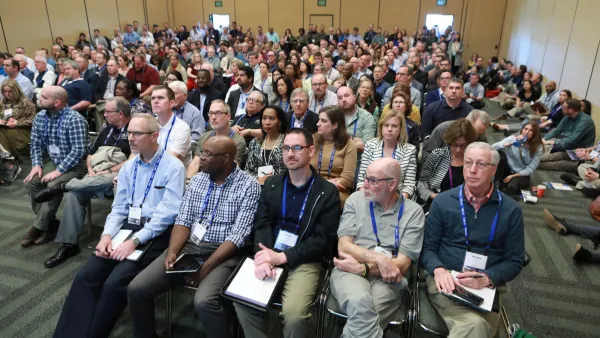
Searching for the Essence of Planning at the National Planning Conference
With so many applications and intersections, planning can be hard to define. Planetizen Managing Editor James Brasuell is in San Francisco searching for meaning.

BLOG POST
The Economic Defense of Sprawl (And What's Wrong With It)
Defenders of suburban expansion argue that government should build more roads in order to open up more land for housing. What's wrong with that argument?
BLOG POST
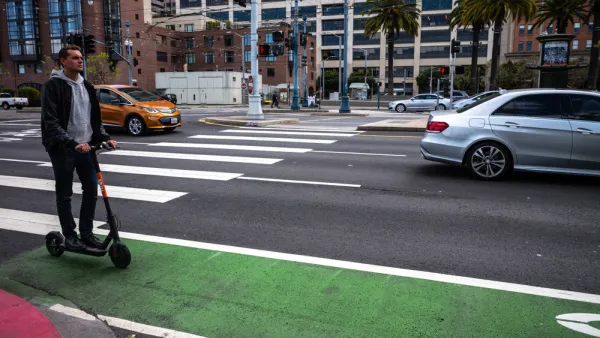
Scooter Media Brief: Electric Scooters Emerge Victorious in the Dockless Bike Share Game
At the beginning of 2017, few people in the United States could have predicted the quick rise to prominence of dockless bike share companies. Even fewer could have predicted what would happen next.

FEATURE
In This New Co-Living Partnership, Friendships Are the Ultimate Amenity
Kin, a new partnership between the real estate company Tishman Speyer and the co-living company Common, bets that residents will accept smaller living spaces in exchange for a community borne out of in-house sharing-economy amenities.

BLOG POST
2019 Already a Big Year For 'Smart City' Evolution
While 2019 doesn’t scream smart city revolution, we are seeing signs of significant smart city evolution.

BLOG POST
Order Without Design: Pro-Housing, Pro-Infrastructure
In Order Without Design, Alain Bertaud takes a middle position between consistent supporters of suburbia and sprawl critics.

FEATURE
Asking for Forgiveness
In the age of new technology, is it better to ask for forgiveness, or beg for permission? Austin Brown and Kelly Fleming of UC Davis explore why companies have taken this approach and how policymakers and business leaders can improve the situation.

BLOG POST
How the Rise of Travel Apps Helps Local Economies
There are so many more ways to access local culture as a tourist or an urban explorer than ever before.

FEATURE
Many Norms, Few Plans: Urban Rubble Clearance in the Cities of the Global South
Michael Hooper of Harvard University writes about the complexity of urban rubble clearance, a growing challenge for cities.

BLOG POST
Scooter Media Brief: Safety, Security, and Business Models Raise Concerns
Recent news has revealed some cracks in the pavement below the speedy wheels of electric scooter share.

FEATURE
Preventing Crime, One Park at a Time
Deborah Marton, executive director of the New York Restoration Project, connects parks and open space to improved public safety.

BLOG POST
The Negligence Law Revolution That Wasn't
In 2017, New York's highest court held that cities could be held liable for failure to adopt traffic calming policies. Why hasn't this ruling led to safer streets?
Harvard University Graduate School of Design
KFH Group Inc.
Greater Baltimore Committee
The Architects Foundation
University of Cincinnati Online
The Pocatello Development Authority
The Urban Renewal Agency of the City of Pocatello

FREE Course: Walkable City 1: Why Walkability?
After describing his path towards focusing on walkability as the essence of good planning, Jeff Speck marches through his five principal reasons for making more walkable places.
Reinventing Malls: Planning Alchemy—Turning Gray Fields Into Gold
The course focuses on the opportunities and imperatives that shape reinvention of mall sites.