Exclusives
BLOG POST
A Minor Setback for Pedestrians
Municipal setback requirements inconvenience pedestrians for no good reason.
BLOG POST
Who Should Pay for Transportation Infrastructure? What is Fair?
Many people assume incorrectly that motorists pay their share of roadway costs through fuel taxes. Not so. Fairness would require much higher motor vehicle user fees to finance roadways.
BLOG POST
'Dam Slow City
Amsterdam feels "cozy" because the city's efforts to manage mobility results in an average speed for all modes of 15kph/10mph.
BLOG POST
The Global TechniCity
Tom Sanchez (Virginia Tech) and I decided to offer a free course to a global audience. The response has been phenomenal with more than 17,000 people participating. Learn about what the globe has to say about technology in cities.
BLOG POST
Understanding Trends from the APA Conference
Every year we analyze all of the tweets from the APA Conference and tell you about the trends in planning. With more than 1,000 people tweeting from the APA Conference, there is a lot of great ideas, links, and blogs that we can all learn from.

FEATURE
Still Learning: An Interview with Denise Scott Brown
In excerpts from an interview with Planetizen contributor Sean Varsolona, Denise Scott Brown of Venturi, Scott Brown and Associates offers insights and provocations on sustainability, New Urbanism, and the social awareness of today’s young urbanists.
BLOG POST
Small Steps = Smart Planning
A bold vision can be terrific but a small step in the right direction is more important.
BLOG POST
Which cities are (perceived as) safest?
A Gallup poll asked residents of each Congressional district whether they felt safe walking alone at night in their city or area. Although city residents feared crime more than suburbs, there were some surprises.
BLOG POST
APA 2013: Dispatches from Chicago
This year's host for the APA National Conference, themed "Plan Big," is the city that virtually invented modern big picture planning. But what does Chicago's seeming inability to plan comprehensively say about the state of contemporary planning?
BLOG POST
The Chemistry of Safer, Denser Cities
While the middle class sought the refuge in the suburbs in the 1960s and 1970s, it turns out that the crime they were fleeing had nothing to do with density, race, or even blight. Mother Jones magazine suggest that it was all because of lead.
BLOG POST
'We Pay Taxes; Parks Don’t'
Some argue that if something is not directly contributing to our public coffers, why protect it? Perhaps it’s worth broadening our understanding of the services – and tax implications – provided by parks.

FEATURE
Planning Chicago: An Interview with D. Bradford Hunt and Jon B. DeVries
After decades of decline, Chicago is reveling in its resurgence as America’s hottest urban center and a “port of the global age.” However, these successes conceal a city struggling with increasing inequality and a planning culture “in retreat.”
FEATURE
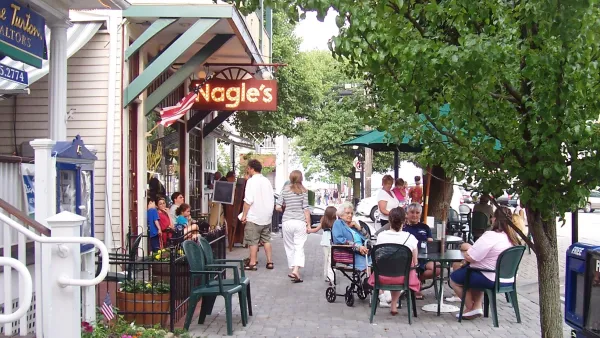
The Case for Age-Friendly Suburbs
Several trends are conspiring to challenge America's ability to house and care for its senior citizens. Utilizing successful examples, architect and planner Eric C.Y. Fang examines how the suburbs can be adapted to support an aging population.
BLOG POST
The "Vertical Sprawl" Myth
Opponents of high- and mid-rise development often use the term "vertical sprawl." But in fact there is little similarity between high-rise infill and suburban sprawl: the major arguments against one do not apply to the other.
BLOG POST
An Easier Way To Fight Sprawl
Instead of always fighting to make sprawl development harder, let's focus our energy on making great infill development easier.
BLOG POST
Density Done Well, and Not Just Downtown
It’s an understatement to say that the “D-Word” is a controversial subject in cities across North America. It needn’t be so though, and shouldn't be, as when it’s done well, density is immensely important to the success of cities and regions.
BLOG POST
The Power of Place: On Democracy and Public Participation in Planning
More thoughts on how public participation in the placemaking process can create better places and better functioning democracies.

FEATURE
Top Trends 2012-2013
Over the course of the year, the editors of Planetizen review and summarize thousands of articles, books, studies and editorials related to planning and urban development. Here are our picks for the most notable planning trends of the past year.
Harvard University Graduate School of Design
KFH Group Inc.
Greater Baltimore Committee
The Architects Foundation
University of Cincinnati Online
The Pocatello Development Authority
The Urban Renewal Agency of the City of Pocatello

FREE Course: Walkable City 1: Why Walkability?
After describing his path towards focusing on walkability as the essence of good planning, Jeff Speck marches through his five principal reasons for making more walkable places.
Reinventing Malls: Planning Alchemy—Turning Gray Fields Into Gold
The course focuses on the opportunities and imperatives that shape reinvention of mall sites.