Community / Economic Development
13 Ways to Kill Your Community
Scott Doyon reviews the book "13 Ways to Kill Your Community", by Alberta Legislative Assembly member Doug Griffiths and journalist Kelly Clemmer. In it, the authors reveal some of the "curiously recurring behaviors" that harm cities of all sizes.
Technology and Robust Economies Drive Rural Town Revival
Population loss has been a fact of life for many of the United States' rural towns for decades. But if the experiences of rural towns across Minnesota are any indication, manufacturing, farming, and technology may generate a widespread rural revival.
Should Universities Help Pay for City Services?
The University of Massachusetts at Lowell has spent $600 million on construction projects over the past six years alone. But as the university grows, local leaders are asking for payments in lieu of taxes to offset the demand on municipal services.
Miami Becomes Safe Harbor for Cash and Celebrity Architecture
Rowan Moore looks at the multiple layers that are conspiring to make a maturing Miami the "new Most Exciting City in America". Diverse cultural offerings and branded architecture are attracting international investors.
Why Many Cities Should Start Looking Beyond Eds and Meds
For many years, economists have touted the higher-education and health care sectors as powerful engines for local economic growth. However, a growing chorus of observers are warning about the continued validity of that premise.
Healthy School Food Initiative Nourishes L.A.'s Economy
A push by the Los Angeles Unified School District to increase its supply of healthy and locally-produced foods is paying dividends for area farmers and businesses.

San Francisco's Crisis of Affluence
The booming tech industry has brought economic development to the Bay Area. But lavish lifestyles, astronomical housing prices, and rising evictions has put the industry in the crosshairs of a very public backlash. Can the city broker peace?
12 Bold and Bizarre Visions for Cities
There's no shortage of bold and bizarre ideas for how to make our future cities more livable, sustainable, and efficient. Whether many of these ideas are feasible is another story.
27 Ideas for Keeping the Twin Cities Prosperous
A study prepared for the McKnight Foundation’s Food for Thought series has searched far and wide for lessons for keeping Minneapolis-St. Paul a prosperous and livable place.
Vacant Buildings: Renovate, Demolish, or Disguise?
To battle blight caused by the plague of vacant properties left by declining populations and the Great Recession, cities and property owners are resorting to some sly tactics.
To Help Clean the City, Amsterdam Gives Alcoholics Free Beer
Should you pay alcoholics in beer? This is the ethical dilemma thrown up by a city project in the famously liberal city of Amsterdam.
China Loosens One-Child Policy
The Communist Party announced on Nov. 15 two huge changes to two long-term policies that exerted enormous control over its citizens. More couples will be allowed to have additional children and "reeducation through labor camps" will be abolished.
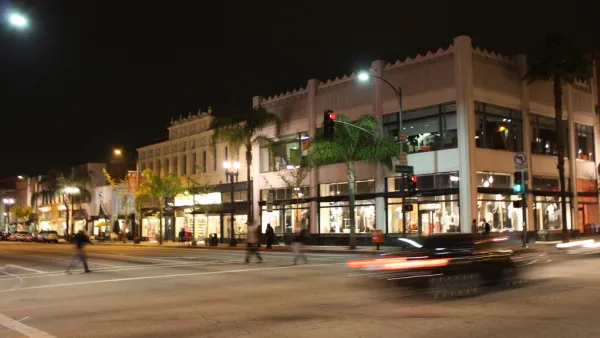
How Parking Meters Turned Around a Struggling Downtown
The revival of Old Pasadena is one of the truly great urban success stories from the past few decades. The area's comeback was not based on shifting demographics or "political will", writes Colin Marshall, but a less sexy foundation: parking reform.
10 Ways Cities Are Turning Back Time
It's back to the future for global cities, now that we've realized what a mess the 20th century was.
Technology, Talent, and Tolerance: The Creative Culture
Creativity isn’t a theory about hipsters and the latte set. The key driver of a resilient economy is the same thing that binds us as humans – our shared creativity. Hazel Borys reviews Richard Florida's latest creative culture ideas.
Could "Impact Bonds" Target Places Rather Than People?
Localities are experimenting with social impact bonds (SIBs) to fund America's social service infrastructure. John Roman asks if such an instrument could be used to help transform blighted areas.
New Study Calls Into Question Chicago's Extensive Use of TIFs
Chicago is America's undisputed leader in using tax increment financing (TIF) to spur economic development. But what is the city getting in exchange for its efforts to fight blight? A new paper says: Not much.

North America's 10 Smartest Cities
A year after he unveiled his list of North America's top "Smart Cities" based on a new metric meant to bring clarity and measurability to the discussion, Boyd Cohen is back with a refined methodology and a new ranking.
A Successful Commuter Shuttle that Serves more than Commuters
The Emery Go-Round is a shuttle service that meets the "last mile" challenge that prevents many commuters from using public transit. Unlike other commuter shuttles, it serves the greater Emeryville community as well. And the buses are full.
Brazilian Boom Town's Troubles are a Warning for Emerging Cities
One of Brazil's most prosperous cities is experiencing a highly visible decline in the quality of life for many residents. Rising crime, stalled infrastructure projects, and general dissatisfaction are turning Salvador into a “failed city”.

FREE Course: Walkable City 1: Why Walkability?
After describing his path towards focusing on walkability as the essence of good planning, Jeff Speck marches through his five principal reasons for making more walkable places.
Reinventing Malls: Planning Alchemy—Turning Gray Fields Into Gold
The course focuses on the opportunities and imperatives that shape reinvention of mall sites.

KFH Group Inc.
Greater Baltimore Committee
Eagle County Government
The Architects Foundation
University of Cincinnati Online
The Pocatello Development Authority
The Urban Renewal Agency of the City of Pocatello