Community / Economic Development
Why New York's Inequality Is a Good Thing
Though he may not find a lot of agreement among the 750,000 residents who voted for Bill de Blasio, Ed Glaeser argues that New York City's extreme inequality is a sign of its economic diversity and success, and is nothing to be ashamed about.
Could California's Largest Casino Transform the State's Relationship with Gaming?
The $800 million Graton Resort & Casino will soon open in Sonoma County for the Federated Indians of the Graton Rancheria and be the closest tribal casino to San Francisco.
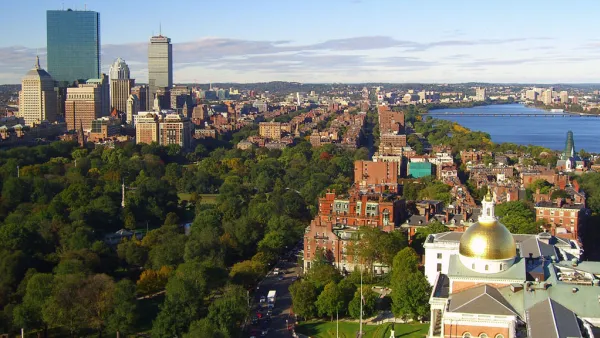
Which U.S. City Gentrified the Most Before the Recession?
A new report from the Federal Reserve Bank of Cleveland quantifies the rate at which America's 55 largest cities gentrified between 2000-2007 based on neighborhood home values. The results may surprise you.
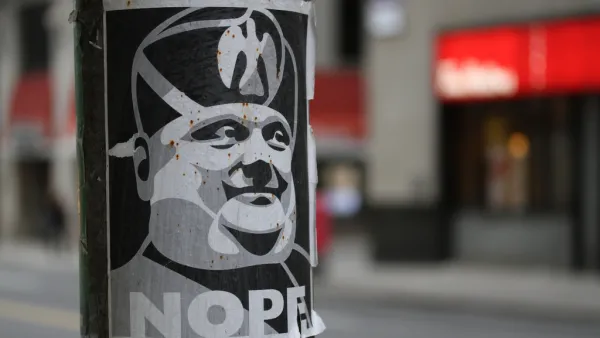
Toronto's Problems Are Bigger Than Rob Ford
Sure, having a boorish crack-smoking mayor who refuses to get help or step down is a problem. But Toronto's existential problems are structural, writes Richard Florida. The city's "outmoded growth model and system of governance" threaten its success.
Microdevelopers Build a Promising Future Using Buffalo's Past
Buffalo is benefiting from a wave of "microdevelopment" driven by entrepreneurs and young urbanists with a belief in preservation as social activism. By rehabbing vacant properties one at a time they're hoping to turn around a city.
NYC: 7 Things at Risk, Post-Bloomberg
As Mayor Bloomberg gets set to leave office in New York, here are 7 things that may dramatically change under a new administration.
An Urban Resurgence Driven by Tweets
The arrival of "one of the technology industry’s next big things" has been just the medicine needed to help turn around one of San Francisco's most stubbornly downtrodden areas.
10 Traits of 'Globally Fluent' Cities
City leaders are constantly told technology is making the world smaller, and they need to make sure their city competes on a world stage, but how? Here are 10 traits cities must have in order to be "globally fluent."
TOD in L.A.'s Low-Income Communities Gets $100 Million Boost
With L.A.'s transit system expanding its footprint and growing its ridership, $100 million in development capital from a national philanthropic organization will help fund projects around stations in the city's underserved communities.
The Scary State of U.S. Municipal Finances
Analysis by The Wall Street Journal shows that even as other sectors of the economy fight their way back from the Great Recession, municipal finances lag far behind.
Cleveland Caught Between Dreams of Revival and Reality of its Woes
Are the grand plans for reviving Cleveland put forth by city leaders - and hyped by the architecture critic at the city's main newspaper - fantasies masking the city's elemental problems or goals worth pursuing?
Neighborhoods Matter
Against a backdrop of increasing spatial segregation of incomes, Robert J. Sampson looks at how neighborhood inequality influences multiple aspects of everyday life. How we address such inequality indicates what kind of society we want to be.
Even for Slow-Growth Davis, Providing Land for Tech Companies Proves Too Enticing
Originally intended for permanent farmland and open space, Davis, CA will consider whether 391 acres along its eastern edge should instead be used for a business technology park, reports Mark Anderson.
With Vote by City Council, Sacramento to Become Healthier and More Bike Friendly
More bike corrals, bike sharing, and parklets are on the way to the Golden State's capital thanks to the city council's unanimous vote on Oct. 22 with support from cyclists, pedestrians, businesses, and the regional air district.
Is Downtown Denver Too Popular?
Some of Denver's leaders are sounding the alarm over rising household income levels and the threat to affordable housing. But in an editorial in The Denver Post, Vincent Carroll argues that an exclusive downtown Denver is better than the alternative.
Were Vancouver's 2010 Olympics Worth the Investment?
A new report says the investments made in hosting the 2010 Winter Olympics in Vancouver were worth it. But could the area have gotten the same benefits without the Games?
Can Later Bar Hours and 'Noise Areas' Make a D.C. Suburb Hip?
As urban areas across the country compete for those coveted young professionals, "unhip" suburbs have a particularly tough challenge. In Montgomery County, MD, a taskforce has issued its recommendations for addressing this challenge.
New Paper Makes the Case for Placemaking's Role in Building Community
With the publication of a new paper, PPS is celebrating "an important occasion in the evolution of the Placemaking movement." Through 10 case studies, the paper argues for "the importance of Placemaking as a vital part of community-building."
Civic Tech and Mobile Engagement 2.0
Community engagement efforts increasingly look to harness mobile devices and mobile applications to access, inform, and empower the public. However the mobile market is evolving at a fast pace, which complicates our understanding of what works best.
Is Traffic Congestion Good or Bad?
No one likes to be stuck in traffic. But while empty streets may look great from behind the wheel of a car, they could signal a city in distress. A new study identifies the tipping point at which congestion becomes a drag on a city's economy.

FREE Course: Walkable City 1: Why Walkability?
After describing his path towards focusing on walkability as the essence of good planning, Jeff Speck marches through his five principal reasons for making more walkable places.
Reinventing Malls: Planning Alchemy—Turning Gray Fields Into Gold
The course focuses on the opportunities and imperatives that shape reinvention of mall sites.

KFH Group Inc.
Greater Baltimore Committee
Eagle County Government
The Architects Foundation
University of Cincinnati Online
The Pocatello Development Authority
The Urban Renewal Agency of the City of Pocatello