Despite a prickly political atmosphere, the Seattle suburb of Bainbridge Island recently transformed the main artery of its town center, Winslow Way, in what author Mark Hinshaw, FAIA, calls “a really cool way.”


Lined with locally-owned shops, the suburban main street has now been re-invented to incorporate state-of-the-art principles of sustainability including low impact development facilities, all-ages and abilities transportation infrastructure and LED street lights.
It took an enormous community effort, with lots of people championing the idea, and elected representatives with the political will to make it happen, but the results suggest a powerful case study for other communities looking to retrofit their streets for a more sustainable, locally-based future.
Read the full story: Winslow (Un)Paves the Way
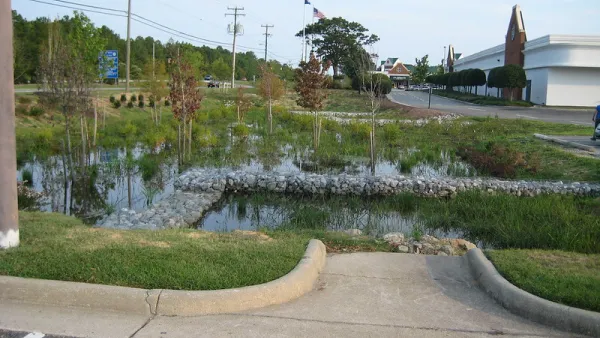
FYI about GSI: The Recipe for Green Stormwater Infrastructure Success
New research highlights some of the ways planners can increase the social benefits and public acceptance of green stormwater infrastructure.
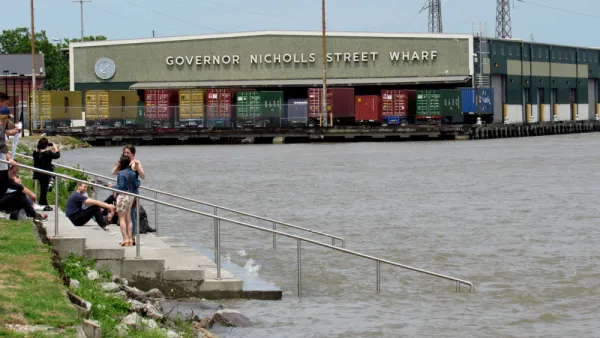
Permeable Pavements Required for Parking, Sidewalks in New Orleans
New Orleans is looking for new ways to mitigate the effects of stormwater that regularly floods the city.
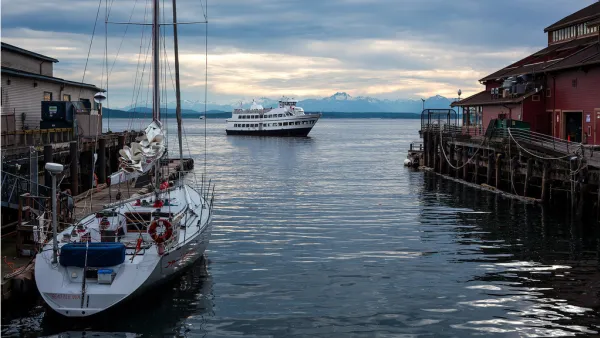
Washington State to Transition to Battery Electric Ferries
Washington's largest diesel emissions polluter will transition its fleet to diesel-hybrids and then to battery-electric propulsion to comply with Gov. Inslee's emissions-reduction executive order which will also please the orcas in Puget Sound.

Washington state to charge fee to drivers with fuel-efficient cars
Revenue from the fee will go towards supporting the state’s highways.

Illinois considers spending $1 billion in taxpayer money on data center
A quantum computing campus and data center are currently under construction in Chicago.

Trump to blast ‘hydrocarbon highway’ through ‘world’s longest art gallery’
Environmental and historic preservation groups are suing to stop the project.

Boston City Council votes to no longer mandate parking in residential developments
The Boston Zoning Commission still needs to approve the proposal.

Passengers in New York, California lift off in air taxis
Two air taxi companies have received a Special Airworthiness Market Survey Certificate, which allows them to service passengers.

MTA to upgrade subway signals for entire network by 2050
This is the first time New York City has planned to modernize subway signals in the Bronx.

FREE Course: Walkable City 1: Why Walkability?
After describing his path towards focusing on walkability as the essence of good planning, Jeff Speck marches through his five principal reasons for making more walkable places.
Reinventing Malls: Planning Alchemy—Turning Gray Fields Into Gold
The course focuses on the opportunities and imperatives that shape reinvention of mall sites.

City of Charlotte
City of Rosemead
Rutgers University, Edward J. Bloustein School of Planning and Public Policy
University of Michigan School for Environment and Sustainability (SEAS)
Hunter College, City University of New York (CUNY)
The Architects Foundation
University District Partnership