The booming tech industry has brought economic development to the Bay Area. But lavish lifestyles, astronomical housing prices, and rising evictions has put the industry in the crosshairs of a very public backlash. Can the city broker peace?



"Resentment simmers [in San Francisco], at the fleets of Google buses that ferry workers to the company’s headquarters in Mountain View and back; the code jockeys who crowd elite coffeehouses, heads buried in their laptops; and the sleek black Uber cars that whisk hipsters from bar to bar," write Erica Goode and Claire Cain Miller.
"For critics, such sights are symbols of a city in danger of losing its diversity — one that artists, families and middle-class workers can no longer afford. On the day of Twitter’s public offering this month, 150 demonstrators protested outside the company with signs reading 'People not profit' and 'We’re the public, what are you offering?'”
“There has to be some kind of public support to make sure you don’t just have a city of the very wealthy, but people to make the city run,” said Kevin Starr, professor of history and policy, planning and development at the University of Southern California.
“You can’t have a city of just rich people,” he said.
FULL STORY: Backlash by the Bay: Tech Riches Alter a City


As prices skyrocket, San Francisco Mayor declares rent emergency
Landlords in San Francisco have initiated over 2,400 evictions since January, putting the city on track to see more evictions this year than during any year in the past decade.
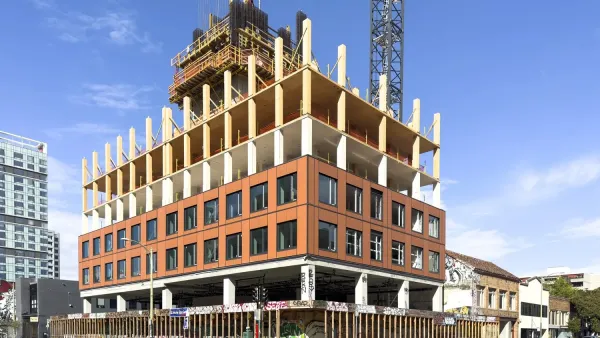
San Francisco Affordable Housing can Cost $1 Milllion per Unit. One Developer Says He can Slash the Cost by 65%
An expansion of a federal tax credit is prompting for-profit developers to get into the affordable housing market.

San Francisco Mayor’s ‘Family Zoning’ Plan Faces Pushback, Displacement Concerns
Newly proposed legislation aims to protect long-term tenants from displacement caused by Mayor Lurie’s proposed zoning reform plan, which would allow for more housing construction in parts of the city.

Planetizen Federal Action Tracker
A weekly monitor of how Trump’s orders and actions are impacting planners and planning in America.

The state-sanctioned urbicide of Austin
People don’t kill cities. Freeways do.

US to reduce Colorado River water deliveries to Mexico
A new Colorado Treaty amendment reduces Mexico’s Colorado River water allocation by 250,000 acre feet.

5 New England states march closer to 800 megawatt wind energy project
Securing federal approval for the project may be complicated under the Trump administration, which has historically been hostile towards domestic wind power.

Baltimore to break ground on $50 million Transit Priority Project
The project will bring faster bus trips, safer streets and better bike connections to Baltimore.

Airbnb launches $250 million 'last-dollar financing' housing accelerator, makes first investment in Austin
The company will put $6.4 million towards affordable housing development in Texas’ capital.

FREE Course: Walkable City 1: Why Walkability?
After describing his path towards focusing on walkability as the essence of good planning, Jeff Speck marches through his five principal reasons for making more walkable places.
Reinventing Malls: Planning Alchemy—Turning Gray Fields Into Gold
The course focuses on the opportunities and imperatives that shape reinvention of mall sites.

Eagle County Government
Harvard University Graduate School of Design
Nashville Planning Department
The Architects Foundation
University of Cincinnati Online
The Pocatello Development Authority
The Urban Renewal Agency of the City of Pocatello
Journal of the American Planning Association