The city wants to expedite the process for getting people into available housing units.



An article in the Oakland Post outlines the city of San Francisco’s newly launched ‘Street to Home’ program aimed at getting unhoused people into permanent supportive housing faster. “By providing direct placement into housing units, the program aims to reduce the trauma and instability associated with homelessness with a path toward stability.”
According to the article, “The new program, in partnership with Delivering Innovation in Supportive Housing (DISH), is part of the City’s ongoing commitment to bring people inside and connect them to a wide range of existing services and placements.” The city says that “By leveraging vacant units within HSH’s portfolio, this program will streamline the process of transitioning individuals from the streets to permanent housing, ensuring a more efficient and compassionate approach.”
For now, the program, which streamlines some of the bureaucratic requirements of placing people into housing, “can only be implemented on locally funded projects due to requirements at the federal level that the City cannot waive.” Mayor London Breed is asking the federal government to relax rules that would let San Francisco expand the program to more buildings.
Read the full story: New ‘Street to Home’ Program Expedites Housing People, Reduces Vacancies in City-Funded Homeless Housing in S.F.
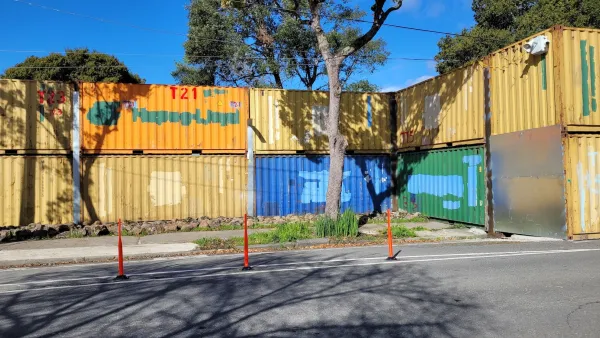
Berkeley promised to build supportive housing in People's Park. Where is it?
More than two years after People's Park was cordoned off, there is no word on a timeline for a promised affordable housing project.
Cleveland program has housed 200 people since 2024
The A Home For Every Neighbor initiative successfully moves people into housing in under two weeks.

California Creates Housing-Focused Agency
Previously, the state’s housing and homelessness programs fell under a grabbag department that also regulates the alcohol industry, car mechanics, and horse racing.

Planetizen Federal Action Tracker
A weekly monitor of how Trump’s orders and actions are impacting planners and planning in America.

California plans to bury El Niño’s downpour
If the state plays its cards right, it may be able to store a billion acre-feet of El Niño’s water in aquifers.

Desperate measures: Advocates weigh draining Lake Powell to fill Colorado River
Draining the reservoir could reduce evaporation losses by a couple hundred thousand acre-feet.

Mamdani’s pied-à-terre tax survives legal challenge
A panel of judges found that the plaintiffs failed to demonstrate injury as a result of New York City's implementation of the tax.

Eastern Nebraska is running out of electricity
Data centers and electrification are straining eastern Nebraska’s grid, throttling economic development.

Seattle passes record-breaking transit services expansion
Proposition 1 will double the city’s transit tax to add 95,000 more bus trips and preserve 180,000 bus trips annually.

FREE Course: Walkable City 1: Why Walkability?
After describing his path towards focusing on walkability as the essence of good planning, Jeff Speck marches through his five principal reasons for making more walkable places.
Reinventing Malls: Planning Alchemy—Turning Gray Fields Into Gold
The course focuses on the opportunities and imperatives that shape reinvention of mall sites.

City of Rosemead
Rutgers University, Edward J. Bloustein School of Planning and Public Policy
One Hundred Miles
Hunter College, City University of New York (CUNY)
The Architects Foundation
University of Cincinnati Online
City of Cambridge
Montrose County
The Pocatello Development Authority