World
Global issues, U.N., etc.
Cities Should Stop Electronic Warrantless Surveillance
From ALPR cameras mounted on garbage trucks to IMSI catchers such as Dirtboxes and Stingrays, local authorities have increased exponentially the amount of electronic surveillance, with little regard for the basic principles of privacy.
Rail Stations Shortchanged as Homeland Security Focuses on Airports
Rail travelers are not subject to the same degree of security measures as air travelers according to security experts, reports Ron Nixon for The New York Times. Yet far more travel by rail than plane, and rail has been a terrorist target abroad.

Land Use Policies and the Future of Cities
Land is perhaps the most fundamental consideration in every variety of planning process—the cost of land, the availability of land, the condition of land, etc. A new e-book studies the importance of land to the global urban future.
Big News From Paris: A New International Climate Accord
After two weeks of negotiating in Paris, almost 200 countries agreed to a plan to reduce emissions, though not to the level supporters had hoped. Nonetheless, the COP21 agreement may be an 'inflection point in human history,' notes The Times.
Car-Free Movement Gaining Steam in Europe and Elsewhere
Athlyn Cathcart-Keays of The Guardian-Cities chronicles the advancement of the international urban car-free movement as well as auto regulations that focus on air pollution. The most recent city to join the growing list is Oslo, Norway

Top 10 Books - 2016
Planetizen is pleased to release its list of the ten best books in urban planning, design, and development published in 2015.
Beware of Energy Rankings for Cities
In a special "Energy for Tomorrow" report, The New York Times looks at "clean city rankings" of energy efficiency and land use. But ranking cities is no easy task—"winners on one list may appears as sinners on another."

Water Resilience in Dry Climates
How can cities in dry climates become self-sufficient in terms of water? California based Dry Lands Institute is creating a digital design tool called Hazel that aims to address just that.

Four New Map Books Reviewed
Looking for the perfect holiday gift for a planner? Check out these new map books.
Climate Talks Won't Tackle the 'Car Problem'
The COP21 talks in Paris won't take on transportation directly, "the world’s fastest-growing energy-based contributor to greenhouse gases," writes David Jolly for The New York Times. Electric vehicles and fuel efficiency face formidable challenges.
Fix Housing Supply, Save the City: Is it Really That Easy?
Planning wonks might have felt all warm inside when they noticed zoning topics wedging their way into broader conversations about community affordability and equity. Bring it on. Finally.
Study: Resurgent in the U.S., Bike Ownership Stagnates Worldwide
Of the 7.3 billion people living on the planet, one in every 12 owns a bike. Despite appearances, however, that number has not increased much in recent years.
World Leaders Shouldn't Underestimate the Climate-Saving Potential of Bicycles
Writing in The Guardian's Bike Blog, Peter Walker has an important message for the 40,000 delegates from 195 nations gathered in Paris for the COP21 talks: Don't discount the carbon-reducing, planet-saving potential of the bicycle.
To Solve Sao Paulo's Water Crisis, Collaboration Is Key
Brazil is rethinking it's approach to water infrastructure. Brazilian think-tank Arq Futuro and Arup's Pablo Lazo give their take on the state of South America's most populous country.
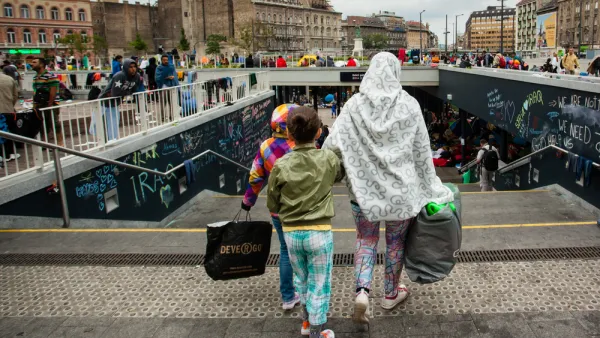
Urban Planners Have a Role to Play in Humanitarian Crises
"Humanitarians are conditioned to think about people, urban planners are conditioned to think about how the place affects people."
The Social Progress Index and the Long History of Searching for the 'Social'
We would do well to withhold our praise of another seemingly new composite index such as the Social Progress Index.
A Quick Guide to the COP21 Climate Talks
World leaders are meeting in Paris this week for the United Nation's COP21 talks. But what exactly are the main topics of discussion?
President Obama Stakes His Legacy at the Paris Climate Conference
President Obama left for Paris on Sunday to partake in the climate talks known as COP21. Coral Davenport of The New York Times looks at the legacy implications for the president stemming from his commitment to fighting climate change.
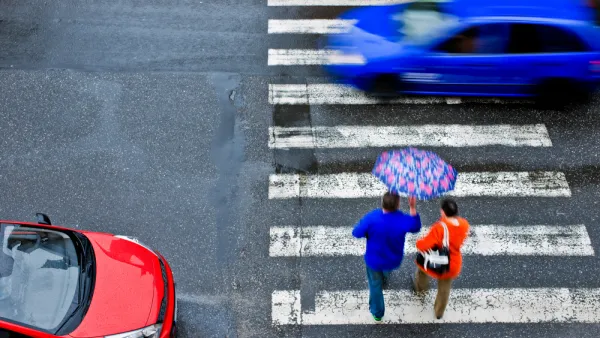
Walkability: Good Money After Bad
"We're investing in walkability," always sounds like an encouraging tagline from local governments...or does it?
'Threading the Needle' of Environmental Sustainability and Social Justice for Cities
This blog is part of the World Resources Report (WRR) series. The WRR looks at cities as drivers of economic and social opportunity, and simultaneously as areas with concentrations of poverty, environmental degradation, and inequality.

FREE Course: Walkable City 1: Why Walkability?
After describing his path towards focusing on walkability as the essence of good planning, Jeff Speck marches through his five principal reasons for making more walkable places.
Reinventing Malls: Planning Alchemy—Turning Gray Fields Into Gold
The course focuses on the opportunities and imperatives that shape reinvention of mall sites.

Eagle County Government
Harvard University Graduate School of Design
Nashville Planning Department
The Architects Foundation
University of Cincinnati Online
The Pocatello Development Authority
The Urban Renewal Agency of the City of Pocatello
Journal of the American Planning Association