As Open Streets events become more popular and spread to cities all over the world, emerging trends show how to make the most of the opportunity to reclaim streets from cars for a few hours.


Mike Lydon checks in on the state of open streets events around the world—with three new cities (Bangalore, India; Cape Town, South Africa; and Peterborough, Ontario) joining a roster of hundreds that are participating in a trend that actually got its start in Seattle in 1965.
To check in with the growing trend, and anticipate the upcoming 2015 National Open Streets Summit, Lydon provides a list of five trends "currently impacting open streets."
The list of trends also reads like a list of best practices for cities looking to commence with open streets events or build on past efforts.
The five trends include:
- "Test Before You Invest" - Lydon here discusses cities like Los Angeles and Minneapolis, which have presented new streetscape and urban design features during open streets events. "Renderings in reall-time," Lydon calls it.
- "Small Cities Do It Too" - Lydon notes that open streets events are becoming popular in smaller cities and suburbs, like Immokalee, FL (pop. 24,154); Wilsonville, OR (pop. 21,484); Buffalo, MN (pop. 15,825); and Decorah, Iowa (pop. 8,089).
Read the full story: #OpenStreets15 Preview: 5 Key Trends in Open Streets

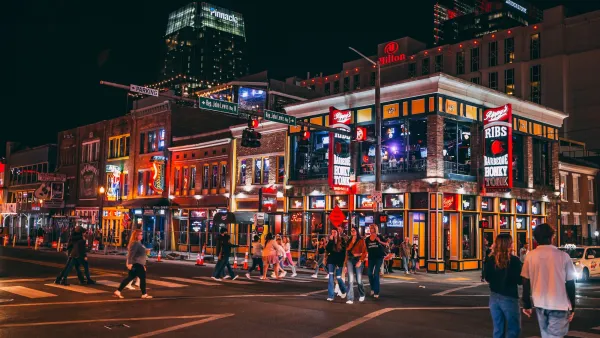
Tennessee DOT weighs making Nashville's Broadway car-free — sometimes
After a crash that killed one person and injured several others, state and city officials are in talks to consider options for closing the popular thoroughfare to cars during certain events.
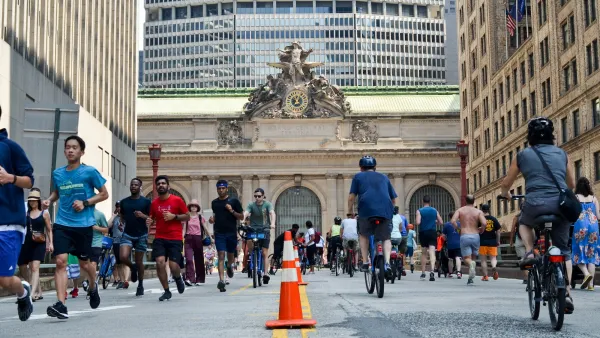
Mamdani’s Budget Fails to Expand Open Streets, Breaking Campaign Promise
The proposed budget allocates $2 million to Summer Streets and Open Streets, less than the $2.1 million allocated by the Adams administration last year.
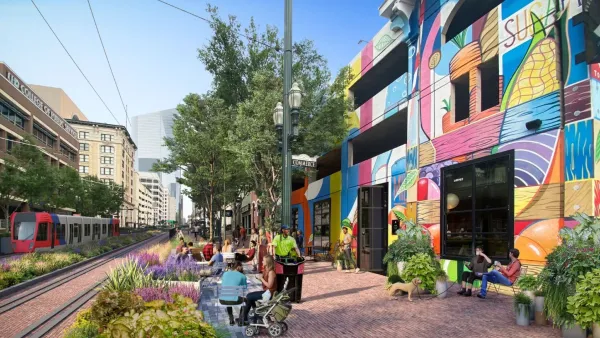
6 Streets Getting Pedestrian Makeovers in 2026
These U.S. cities are reducing or removing car traffic to make major streets more people-friendly.

Planetizen Federal Action Tracker
A weekly monitor of how Trump’s orders and actions are impacting planners and planning in America.

‘Going backwards:’ Baltimore mayor, students rally against state's transit funding plan
Maryland's proposed six-year plan provides no funding for Baltimore’s BMORE bus program and reduces its road maintenance funding.

Detroit to transform waterfront with $2.2 billion investment
Developers will convert about 18 acres of unused parking lot space into civic spaces.

HUD modernizes 50-year-old manufactured housing framework
The Next Generation Manufactured Housing Action Plan establishes new energy-efficiency standards for manufactured homes, and new guidelines for anchoring them.

New CA housing laws tear down development red tape
Recently-signed legislation makes building starter homes and ADUs cheaper and faster in California.

Metrolink finishes first expansion in 20 years
The transit agency is now one of very few in the United States to connect two major airports.

FREE Course: Walkable City 1: Why Walkability?
After describing his path towards focusing on walkability as the essence of good planning, Jeff Speck marches through his five principal reasons for making more walkable places.
Reinventing Malls: Planning Alchemy—Turning Gray Fields Into Gold
The course focuses on the opportunities and imperatives that shape reinvention of mall sites.

One Hundred Miles
County of Mendocino
planning NEXT
The Architects Foundation
University of Cincinnati Online
Montrose County
Northern Illinois Transit Authority (NITA)
The Pocatello Development Authority