United States
The Best Places in America to Enjoy Halloween
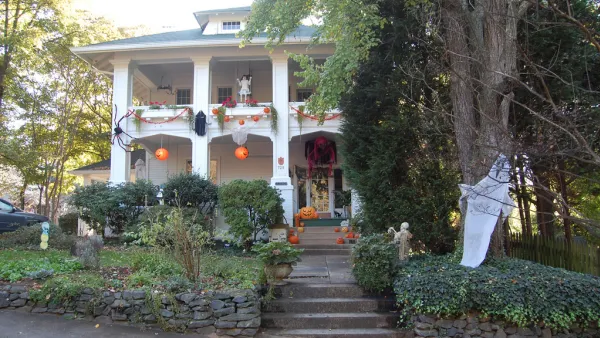
After much anticipation, Richard Florida has published his extremely scientific (no joke) 2012 Halloween Index, which identifies "the metros best primed for trick-or-treating and Halloween revelry."
A Tale of Two Americas
Richard Florida warns about America's increasing “economic Balkanization”: a shrinking working class and the attendant swelling of low-wage service sector employees and the unemployed on the one hand, and the prosperous creative class on the other.
Can Cargo Bikes Replace Trucks and Minivans?
Is the adoption of cargo bikes the next step in America's evolution towards a European model of bikeability?
Are All of America's Coastal Cities Now at Risk?
Hurricane Sandy demonstrates that the impacts of climate change -- rising sea levels and more extreme weather patterns -- mean that the future of America's coastal cities is in doubt.
LEED Certification: Path to Better Buildings or Bigger Bottom Lines?
With supporting evidence from a USA TODAY analysis, Thomas Frank examines the LEED points system and finds that certification, and the tax breaks and other rewards that go with it, can be easily obtained without proven environmental impact.
Unprecedented Northeast Transit Shutdown as Sandy Approaches
Sommer Mathis writes about the largest planned shutdown ever of train and bus service in the U.S. as New York City, Philadelphia, Baltimore, and Washington, D.C. cancel service on the eve of Hurricane Sandy's arrival along the mid-Atlantic seaboard.
Experience Hurricane Sandy from the Safety of Your Desk
For the next few days, America's eyes will be on the East Coast, where a historic storm is already making its presence felt. Quartz has posted a list of webcams to provide you with a first-hand experience of the storm, from the safety of your desk.
Would a Romney Administration Cut FEMA?
On the eve of landfall of Hurricane Sandy, Matthew Yglesias recalls Mitt Romney's 2011 response to a GOP primary debate question in which he called federal disaster relief spending "immoral."
Who Will Pay for America's $2.2 Trillion Infrastructure Backlog?
With the federal government unable to agree on much of anything, state and local taxpayers are bearing the burden for repairing and replacing America's aging infrastructure says a new report from Standard & Poor’s Rating Services.
Visualizing the Connection Between Transportation and Public Health
An informative infographic produced by the Robert Wood Johnson Foundation illustrates the role of walkable, bikeable, and transit-oriented communities in producing healthier populations.
NPR Distinguishes Energy Independence From Security
Surging oil and natural gas production has transformed the domestic energy paradigm. With the U.S. on track to replace Saudi Arabia as the world's largest oil producer, will the U.S finally meet President Nixon's 1973 goal of 'energy independence'?
The Bad News About Rising Home Prices
Economists see America's recovering housing market as a positive indication of the country's economic health. But according to a new study, rising home prices "decrease income mobility and ultimately hurt the U.S. economy," reports Nicole Goodkind.
Bad Habits Are Hard to Break for US Metro Commuters
Despite significant investment in transit infrastructure, and renewed interest in downtowns and walkable neighborhoods, new data shows that gains in transit commute mode share have been hard to come by in America’s largest cities, says Kaid Benfield.
Guide to Building Better Streets Released
This week, NACTO released a preview of its Urban Street Design Guidebook, a document meant to assist local governments in designing their streets on the principle that they're spaces for people and commerce as well as arteries for traffic.
Get Back the Vote: How Civic Engagement Groups Can Strengthen Voting Rights
"Since the beginning of 2011, 180 bills restricting voting and voter registration have been introduced in 41 states. Over 70% of the electoral votes needed to win the 2012 Presidential election will come from states with new restrictive voting laws."
A Tide of Prosperity Inundates the Great Plains
A vast expanse of prairies and grasslands, the Great Plains have long been considered a barren wasteland with little potential for growth. A new report by Joel Kotkin, Praxis Strategy Group, and Kevin Mulligan of Texas Tech claims otherwise.
Why the Silence on Climate Change?
Justin Gillis discusses the controversy over President Obama's and Governor Romney's decision to skirt the topic of climate change during the presidential debates.
Absent From Political Debate: Transportation Infrastructure
National Journal engaged several experts on the state of transportation infrastructure. Both Ken Orski and Rep. Earl Blumenhauer examine different aspects of the 'Infrastructure Deficit". What can we expect to see in the next four years?
Local Governments Work Together to Fight Recession
Chuck Raasch looks at how combining services can help local governments "to capitalize on the economics of scale and offset declining revenue since the Great Recession."
Millennials Seek Downtown Living, Planners Respond
Recent studies show that upwards of 77% of Millennials are opting to live in urban areas. The impact on the local economy will be huge, IF urban planners rethink how we build our downtowns.

FREE Course: Walkable City 1: Why Walkability?
After describing his path towards focusing on walkability as the essence of good planning, Jeff Speck marches through his five principal reasons for making more walkable places.
Reinventing Malls: Planning Alchemy—Turning Gray Fields Into Gold
The course focuses on the opportunities and imperatives that shape reinvention of mall sites.

Eagle County Government
Harvard University Graduate School of Design
Nashville Planning Department
The Architects Foundation
University of Cincinnati Online
The Pocatello Development Authority
The Urban Renewal Agency of the City of Pocatello
Journal of the American Planning Association