United States
What's the True Cost of America's Tax Incentive Folly?
The Times delves deep into the financial incentives that cities, counties, and states dole out to corporations to lure jobs and economic development to their corner of the country. Just what does the $80 billion spent each year actually buy?
Pew Research Reports U.S. Baby Bust
The U.S. birth rate is now at the lowest recorded level ever - or at least since record-keeping began in 1920. Births were increasing but plunged after the 2007 recession. The biggest decrease is among immigrant groups, particularly Mexican women.
Builders Respond to Desire for Multigenerational Homes
The new American household is much like the old multigenerational household that existed before World War II, recent population trends show. And builders are responding by offering "bonus" and "flex" rooms, while circumventing outdated zoning.
Next Battleground in Climate Debate: Repealing State Mandates
While the federal government has dithered on comprehensive programs to limit greenhouse gas emissions, states and cities have led such efforts. Climate change skeptics are now leading efforts to reverse state renewable energy mandates across the US.
How Will Travel Change in the Next Decade?
Driverless cars, 'super elite" fliers, and more rail for everyone; these are among the predictions from experts for how travel in the United States will change over the next decade.

High Density Means More Economic Growth and More Happiness, Too
Using new analysis of recent US Census data, Richard Florida demonstrates that “[c]ities and regions where density is more concentrated near their urban cores — appear to gain the biggest economic advantage.” That, and a tad more happiness.
Virtual City to Test Preparedness for Cyberwarfare
The Pentagon is building a "CyberCity" that simulates real communications and operations, reports Robert O'Harrow Jr. Government hackers will train to attack and defend the nation's critical infrastructure in cyberspace.
EPA Smart Growth Award Winners Announced
Kaid Benfield shares the seven winners of this year's National Awards for Smart Growth Achievement, who were recognized by the EPA for protecting "the health and the environment of our communities while also strengthening local economies."
Former Auto Dealer Named Transportation Committee Chair
Yesterday, Rep. Bill Shuster (R-PA) was named the new head of the Transportation and Infrastructure Committee, replacing former chair John Mica. With MAP-21 expiring in less than two years, what can rail and bike/ped advocates expect?
World Climate Talks Convene As Emissions Rise
World climate talks convened in oil and gas-rich Qatar on Monday, and many eyes have turned to the U.S. Will it be receptive to a climate treaty in light of the devastation reaped on the Northeast by Superstorm Sandy? Can the world agree to a treaty?
Why Are Phoenix and Minneapolis Starting to Look Alike?
It's not the proliferation of chain stores and restaurants making some of America's most geographically distant cities look more and more alike. Ironically enough, local vegetation is to blame, as the country heads towards ecological homogenization.
Teaching Architects to Succeed While Serving the Public Interest
The Public Interest Design Institute encourages architects to embrace participatory approaches in design that address complex social needs; demonstrating that it's possible to "make a career as an architect serving those who need the most help."
Should Taxpayers Fund the Rebuilding of Coastal Communities?
In the "Room for Debate" section of The New York Times, five experts debate whether the federal government should continue to subsidize the cost of coastal reconstruction in the aftermath of storms.
How TODs Fared Through the Housing Crash
Transit-oriented developments multiplied and held their values comparatively well in the housing crisis. In this article, Josh Stephens explores whether the trend will continue post-recession, or if sprawl is poised for a comeback.
How to Unlock America's Bottom-Up Innovation
Thomas Friedman uses Chattanooga, Tenn. as an example of the "innovative thrust building, bottom-up, in the U.S. economy today." In an opinion piece for the Times, he urges leaders in Washington to help unlock America's embryonic growth surge.
Can Electric Cars Break Out of Niche Market?
Are you an environmentally aware, well educated, upper-middle class white man in your early 50s with a garage equipped with an electric outlet? If so, you meet the demographic to buy an electric vehicle. And that may be the EV's only potential group.
What Do America's Cities Stand to Lose from Rising Seas?
In an astonishing interactive graphic and accompanying opinion piece, Benjamin Strauss and Roberr Kopp outline several likely scenarios for the impact of rising seas on America's urban areas. New Orleans and Miami Beach could be completely submerged.
The New Promise of Urban Ecology
Courtney Humphries takes a look at recent federal investment in research on the complex interrelationship between human settlements and the natural environment.
Jockeying for a Gas Tax Increase from Fiscal Cliff Talks
It could be a win-win: Reducing the deficit, stimulating job creation, and avoiding the dreaded 'fiscal cliff'. Those pushing for a gas tax increase have joined other industries in using the need to raise and/or cut $500 billion to avoid recession.
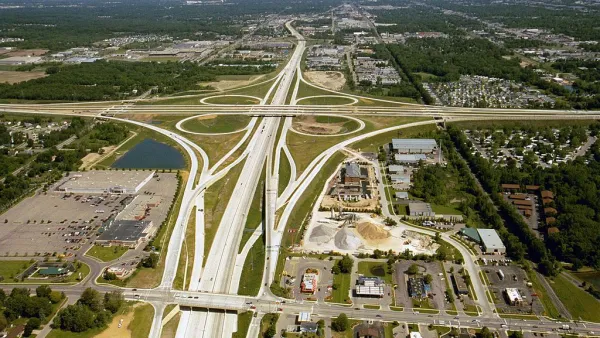
An Argument for Eliminating Federal Transportation Funding
Charles Marohn turns a critical eye toward the inertia of federal transportation policy and the shortsightedness of its most treasured investment. Since America seems to be stuck with a federal transportation bill, he suggests ways to make it work.

FREE Course: Walkable City 1: Why Walkability?
After describing his path towards focusing on walkability as the essence of good planning, Jeff Speck marches through his five principal reasons for making more walkable places.
Reinventing Malls: Planning Alchemy—Turning Gray Fields Into Gold
The course focuses on the opportunities and imperatives that shape reinvention of mall sites.

City of Rosemead
Rutgers University, Edward J. Bloustein School of Planning and Public Policy
One Hundred Miles
University of Michigan School for Environment and Sustainability (SEAS)
Hunter College, City University of New York (CUNY)
The Architects Foundation
City of Cambridge
Montrose County
The Pocatello Development Authority









