On the 16th anniversary of the signing of the 27 principles of the Charter of the New Urbanism, many will be pleased to know that a revised edition of the book based on those principles is being developed.


The Charter of the New Urbanism book was published in 1998, two years after the signing of the Charter principles. Despite the high value of this material, an update is long overdue. Consider all the terms and concepts that are nowhere to be found in the book:
• Climate change and global warming
• Location efficiency
• Pedestrian sheds
• Charrette (mentioned only once, and in passing)
• The Transect
• The SmartCode
• Form-based codes
• Retrofitting Sprawl
• Tactical Urbanism
• LEED-ND
"The main challenge for the Charter of the New Urbanism, Second Edition, will be to incorporate new ideas, reflecting the complexity and depth of new urbanist thinking, without giving off mixed messages. How can the book present the creative tensions and healthy debates revolving around the bedrock principles of the Charter without getting too far off topic, and without watering down the message," asks Emily Talen.
Thanks to Robert Steuteville
Read the full story: Updating the Charter Book: Same mission, broader scope

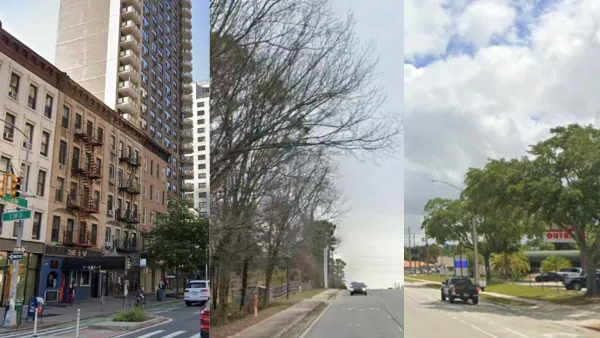
A Transect of sprawl
A development pattern this lifestyle-defining deserves its whole own classification system.

Meet CNU's New Executive Director
The Congress for the New Urbanism has announced the hiring of Rick Cole as the its new executive director, filling a role left vacant by the departure of Lynn Richards earlier this year.
CNU Climate Summit Highlights
Growing set of tools measures the impact of urban form on climate. Hazel Borys reviews highlights of the CNU Climate Summit held last weekend near Washington, D.C.

Planetizen Federal Action Tracker
A weekly monitor of how Trump’s orders and actions are impacting planners and planning in America.

‘Going backwards:’ Baltimore mayor, students rally against state's transit funding plan
Maryland's proposed six-year plan provides no funding for Baltimore’s BMORE bus program and reduces its road maintenance funding.

Detroit to transform waterfront with $2.2 billion investment
Developers will convert about 18 acres of unused parking lot space into civic spaces.

'I can't live in this:' Mississippi town besieged by power plant noise
A plant powering Elon Musk’s xAI data centers is subjecting Southaven, Mississippi residents to ceaseless noise.

Battered from federal attacks, Louisiana's offshore wind industry refuses to give up
State Representative Joe Orgeron expressed hope that the state could revitalize its wind industry once President Trump leaves office.

Data center developers are using lawsuits, cash offers to ‘overwhelm’ rural America
Newsrooms in five states worked together to uncover the tactics big tech developers use to buy land from reluctant communities.

FREE Course: Walkable City 1: Why Walkability?
After describing his path towards focusing on walkability as the essence of good planning, Jeff Speck marches through his five principal reasons for making more walkable places.
Reinventing Malls: Planning Alchemy—Turning Gray Fields Into Gold
The course focuses on the opportunities and imperatives that shape reinvention of mall sites.

One Hundred Miles
County of Mendocino
planning NEXT
The Architects Foundation
University of Cincinnati Online
Montrose County
Northern Illinois Transit Authority (NITA)
The Pocatello Development Authority