A new report from the Brookings Metropolitan Policy Program documents the rise in manufacturing employment during the recovery. Motoko Rich parses the findings, their geographical implications, and whether a long-term turnaround is in the cards.


While the uptick in manufacturing jobs can be felt in regions (largely metropolitan) across the country, with a total of 489,000 jobs added since the beginning of 2010, the findings of the new Brookings report may sound especially good to those in the South and Midwest, notes Rich.
"Southern regions remain relatively strong in manufacturing, with eight metropolitan areas on that list. But the usual narrative of an inexorably declining Rust Belt seems not quite accurate – or at least for now. 'It's possible that this bounce-back is just a bounce-back and won't last,' said Howard Wial, an economist and fellow at the Brookings Institution who was one of the authors of the report. 'But there is an opportunity for it to be more.'"
At Next American City, Matt Bevilacqua expands on the last point, and the prospects for long-term growth.
"Perhaps the study's most lasting implication is that manufacturers have increasingly fewer reasons to outsource their operations to foreign countries. Though labor costs in China still remain well below those in the U.S., they've been rising more rapidly than ever in recent years. Add that to transportation costs and the fact that the Chinese yuan has risen in value, and manufacturers have a pretty convincing case to think twice before following in Apple's footsteps."
Read the full story: Where Manufacturing Is Gaining
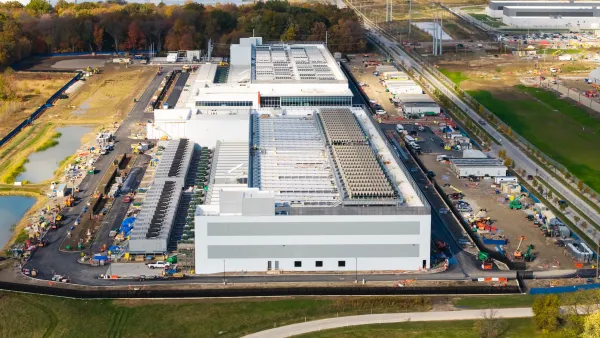
America’s Next Rust Belt Could be its Most Digitally Connected Cities
Research warns that the rise of AI is making some of the country’s most economically successful cities vulnerable to AI-driven decline.
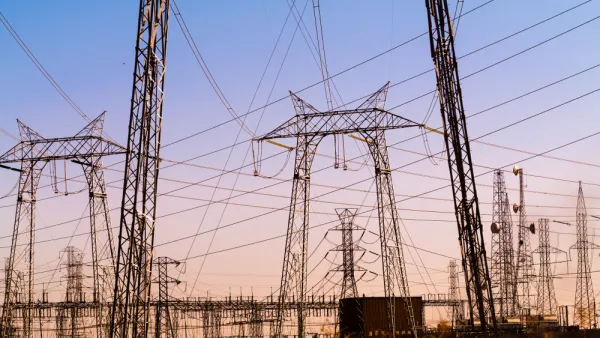
Power Demand is Surging in US
The U.S. has entered a new power paradigm according to a new energy analysis that warns of unprecedented new demands for power, largely from “new manufacturing, industrial, and data center facilities,” and the grid is not prepared for the surge.
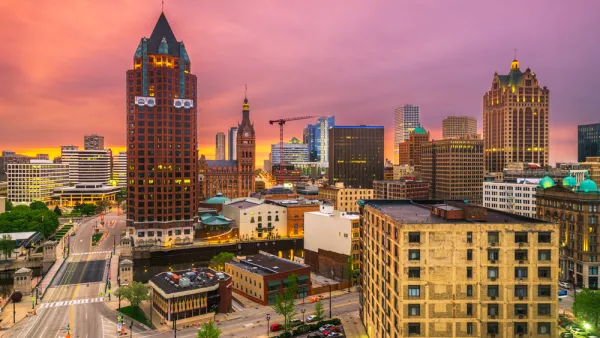
Milwaukee Sets Sights on a Million Residents
Zoning reform will be key to the Milwaukee Mayor Cavalier Johnson’s vision to almost double the city’s population.

Desperate measures: Advocates weigh draining Lake Powell to fill Colorado River
Draining the reservoir could reduce evaporation losses by a couple hundred thousand acre-feet.

Eastern Nebraska is running out of electricity
Data centers and electrification are straining eastern Nebraska’s grid, throttling economic development.

Malls are becoming the midtowns of the future
Mall and office park redevelopments are a generational opportunity to create new nodes of urbanity.

NYC breaks ground on anti-flooding infrastructure project
New York City's new system will reduce stormwater flows to local sewers by 90%.

One Kentucky town’s secret to affordable housing
The Smoketown Community Land Trust has already built seven affordable homes for community members.

Houston gains petal-shaped cooling infrastructure to make streets more ‘delightful’
The city has installed the pavilions along 15 blocks in Houston.

FREE Course: Walkable City 1: Why Walkability?
After describing his path towards focusing on walkability as the essence of good planning, Jeff Speck marches through his five principal reasons for making more walkable places.
Reinventing Malls: Planning Alchemy—Turning Gray Fields Into Gold
The course focuses on the opportunities and imperatives that shape reinvention of mall sites.

City of Rosemead
Rutgers University, Edward J. Bloustein School of Planning and Public Policy
One Hundred Miles
University of Michigan School for Environment and Sustainability (SEAS)
Hunter College, City University of New York (CUNY)
The Architects Foundation
City of Cambridge
Montrose County
The Pocatello Development Authority