United States
How to Unlock America's Bottom-Up Innovation
Thomas Friedman uses Chattanooga, Tenn. as an example of the "innovative thrust building, bottom-up, in the U.S. economy today." In an opinion piece for the Times, he urges leaders in Washington to help unlock America's embryonic growth surge.
Can Electric Cars Break Out of Niche Market?
Are you an environmentally aware, well educated, upper-middle class white man in your early 50s with a garage equipped with an electric outlet? If so, you meet the demographic to buy an electric vehicle. And that may be the EV's only potential group.
What Do America's Cities Stand to Lose from Rising Seas?
In an astonishing interactive graphic and accompanying opinion piece, Benjamin Strauss and Roberr Kopp outline several likely scenarios for the impact of rising seas on America's urban areas. New Orleans and Miami Beach could be completely submerged.
The New Promise of Urban Ecology
Courtney Humphries takes a look at recent federal investment in research on the complex interrelationship between human settlements and the natural environment.
Jockeying for a Gas Tax Increase from Fiscal Cliff Talks
It could be a win-win: Reducing the deficit, stimulating job creation, and avoiding the dreaded 'fiscal cliff'. Those pushing for a gas tax increase have joined other industries in using the need to raise and/or cut $500 billion to avoid recession.
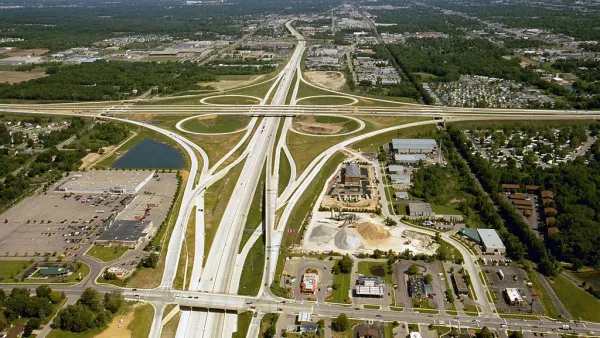
An Argument for Eliminating Federal Transportation Funding
Charles Marohn turns a critical eye toward the inertia of federal transportation policy and the shortsightedness of its most treasured investment. Since America seems to be stuck with a federal transportation bill, he suggests ways to make it work.
Adapting Modernist Landscapes for Contemporary Needs
Alex Ulam discusses the challenges of redesigning mid-century urban landscapes to accommodate contemporary tastes and social activities, drawing on examples like Dan Kiley's North Court at Lincoln Center and Boston City Hall Plaza.
Sandy Inspires Solar Companies to Rework System
Hurricane Sandy caused power outages that also prevented the use of hundreds of solar panels in the greater New York area. Solar companies are now working on decentralizing the system to make solar energy a backup source, reports Diane Cardwell.
Fighting Homelessness, or Fighting the Homeless?
Martha Bridegam investigates the aftermath of a forced eviction at a homeless encampment in San Francisco. Do the homeless deserve to be criminalized?
Fracking Debate Shifts To $
The public is increasingly showing support for hydraulic fracturing of oil and gas - and it's reflected at the ballot box as many pro-drilling candidates were elected. In fact, the debate has shifted from banning to what to do with new tax revenue.
Preserving History, Byte by Byte
Completed in 1791, the Mission Dolores is the oldest building in San Francisco. It has survived major earthquakes in the past, writes Alexis Coe, but preservationists are worried about its fate and have begun digitally preserving the landmark.
The Secret Plans for Containing New York's Next Housing Emergency
Hurricane Sandy exposed the need for New York City to be able to house large numbers of residents following natural disasters. Matt Chaban examines the Bloomberg administration's "secret" plan to build modular apartments out of shipping containers.
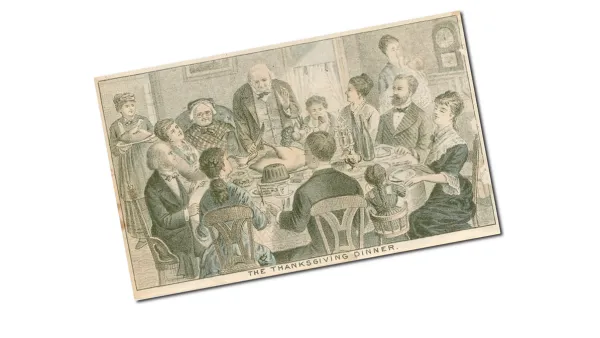
From 'Leave It to Beaver' to 'Modern Family'
Kaid Benfield takes a moment to reflect on the changing nature of the American household and how it will shape our cities in the coming years.

America's Best Food Trucks
In case you manage to save some room today, or need to take a break from Turkey salads, Turkey sandwiches, and Turkey soup over the weekend, let The Daily Meal's list of the "101 Best Food Trucks in America 2012" be your guide to awesome eats.
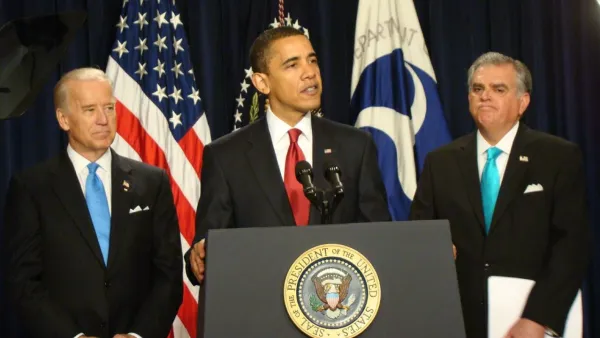
Leave Transit Projects to Transit Experts, Not Politicians
Stephen Smith sheds light on the problems of leadership holding back Obama's dream of high-speed rail.
Airport Expansion: A Losing Bet
Often depicted as drivers of local economies, airports have struggled to stay profitable as passenger air travel continues to languish. Steve Malaga presents the case that throwing money at this particular problem can actually make things worse.
How Can Architects Help in Disaster Relief?
Using post-Sandy New York as a case study, C.J. Hughes looks at the extent to which architects can be helpful in the immediate aftermath of a natural disaster.
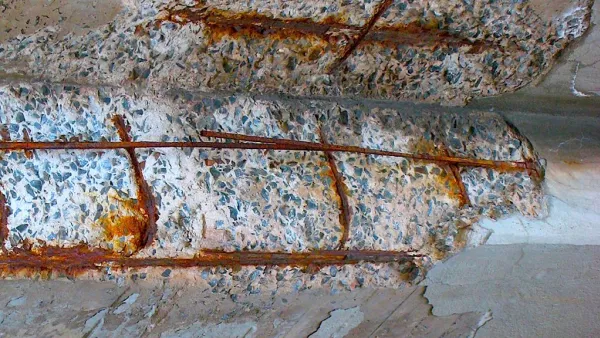
Why Do Americans Put Up With Decaying Infrastructure?
Compared to Europe's high-speed rail, paved roads, and underground power lines, America lags behind with its unreliable trains, potholes, and overhead power lines. Uwe E. Reinhardt questions why Americans put up with the decaying infrastructure.
'Climate Dividend' Proposed for California Utility Customers
California residential utility customers will receive a 'climate dividend', about $30 twice a year as part of the nation's first comprehensive 'cap & trade' program if the CA Public Utility Commission accepts a staff proposal at its Dec. 20 meeting,
A Roadside Distraction from the Destination
As the holiday travel season begins, Becky Krystal reminisces on rest stops encountered along family road trips and observes that "stops are evolving from small, flypaper-plastered restrooms into airy, high-tech travel plazas and welcome centers."

FREE Course: Walkable City 1: Why Walkability?
After describing his path towards focusing on walkability as the essence of good planning, Jeff Speck marches through his five principal reasons for making more walkable places.
Reinventing Malls: Planning Alchemy—Turning Gray Fields Into Gold
The course focuses on the opportunities and imperatives that shape reinvention of mall sites.

Eagle County Government
Harvard University Graduate School of Design
Nashville Planning Department
The Architects Foundation
University of Cincinnati Online
The Pocatello Development Authority
The Urban Renewal Agency of the City of Pocatello
Journal of the American Planning Association