Jason Jordan reports on last week's stunning vote in the House of Representatives to eliminate the American Community Survey (ACS) in its entirety.


The elimination of the ACS, should it come to pass, would be a significant blow to a variety of fields that rely on its data. The ACS, "is now the primary source of vital community data and [is] used by key
federal programs, like the Community Development Block Grants, in
determining funding allocations. It is also heavily relied upon by
businesses, economists, academics and, of course, planners," notes Jordan.
Approved by a 232 to 190 vote, the amedment to eliminate the American Community Survey (ACS) was offered by Rep. Daniel Webster (R-Fla.), following approval of an earlier amendment making ACS responses voluntary (a significant challenege to the accuracy of the data in itself).
According to Jordan, "Census supporters, ranging from corporations to equity organizations,
plan to mount an aggressive effort in the Senate to block the ACS
provisions."
Read the full story: A Bad Day in the House for the Census
In Defense of the American Community Survey
Recently Congress voted in favor of a GOP measure to scrap the American Community Survey, on the basis of its alleged intrusiveness. Now a backlash is growing in defense of the survey, even among some conservatives, reports Matthew Yglesias.

US Census Starts Using Postal Workers as Census Takers
A test program is using postal carriers to administer Census questionnaires.
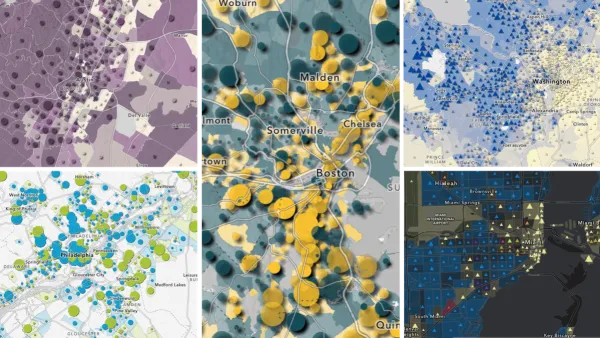
Explore US Demographics With the New ACS Atlas Collection
Esri's new ACS Atlas Collection offers interactive applications that visualize the latest U.S. demographic and socio-economic data, enabling users to explore over 175 curated web maps across various thematic areas.

Planetizen Federal Action Tracker
A weekly monitor of how Trump’s orders and actions are impacting planners and planning in America.

California plans to bury El Niño’s downpour
If the state plays its cards right, it may be able to store a billion acre-feet of El Niño’s water in aquifers.

Desperate measures: Advocates weigh draining Lake Powell to fill Colorado River
Draining the reservoir could reduce evaporation losses by a couple hundred thousand acre-feet.

US buildings threatened, destroyed by fires set to triple by 2060
Researchers found a high fire risk for socioeconomically vulnerable neighborhoods in the American West.

LA residents may be allowed to paint their own crosswalks
Councilwoman Katy Yaroslavsky put out a motion instructing the Los Angeles Department of Public Transportation to study the feasibility of allowing volunteers to paint crosswalks.

Dallas moves to overhaul its zoning code
The city's zoning reform will allow more multi-family and mixed-use developments.

FREE Course: Walkable City 1: Why Walkability?
After describing his path towards focusing on walkability as the essence of good planning, Jeff Speck marches through his five principal reasons for making more walkable places.
Reinventing Malls: Planning Alchemy—Turning Gray Fields Into Gold
The course focuses on the opportunities and imperatives that shape reinvention of mall sites.

City of Rosemead
Rutgers University, Edward J. Bloustein School of Planning and Public Policy
One Hundred Miles
Hunter College, City University of New York (CUNY)
The Architects Foundation
University of Cincinnati Online
City of Cambridge
Montrose County
The Pocatello Development Authority