Launched one year ago, ArtPlace works to accelerate creative placemaking by making grants and loans. So what does that actually look like on the ground? A new video from ArtPlace gives a glimpse of what they've accomplished so far.


ArtPlace is an unusual collaboration of foundations, banks and federal agencies including the NEA and HUD. In 2011, they awarded $11 million in grants to 34 "creative placemaking" projects, which they define as "putting art and culture at the heart of a portfolio of integrated strategies that can drive vibrancy and diversity so powerful that it transforms communities."
"Creative placemaking can be found in the Lunar New Year parade that The Wing Luke Asian Museum brought out into the streets of Seattle's ailing International District, and in the vision for a new town square for Miami based around the Adrienne Arsht Center for the Performing Arts," explains the ArtPlace blog entry.
This video shows some of the work they've funded in the past year:
Read the full story: ArtPlace Looks Back at 2011 and Forward to 2012

America's Top Small Town Art Scenes
ArtPlace, the creative placemaking collaboration, has announced its inaugural list of the top small town art scenes in the United States. The dozen communities selected for recognition include Crested Butte, CO, Vineyard Haven, MA, and Taos, NM.
The Top "ArtPlaces" in the U.S.
ArtPlace — a collaboration of foundations, banks, and federal agencies that supports creative placemaking projects — has released a new study that identifies 12 neighborhoods across the country as America's Top ArtPlaces 2013.
Sparking Creativity in Walkable Places
Happiness and health are generated or depleted by the way our neighbourhoods, towns, cities, and rural landscapes are developed. Creative placemaking adds to walkable urbanism by sealing the deal on physical, mental, and social well-being.

Amtrak, CN end decades-long dispute with eight-year agreement
The new operating agreement establishes an updated framework for the companies to work together, including processes to resolve disputes.

Judges permit Denver to divert 77,000 acre feet from the Colorado River for reservoir expansion
Overuse and climate change have caused the Colorado River’s water levels to plummet.
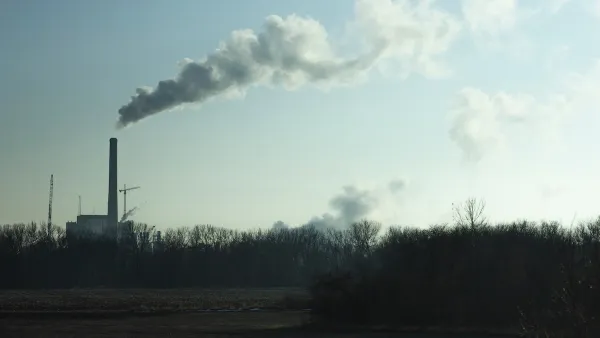
Nation's most wind-powered state turns to coal as data centers increase energy demand
For the first time in decades, Iowa has increased its generation of coal power.

Boston has spent millions making the Green Line more accessible — and there’s no end in sight
While the city has invested millions into expanding and adding platforms to the Green Line to make it more accessible, new train cars set to arrive next year will be too tall for disabled passengers to board without raising the current platforms.

Idaho may see an 18% drop in federal surface transit funding — the largest estimated cut in the US
Transit systems in rural communities are much more reliant on federal funding to provide their services.

How ‘post-disaster gentrification’ alters neighborhoods after natural calamities
After hurricanes, fires or other calamities, the original residents of a community are often replaced by younger, wealthier residents.

FREE Course: Walkable City 1: Why Walkability?
After describing his path towards focusing on walkability as the essence of good planning, Jeff Speck marches through his five principal reasons for making more walkable places.
Reinventing Malls: Planning Alchemy—Turning Gray Fields Into Gold
The course focuses on the opportunities and imperatives that shape reinvention of mall sites.

City of Wisconsin Rapids
Harvard University Graduate School of Design
KFH Group Inc.
The Architects Foundation
University of Cincinnati Online
The Pocatello Development Authority
The Urban Renewal Agency of the City of Pocatello