United States
Why 'Affirmatively Furthering Fair Housing' Matters
An interview with a leading academic on the subject of fair housing offers perspective on the new Affirmatively Furthering Fair Housing rule created by the Department of Housing and Urban Development.
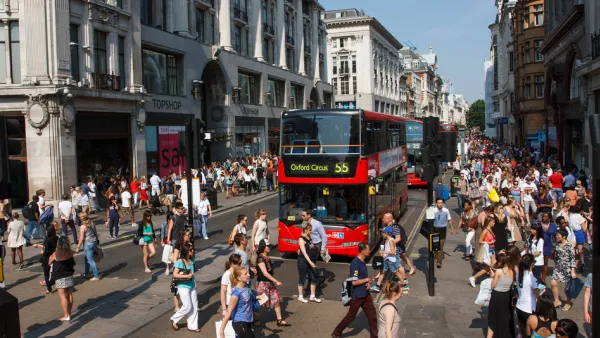
7 Principles for Designing Safe Cities
A World Research Institute report offers seven prescriptions for designing safer cities. At the top of the list: avoid sprawl.
Community is Common Ground for Liberals and Conservatives
Supporters of New Urbanism may live across the political spectrum, but they all want to live in traditional neighborhoods.
8 Winners Selected for the 2015 Transportation Planning Excellence Awards
The federal government surveyed the country to recognize the best (multi-modal) transportation planning projects.
Selling the Nation's Strategic Assets to Fund Road Construction
What happened to the "strategic" in the nation's Strategic Petroleum Reserves? As Politico reveals, heretofore these oil reserves have only been sold when the nation's oil supply was threatened. Republicans leaders now view the SPR as a cash cow.
Improving Mental Health May Be As Easy As a Walk in the Park
A new study offers evidence that walking in a natural setting is more beneficial to mental health than walking in an urban setting.
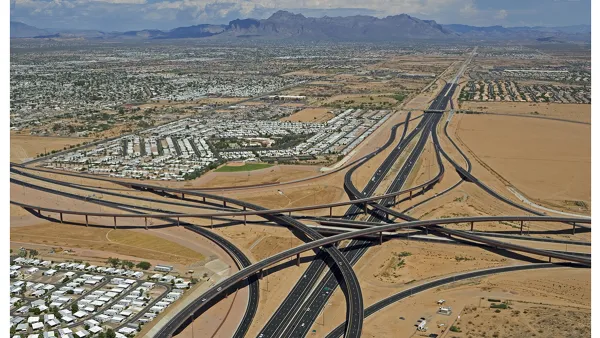
Friday Eye Candy: Freeway Interchanges From Far Above
High quality, high altitude images of that marvel of modern engineering: the freeway interchange.
Friday Eye Candy: Mapping the Most Epic Road Trips in American Literature
A map for good reads and long drives to new places.
On the Limitations—and Unanswered Questions—of Housing Research
Limitations of data collection mean many questions about housing consumption simply cannot be answered.
New App from the U.S. EPA Maps Environmental Justice
A publicly available web tool allows access to maps that overlay environmental impacts and the populations they impact (or the populations that manage to avoid such impacts, for that matter).
Democrats Object to 'Bipartisan' Senate Transportation Reauthorization Bill
We look at what happened in the Senate on Tuesday when the six-year DRIVE Act, relying on a variety of non-user fee revenue mechanisms to finance the Highway Trust Fund shortfall for three years, failed a procedural vote, and where it goes next.
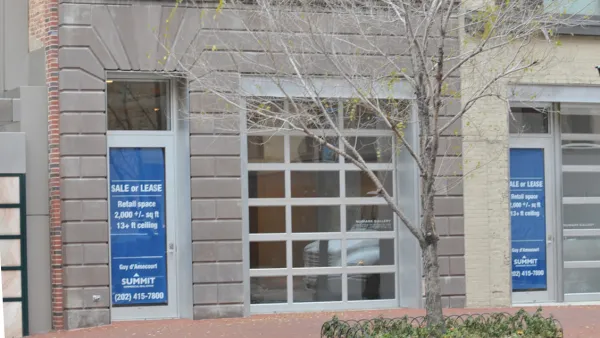
When Mixed Use Goes Too Far
A recent op-ed by ULI Foundation Governor and developer John McNellis argues that too many cities are forcing mixed-use developments into neighborhoods, enabling vacancies and blight in the process.
Meet the Uber for Kids
With extra layers of security and a pricing model that differs from other transportation network companies, HopSkipDrive is looking to tap into the crucial "busy parents" demographic.

On the Legacy and Unfulfilled Potential of Shopping Malls
The origin story of one of the definitively American typologies—the shopping mall—is one of unintended consequences run amok. Could the next chapter of this story come closer to the author's intention?
The Past and Future of Architecture Criticism
How much do the challenges of the built environment require a thoughtful and informed media? What is the role of traditional architecture criticism in the world of aggregators, snark, and armchair urbanists?

How Data Privatization Will Change Planning Practice
Planners will be presented with new challenges and opportunities in a new era of data-enhanced government.
House and Senate Republicans Differ on Must-Pass Transportation Funding Bills
The House passed their patch bill on July 15—it's now the Senate's turn at bat on highway funding. Both houses are controlled by Republicans but they appear to be pitching for different teams. A bill must pass by July 31 or road funding ceases.
Citi Bike Tackles Biking's Gender Gap
New York City's bike share program, Citi Bike, enjoys a greater percentage of female cyclists that the city as a whole, but still only reaches 25 percent. The problem is typical of bike share programs in the United States.
The 'Unlikely Source' of Hope for Affordable Housing: the Private Sector
The chair of the Community Development Trust makes the case for the new potential of private sector investments in affordable housing.
5 Resilience Plans for the 21st Century
Resilience is one of the hottest buzzwords in contemporary planning, and planners in communities around the country are only beginning to realize the multiple benefits of the attention and funding devoted to resilience plans.

FREE Course: Walkable City 1: Why Walkability?
After describing his path towards focusing on walkability as the essence of good planning, Jeff Speck marches through his five principal reasons for making more walkable places.
Reinventing Malls: Planning Alchemy—Turning Gray Fields Into Gold
The course focuses on the opportunities and imperatives that shape reinvention of mall sites.

One Hundred Miles
County of Mendocino
planning NEXT
The Architects Foundation
University of Cincinnati Online
Montrose County
Northern Illinois Transit Authority (NITA)
The Pocatello Development Authority









