A recent study suggests that people consider transit proximity to be more flexible than planners often allow.


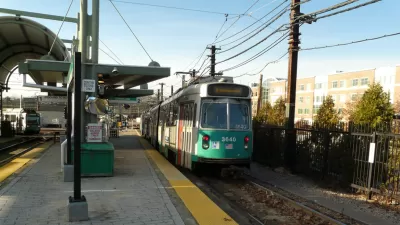
Eric Jaffe reports: "New research, set to be presented Monday at the 94th Annual Meeting of the Transportation Research Board, suggests that some cities indeed might be selling their TOD footprint short."
The study, led by Arthur Nelson of the University of Arizona, "analyzed the impact that proximity to a light rail station had on office rents in metropolitan Dallas," finding that "a quarter of the rent premium ('not a trivial amount,' they submit) extended nearly a mile away from transit."
"As expected, Nelson and company found that rent premiums decreased farther away from a DART station. A quarter of the premium disappeared after a quarter-mile, half disappeared at about .56 miles, and 75 percent had disappeared by .93 miles (below). But that means a quarter of the rent premium extended almost a full mile away from transit—and the researchers detected evidence of a premium as far away as 1.85 miles from light rail stations."
Jaffe explains of the implications of the study and mentions a previous study with similar findings in the full article, linked below.
Read the full story: What Does Living 'Close' to Transit Really Mean?


Can Upzoning Increase Housing Supply and Affordability?
Increasing allowable densities and reducing parking requirements are important strategies for achieving long-term planning goals, but to succeed they must be applied to large areas.
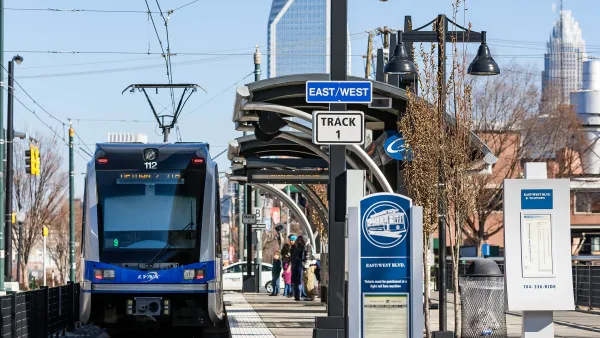
The triumph and tragedy of light rail in Charlotte
Like the iPhone, Charlotte's Blue Line represents a missed opportunity for the public to recoup the value it created.

Amazon launches cargo bike deliveries in DC
The e-commerce giant is deploying micromobility devices including cargo bikes and mopeds in several global markets to reduce the need for larger trucks and vans for last-mile deliveries.

Planetizen Federal Action Tracker
A weekly monitor of how Trump’s orders and actions are impacting planners and planning in America.

‘Going backwards:’ Baltimore mayor, students rally against state's transit funding plan
Maryland's proposed six-year plan provides no funding for Baltimore’s BMORE bus program and reduces its road maintenance funding.

Detroit to transform waterfront with $2.2 billion investment
Developers will convert about 18 acres of unused parking lot space into civic spaces.

HUD modernizes 50-year-old manufactured housing framework
The Next Generation Manufactured Housing Action Plan establishes new energy-efficiency standards for manufactured homes, and new guidelines for anchoring them.

New CA housing laws tear down development red tape
Recently-signed legislation makes building starter homes and ADUs cheaper and faster in California.

Metrolink finishes first expansion in 20 years
The transit agency is now one of very few in the United States to connect two major airports.

FREE Course: Walkable City 1: Why Walkability?
After describing his path towards focusing on walkability as the essence of good planning, Jeff Speck marches through his five principal reasons for making more walkable places.
Reinventing Malls: Planning Alchemy—Turning Gray Fields Into Gold
The course focuses on the opportunities and imperatives that shape reinvention of mall sites.

One Hundred Miles
County of Mendocino
planning NEXT
The Architects Foundation
University of Cincinnati Online
Montrose County
Northern Illinois Transit Authority (NITA)
The Pocatello Development Authority