Oregon
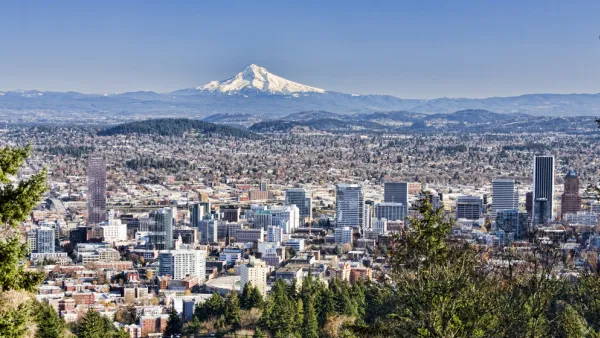
Report: Out-Migration Grows in Seattle and Portland
The findings of a new report from United Van Lines along with Michael Stoll, an economist at University of California Los Angeles, show surprising trends from this summer's prime moving months, especially in the Pacific Northwest.
Key to Successful Parks: More Female Visitors
The example of Holladay Park in Portland is examined for lessons in improving public spaces through the help of private sector consultants.
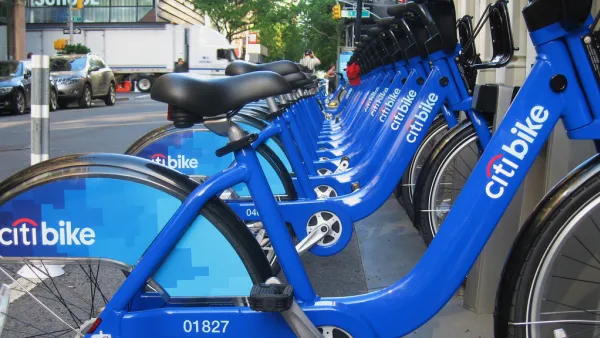
The United States' Top Large City for Biking Is...
Portland (top city in 2012)? Minneapolis (top city in 2010)? No, it's the Big Apple! New York City leaped from #7 in 2012 to the top spot this year for cities with populations of 100,000 or greater.
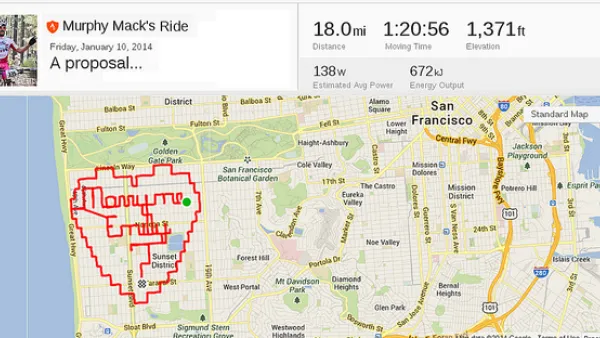
The Power of Public-Private Partnerships: Mobile Phone Apps and Municipalities
Private, crowdsourced mobile phone applications addressing urban mobility collect troves of data on how cities flow. So how can municipalities tap into these databases to accurately understand the movement of their citizens?
Developers Fail to Meet Affordable Housing Quota in Portland's Pearl District
Despite a contractual obligation, Hoyt Street Properties under-built 258 affordable housing units in Portland's Pearl District. The city has to react.
Portland Building First Multi-Modal Bridge—No Cars Allowed
To connect the South Waterfront area with the rest of the city, Portland is building a multi-modal bridge accommodating tram lines, streetcars, light rail lines, bicyclists, and pedestrians, but not automobiles.
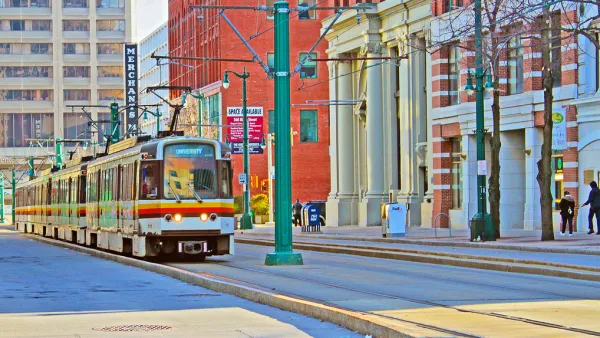
Editorial: Streetcar Funding Better Spent Elsewhere
The Economist introduces the concept of the streetcar in America—its history and its recent revival—before laying the arguments in support of, and against, the role of streetcars in urban revival.
Austin Voters To Decide on Light Rail and Freeway Bond Measure
The Austin City Council unanimously approved a $1 billion bond measure on August 7, subject to voter approval on Nov. 4 to provide $600 million toward a $1.4 billion, 9.5-mile light rail line and $400 million for freeway improvements.
Poor Planning Decisions Exacerbate Wildfires—Should Locals be Held Accountable?
A new study by the union of Concerned Scientists faults local development policies that place homes in wildfire-prone areas for the increasing cost of wildfires. Should local agencies split the bill for the risks they've permitted?
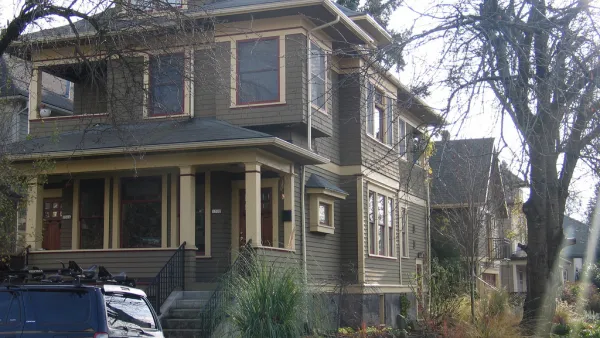
Study: Portland's Accessory Dwelling Units Reduce Car Impacts
Since Portland began subsidizing accessory dwelling units (ADU) by waiving development fees, construction of ADUs have increased to a pace of more than 100 a year. A new study finds additional benefits in the low impact of ADUs on neighborhoods.
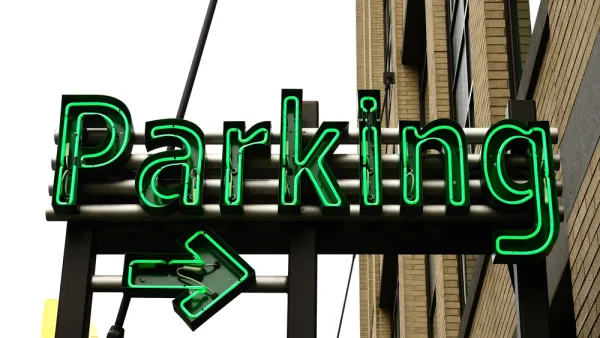
Portland Shows How to Create More Downtown Parking (Without Building Any)
Dynamic pricing is not the only route to increasing parking availability. Better management of disabled placards at metered spaces may be an easier and more effective strategy. Implemented on July 1, Portland's policy is showing dramatic results.
Portland Businesses Advocate for Road Diet
Angie Schmitt covers Bike Portland's article on store owners teaming up to bring road diet as a means to improve business.
Study: Oregon Bikers Abide Red Lights
Move aside, myth of the reckless biker who flouts the law at every possible junction.
U.S. Supreme Court Approves California's Low Carbon Fuel Standard
A key regulation in California's war on global warming emissions withstood a major court challenge by the energy industry—both oil and corn ethanol—when the U.S. Supreme Court declined to hear their challenge to an Appeals Court ruling on June 30.
Bicycle-Friendly Intersection Proposed to Attract Riders
A Portland urban planner proposes a new street intersection design to make cycling more safe and to attract cyclists.
A Walk in the Woods Just Got Expensive in Washington and Oregon
The largest private owner of timberland in Washington and Oregon is now charging access fees ranging from $75 to $550 depending on the permit area. The $30 fees for National Forest and state parks passes look cheap by comparison.
Who Should Pay for Highways: Motorists or Oil Companies?
A new transportation funding option proposed by Rep. Peter DeFazio (D-Ore.) would repeal the 18.4-cent gas tax, unchanged since 1993, with a "small" tax levied against oil companies on each barrel of oil used to make gasoline.
The Inside Scoop on Portland's Street Signal System
A new installment of the BikePortland podcast reveals the technical considerations in the city’s signal system that contribute to bike and pedestrian safety.
Study Evaluates Protected Bike Lanes in the United States
The National Institute for Transportation and Communities released a new study this week called "Lessons from the Green Lanes: Evaluating Protected Bike Lanes in the U.S."
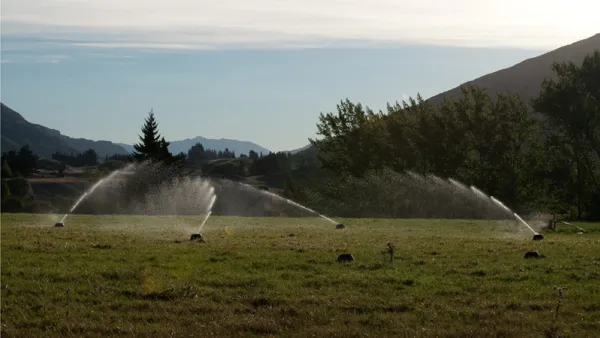
What Urban Planners Fail to Grasp in Climate Action Plans
Climate mitigation and adaptation have become de rigeur aspects of urban planning for most cities, according to results from MIT's international Urban Climate Change Governance Survey. What's missing in most plans is the link to economic development.

FREE Course: Walkable City 1: Why Walkability?
After describing his path towards focusing on walkability as the essence of good planning, Jeff Speck marches through his five principal reasons for making more walkable places.
Reinventing Malls: Planning Alchemy—Turning Gray Fields Into Gold
The course focuses on the opportunities and imperatives that shape reinvention of mall sites.

City of Rosemead
Rutgers University, Edward J. Bloustein School of Planning and Public Policy
One Hundred Miles
University of Michigan School for Environment and Sustainability (SEAS)
Hunter College, City University of New York (CUNY)
The Architects Foundation
City of Cambridge
Montrose County
The Pocatello Development Authority









