Despite steady increases in ridership since opening in 2007, a proposed expansion of the Lane Transit District’s EmX bus rapid transit system between Eugene and Springfield is meeting local resistance.


Since its launch in 2007, the ridership for the EmX bus rapid transit system connecting Springfield and Eugene in Oregon has seen consistent growth. According to reporter Edward Russo, “Since [2007], total EmX ridership has increased from 1.4 million annually to more than 2 million.” EmX boarding rates perform better than the entire LTD system, which, in total, "ranks 20th out of 631 reporting transit districts."
The line’s recipe for success, according to sources quoted in the story, relies on efficient service, well-designed stations, and a steady stream of added capacity:
- “Ridership got a sizeable boost after the second segment, from downtown Springfield to the Gateway area of Springfield, was added in 2011.”
- “[Dorothy Kepler] praised the EmX rapid transit service, mainly because the sleek, trainlike buses arrive at stops every 10 minutes on weekdays.”
- “The new station ‘spurred business growth on South A,’ Egan said. ‘That station is very busy.’”
But the third leg, a proposed west Eugene route, has provoked resistance, including a lawsuit, over high costs: “…the group Our Money Our Transit sued the Federal Transit Administration, contending the federal agency erred by approving $75 million in federal funding for the project based on flawed environmental studies and without carefully considering other alternatives.”
Read the full story: EmX is up to speed, but are bumps near?

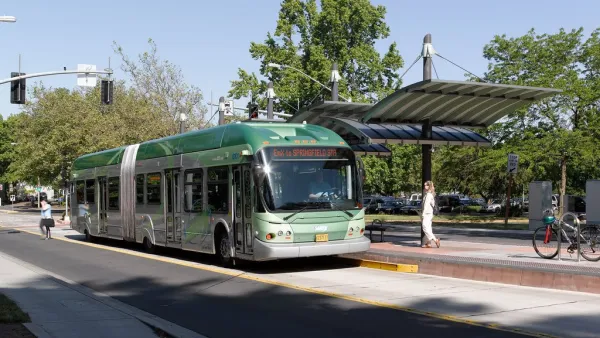
Oregon Governor Kicks Off State Gas Tax Campaign in Eugene's Bus Rapid Transit
A transportation funding proposal including a gas tax will be prepared for the 2017 legislative session. The media event in the EmX bus highlighted the need to have continuous, dedicated lanes for the Eugene-Springfield bus rapid transit system.
BRT Boom in U.S.
A new study says that Los Angeles, Cleveland, Las Vegas, Eugene and Pittsburgh are leading the surge with the best bus rapid transit (BRT) systems in the nation.
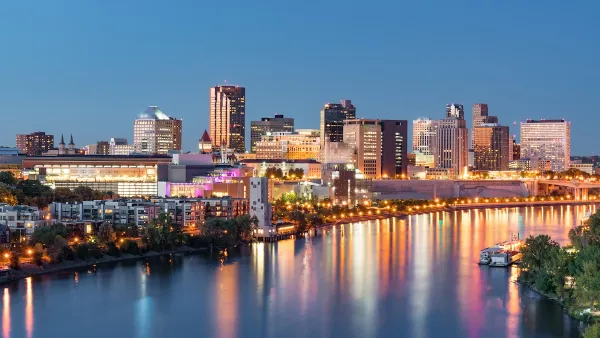
Officials Kill St. Paul Streetcar, BRT Proposals
The proposed transit lines would have linked the St. Paul airport, downtown, and the Mall of America.

Planetizen Federal Action Tracker
A weekly monitor of how Trump’s orders and actions are impacting planners and planning in America.

Amtrak, CN end decades-long dispute with eight-year agreement
The new operating agreement establishes an updated framework for the companies to work together, including processes to resolve disputes.

Judges permit Denver to divert 77,000 acre feet from the Colorado River for reservoir expansion
Overuse and climate change have caused the Colorado River’s water levels to plummet.

New bill requires California data center developers to create water scarcity plans
Gov. Gavin Newsom recently signed 7 bills intended to give California communities more information about the impact of proposed data centers.

San Diego may kill one-third of its bus routes as budget crisis looms
Under the city's proposed plan, 21% of Metropolitan Transit System riders would lose access to transit services.

Philadelphia to invest $2 billion into upgrading city airports as PHL places last in customer satisfaction
Modernizations to Philadelphia's airports will include baggage system upgrades and a new automated parking garage guidance system.

FREE Course: Walkable City 1: Why Walkability?
After describing his path towards focusing on walkability as the essence of good planning, Jeff Speck marches through his five principal reasons for making more walkable places.
Reinventing Malls: Planning Alchemy—Turning Gray Fields Into Gold
The course focuses on the opportunities and imperatives that shape reinvention of mall sites.

City of Wisconsin Rapids
Harvard University Graduate School of Design
KFH Group Inc.
The Architects Foundation
University of Cincinnati Online
The Pocatello Development Authority
The Urban Renewal Agency of the City of Pocatello