Urban Development
Demolish a Ballpark to Save a Downtown?
While many cities are seeking to build large entertainment venues to revive their downtowns, St. Petersburg is taking the opposite track. Stephen Nohlgren examines whether Tropicana Field can be the city's next big urban mixed use development.
The Great Public Facility Sell-Off
In need of at least $230 million for system-wide repairs, NYC libraries, which receive less than $15 million a year from the city, look to strike land deals with private developers, report Joseph Berger and Al Baker.
Taking the Fun out of Entertainment Districts
Using Omaha's Old Market neighborhood as an example, Nathaniel M. Hood calls for an end to the urban "Entertainment District" - the common revitalization tool that produces a "single-use monoculture" that alienates families and baby boomers.
Filmmaker Tells Her Side of Williamsburg's Gentrification Story
As SHoP unveils massive redevelopment plans for the Domino Factory site in Williamsburg, Su Friedrich rails against the gentrification that has already transformed the neighborhood in her film Gut Renovation, which premiered at Film Forum last week.
Growing Disparities Belie Chicago's Bloom
Recent exultant headlines about downtown's astounding growth overlook Chicago's troubling bifurcation into two cities — "one where optimism abounds, one where hope and opportunity are hard to find," writes Marilyn Katz.
Starchitects Jump on Miami Building Boom
Zaha Hadid, Rem Koolhaas, Herzog and de Meuron, and Bjarke Ingels are some of the big names designing projects for Miami's hot again real estate market. Can their bold designs ensure that this building boom has legs?
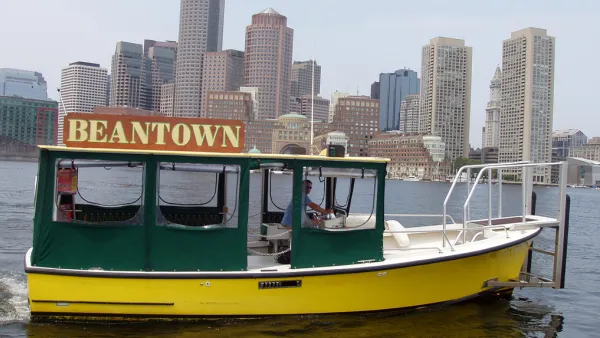
Thriving Industries and Suburban Inversion Drive Beantown Boom
The construction cranes dotting South Boston's waterfront are just one sign of the city's booming real estate market. Vibrant industries seeking to lure young professionals to downtown workplaces are helping to drive development.
An Incremental Approach to Slum Improvement
Flavie Halais looks at both successful and unsuccessful cases of alleviating slum conditions on three continents. For the best results, practitioners must be more adept at problem solving and creativity than pure design.
Should D.C. Leave Parking to Developers?
AAA has been outspoken in their opposition to the parking reforms being debated in Washington D.C. For Matthew Iglesias, parking is a "privilege," not a right.
Bipartisan Bill Aims to Boost Brownfield Redevelopment
This week, a bipartisan group of U.S. Senators introduced the Brownfields Utilization, Investment and Local Development Act of 2013 (BUILD Act), a bill aimed at assisting local communities in remediating and redeveloping contaminated sites.
In San Francisco, Massive Waterfront Projects Bring Transportation Challenges
A new arena for the NBA's Warriors and a $1.6 billion mixed-use development south of AT&T Park are among the projects planned for San Francisco's waterfront. But a transit system already at capacity presents a formidable challenge for planners.
Participation Makes for Successful Placemaking
In a compelling entry into the public dialog around placemaking, Project for Public Spaces argues that people, rather than merely places, create vibrancy in a community.
Santa Monica Unearths Its Civic Heart
Terry Pristin examines two pivotal projects currently under construction in Santa Monica that are poised to reconnect the city's historic civic center to the vibrant, walkable beachfront community.
One Detroit Rises, While the Other Falls
Monica Davey describes the divergent paths of Detroit's public and private sectors.
Despite Recent Progress, L.A. Leaders Clamor for More Permitting Reform
Efforts to reform L.A.'s permitting process are proceeding slower than many had hoped, reports Ryan Vaillancourt, and city leaders are looking to make more drastic changes. Could the city's planning department be consolidated as part of the effort?
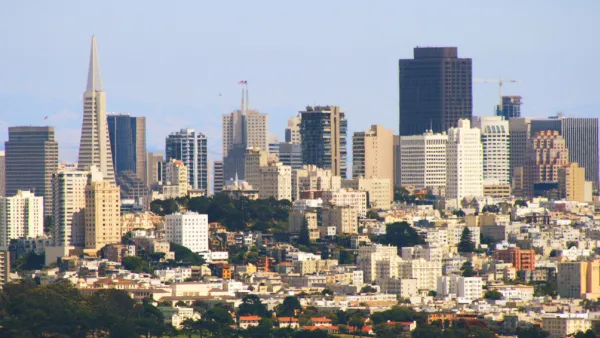
San Francisco Grapples With How to Accommodate Astonishing Growth
Over the next 20 years, San Francisco is expected to add 150,000 new residents, or nearly 20% of its existing population. John Wildermuth looks at the "hard choices" confronting the city as it plans for its future.
An Ode to 'Patient Urbanism'
Building incrementally over time allows cities and towns to develop more interesting landscapes while incurring less debt. The slow evolution of Seaside, Florida is a prime example of the benefits of 'patient urbanism.'
Refined Plans Unveiled for Brooklyn's Domino Sugar Site
Alan G. Brake outlines the redesigned plans to develop the site of the historic Domino Sugar refinery along Brooklyn's East River waterfront. The $1.5 billion plan is the latest, and perhaps last, turn in the site's tortured redevelopment saga.
In Toronto, Urban Amenities Lag Behind Condo Boom
Since it began in 1999, Toronto's condo boom has added 120,000 units to the city and, in the process, transformed its urban landscape. City leaders are just now beginning to address how to accommodate these new residents.
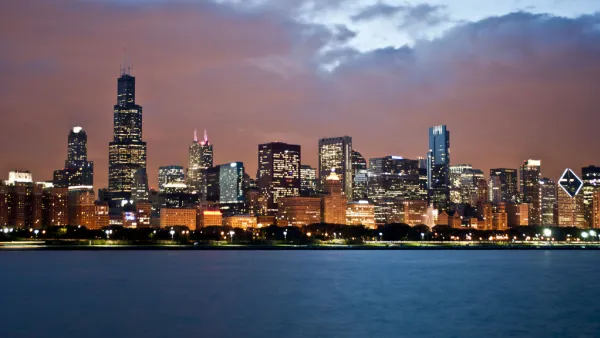
Downtown Chicago: America's Hottest Urban Center
With its surging job and population growth, and high retail sales, downtown Chicago is outperforming the suburbs for the first time in decades. Perhaps more than any other city in the country, it reflects the inversion of the post-war paradigm.

FREE Course: Walkable City 1: Why Walkability?
After describing his path towards focusing on walkability as the essence of good planning, Jeff Speck marches through his five principal reasons for making more walkable places.
Reinventing Malls: Planning Alchemy—Turning Gray Fields Into Gold
The course focuses on the opportunities and imperatives that shape reinvention of mall sites.

Greater Baltimore Committee
Eagle County Government
Harvard University Graduate School of Design
The Architects Foundation
University of Cincinnati Online
The Pocatello Development Authority
The Urban Renewal Agency of the City of Pocatello
Journal of the American Planning Association