Damien Newton reports on L.A. Mayor Antonio Villaraigosa's creation of a Transit Corridors Cabinet (TCC) to coordinate the work of all City departments and agencies with the goal of producing a "more transit-oriented Los Angeles."


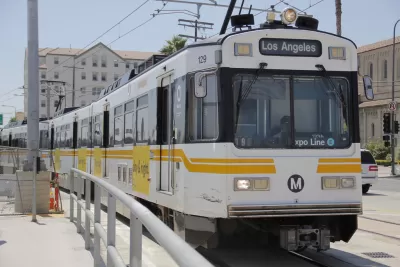
One of the centerpieces of Villaraigosa's legacy as mayor has been the elucidation and implemention of his vision for transforming Los Angeles "from the 'car capital of the world' to a transit-rich metropolis," with development focused on creating "elegant density" around transit. Now that the mechanism for funding the expansion of the region's transit network is in place (albeit at a slower pace than he had hoped for), Villaraigosa is pointing the city's bureaucratic apparatus in the direction of spurring transit-oriented planning and development.
"In an Executive Directive last week, Mayor Antonio Villaraigosa called on the City’s General Managers to create the Los Angeles Transit Corridors Cabinet (TCC), a central entity to ensure all City departments and agencies coordinate, collaborate, and communicate their efforts to bring about a more transit-oriented Los Angeles," says Newton.
The move comes not a moment too soon for a city that has historically built transit first, and only thought about how to leverage those investments for development afterwards. At least one transit advocacy group is cheering the Mayor's efforts.
“Move L.A. applauds Mayor Villaraigosa’s initiative in creating the TOD Corridors Cabinet and charging it with ensuring a heightened collaboration among city departments and its communities take full advantage of the opportunities created by LA Metro’s investments in our county’s transit system," writes Denny Zane, the Executive Director of Move L.A. "The Cabinet will help everyone get on the same page about TOD, which offers LA County real potential for building livable, equitable, affordable, walkable, bikeable, healthy, green neighborhoods.”
"While the announcement produced a collective yawn in the media," notes Newton, "if the cabinet works together and with communities to create an implement visions for better streets and the process is continued by Villaraigosa’s replacement in 2013, this could mark a major turning point in the city’s planning history. With the current and coming transit boom, better planning is needed for buildings that work in and for the community and streets that better serve all users."
Read the full story: Villaraigosa to Department Heads: It’s Time to Work Together on T.O.D. Planning

LA Metro Opposes TOD Law, Fearing Backlash to Transit Expansion
Metro wants an exemption from California’s new housing law, despite the law’s potential to increase ridership by putting more housing near transit stations.

California TOD Law Gives NIMBYs a new Weapon Against Bus Lanes
A new law that allows rezoning for higher density near transit lines is fueling opposition to a Burbank bus rapid transit line.
LA Parking Reform is Bearing Fruit
Changes to minimum parking requirements near transit lines are spurring more residential development with little or no on-site parking.

Planetizen Federal Action Tracker
A weekly monitor of how Trump’s orders and actions are impacting planners and planning in America.

Eastern Nebraska is running out of electricity
Data centers and electrification are straining eastern Nebraska’s grid, throttling economic development.

Study reveals best places in the U.S. for cycling, walking
New research from Streetlight Data examines bicycle and pedestrian miles per capita in the 100 largest U.S. cities by population.

DSA members accuse Mamdani of 'abandoning values' over housing redevelopment
New York City's mayor plans to replace about 2,000 units of public housing with private, mixed-income housing.

All sides of BRT debate unhappy with CDOT’s most recent move
The Colorado Department of Transportation is no longer considering center-running bus lanes for Colorado Boulevard.

Massachusetts bogs generate both power, and cranberries
Putting solar panels above farmland is one way Massachusetts is advancing toward its goal of net-zero carbon emissions by 2050.

FREE Course: Walkable City 1: Why Walkability?
After describing his path towards focusing on walkability as the essence of good planning, Jeff Speck marches through his five principal reasons for making more walkable places.
Reinventing Malls: Planning Alchemy—Turning Gray Fields Into Gold
The course focuses on the opportunities and imperatives that shape reinvention of mall sites.

City of Rosemead
Rutgers University, Edward J. Bloustein School of Planning and Public Policy
One Hundred Miles
University of Michigan School for Environment and Sustainability (SEAS)
Hunter College, City University of New York (CUNY)
The Architects Foundation
City of Cambridge
The Pocatello Development Authority
The Urban Renewal Agency of the City of Pocatello