For the past eight months, the Tampa community has shared their ideas for improving the city in public meetings and through social media. The resulting InVision Tampa plan will orient a more livable downtown along the Hillsborough River.


"Our goal is that 10 years from now, that waterfront is the center of our downtown, not the western edge," said Mayor Bob Buckhorn upon completion of the InVision Tampa plan. Based on feedback from over 800 residents, businesses, and property owners, along with online comments from more than 1,000 people, the detailed plan focuses on the "center city," which encompasses the central business district, Channel District, Ybor City, North Hyde Park, University of Tampa, West Riverfront, Old West Tampa, Tampa Heights and V.M. Ybor. The vision crafted with the help of consultants from AECOM is for "a community of livable places, connected people and collaborative progress that embraces and celebrates its river and waterfront."
"The center city plan is really about continuing on a path that we believe that Tampa is already on to become a more livable place, a place with strong neighborhoods, a diversified and healthy downtown with many ways to connect to the river and to the water," said Pete Sechler, AECOM project manager. InVision Tampa includes an outline of five goals to "reimagine and refocus activity along the Hillsborough River," "create livable neighborhoods in the center city," "strengthen links between downtown and nearby neighborhoods, "make pedestrians and cyclists feel safe and welcome," and "create urban patterns that support transit." The plan was well-received by the community at a meeting Tuesday, and the city will hold a series of discussions on the corridor's possibility for rail transit next month.
InVision Tampa is the first of a three-part strategy to redevelop Tampa's urban core. The other two parts are being developed by the Urban Land Institute and the Tampa Housing Authority. Experts from the institute have been looking at development opportunities in downtown and along the river, while the housing authority and city are conducting a detailed study of 140 acres west of the river, reports Richard Danielson.
Read the full story: Tampa plan charts downtown's future along the Hillsborough River
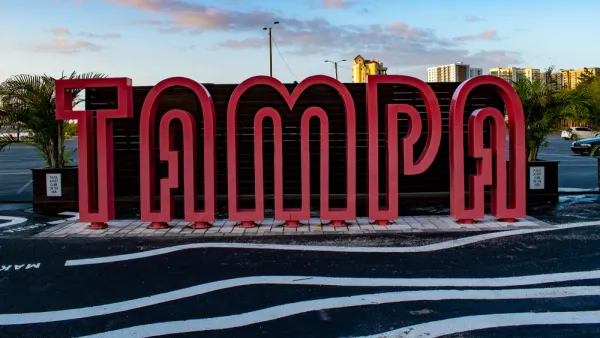
From Vacant to Catalytic: Tampa to Upgrade City-Owned Property
West Tampa, among the Hillsborough River, is already gaining development momentum, and new plans to develop a city-owned property on the river could add fuel to the fire.
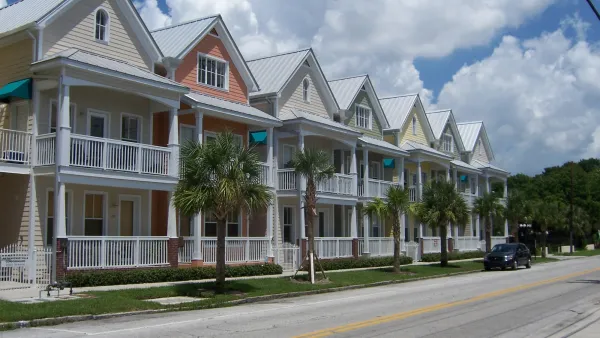
Tampa Awards 60% of Tampa Infill Housing Program Lots to Black Builders
The program encourages private-public partnerships that develop new, attainably priced housing on vacant and blighted lots.
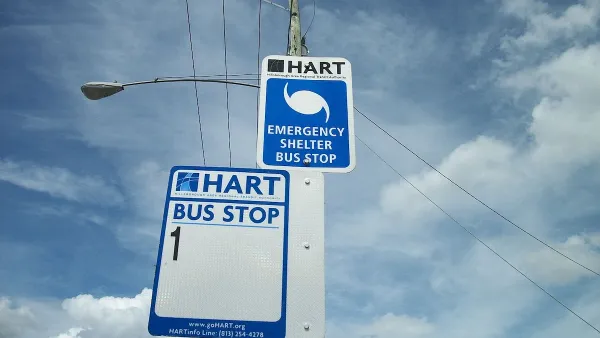
Popular Tampa Bus Route Going Fare-Free
The initiative, which starts on January 5, is funded by parking fees.

Planetizen Federal Action Tracker
A weekly monitor of how Trump’s orders and actions are impacting planners and planning in America.

California plans to bury El Niño’s downpour
If the state plays its cards right, it may be able to store a billion acre-feet of El Niño’s water in aquifers.

Desperate measures: Advocates weigh draining Lake Powell to fill Colorado River
Draining the reservoir could reduce evaporation losses by a couple hundred thousand acre-feet.

Los Angeles just elected an urban planner as its mayor
Transportation analysts are optimistic that Raman will be more aggressive in addressing transit issues than Bass.

Mamdani’s pied-à-terre tax survives legal challenge
A panel of judges found that the plaintiffs failed to demonstrate injury as a result of New York City's implementation of the tax.

Eastern Nebraska is running out of electricity
Data centers and electrification are straining eastern Nebraska’s grid, throttling economic development.

FREE Course: Walkable City 1: Why Walkability?
After describing his path towards focusing on walkability as the essence of good planning, Jeff Speck marches through his five principal reasons for making more walkable places.
Reinventing Malls: Planning Alchemy—Turning Gray Fields Into Gold
The course focuses on the opportunities and imperatives that shape reinvention of mall sites.

City of Rosemead
Rutgers University, Edward J. Bloustein School of Planning and Public Policy
One Hundred Miles
University of Michigan School for Environment and Sustainability (SEAS)
Hunter College, City University of New York (CUNY)
The Architects Foundation
City of Cambridge
Montrose County
The Pocatello Development Authority