Parking Requirements
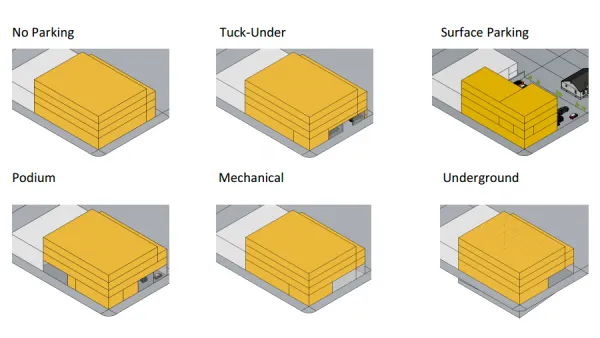
How Parking Rules Raise Rents
Alan Durning details the negative effects that parking requirements have on housing affordability.
Cincinnati Revival Gets Boost With Parking Requirement Reform
Recognizing the obstacle to redevelopment and livability presented by its outdated parking requirements, Cincinnati leaders have reduced parking minimums in the central business district and historic Over-the-Rhine neighborhood, reports Randy Simes.
Legislating the Waste of Land
Surveys of parking use in multifamily buildings across Cascadia have quantified the extent to which parking requirements have 'force fed' more spaces into projects than developers would provide based on demand. Alan Durning examines the implications.
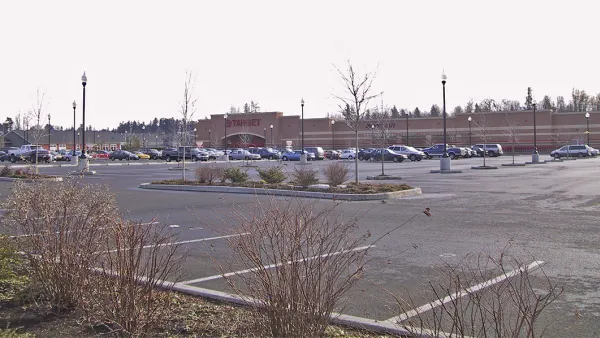
How Parking Minimums Beget Ugly Urban Environments
In the Pacific Northwest, and elsewhere, excessive parking requirements dictate the form and footprint of buildings, mostly to the detriment of urban environments. In a lavish photo essay, Alyse Nelson explores the damage inflicted by parking laws.
Mapping the United States of Parking
With arresting infographics, architect Seth Goodman aims to expose the absurd parking requirements that can be found in cities across America.
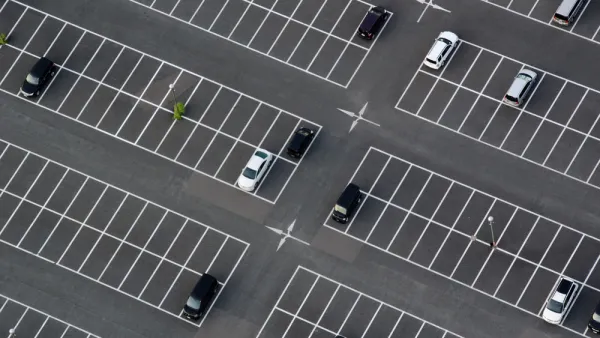
Has Seattle Solved the Science of Parking Demand?
Parking regulations are generally formulated as uniform standards that apply to hundreds or thousands of parcels equally, often resulting in overbuilt supply. But what if planners could anticipate the parking demand down to the parcel?
Why S.F.'s Parking Requirements May Cause Your Building to Crumble in an Earthquake
1960s and 70s era Dingbat buildings, which are common in many California cities, may be hazardous to more than just your design sensibilities. Their much-loathed parking-oriented designs can make buildings especially vulnerable to earthquakes.
On-Site Parking Requirements Stifle D.C. Redevelopment
Business owners, city leaders, and community members would love to see the struggling Anacostia neighborhood transformed into a bustling retail zone. But onerous parking requirements in DC's outdated zoning code are stifling the city's own ambitions.
L.A. to Increase Parking Requirements...For Bikes, not Cars
This week the L.A. City Council's Planning and Land Use Committee forwarded to the full council a progressive bike parking ordinance that could dramatically change how developers provide parking for both bikes and autos, reports Damien Newton.
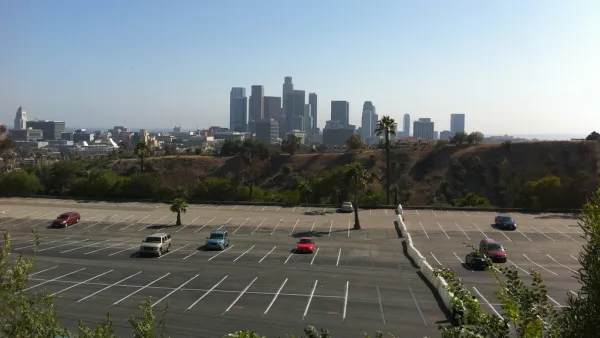
With Innovative Plan, L.A. Says Adios to Parking Requirements
Yesterday, the Los Angeles City Planning Commission approved a landmark specific plan that is notable as much for what it doesn't include as what it does.
Cater to Commuters or Residents? Denver Rethinks its Rail Stops
Denver is confronting a dilemma facing many cities as they build out their transit systems: what types of uses should be developed in close proximity to stations, and who should these facilities serve.
Planners Backtrack on Reform of Parking Standards
A bill in California that would reduce parking minimums in transit-oriented areas has drawn opposition from an unlikely group: the American Planning Association.
Parking Minimums Beleaguer a Car-Choked Brazil
Stephen Smith takes a look at land use regulations in Brazil, where developers are still required to make room for cars that its growing cities can't support.
How Parking is Hampering Cincinnati's Resurgence
John Yung looks at how an overabundance of off-street parking spaces and outdated parking policies are harming Cincinnati's downtown rebound, and proposes three solutions to address the city's parking problem.
Are Liberals and Conservatives Fighting Each Other's Land Use Battles?
In his book, The Rent Is Too Damn High, Matthew Yglesias encourages us to reexamine our assumptions about which urban policies our values really support.
New DC Zoning Code Goes Back to the Future
David Alpert provides a thorough analysis of the first third of Washington D.C.'s proposed new zoning code, and finds a return to kind of development patterns that formed the neighborhoods residents treasure today.
Parking Garages Built to Zoning, Are Half Empty
In a popular new development in Brooklyn built near transit, 50% of parking spaces are going unused. Why are parking requirements so overspec'ed?, asks Jeremy Smerd.
Less Parking Needed In Silicon Valley TODs
A graduate class in San Jose State's urban planning program surveyed parking lots at 12 housing developments by rail stations in Santa Clara County to see how well utilized they were and offer recommendations on parking codes.
Developer: I've Walked Away From Projects Because of Parking Minimums
Why is it so hard to build in New York City? Why are rents so expensive? It's partly because parking requirement are so onerous that developers are doing everything they can to avoid them, writes Noah Kazis.
Parking Minimums Make Housing More Expensive
A new report from NYU's Furman Center for Real Estate and Urban Policy reveals that the parking minimums required for new developments are a significant part of why housing in New York is so expensive.

FREE Course: Walkable City 1: Why Walkability?
After describing his path towards focusing on walkability as the essence of good planning, Jeff Speck marches through his five principal reasons for making more walkable places.
Reinventing Malls: Planning Alchemy—Turning Gray Fields Into Gold
The course focuses on the opportunities and imperatives that shape reinvention of mall sites.

City of Rosemead
Rutgers University, Edward J. Bloustein School of Planning and Public Policy
One Hundred Miles
University of Michigan School for Environment and Sustainability (SEAS)
Hunter College, City University of New York (CUNY)
The Architects Foundation
City of Cambridge
Montrose County
The Pocatello Development Authority









