John Yung looks at how an overabundance of off-street parking spaces and outdated parking policies are harming Cincinnati's downtown rebound, and proposes three solutions to address the city's parking problem.


In downtown Cincinnati, off-street parking spaces outnumber residents by nearly 7 to 1. As the city embarks on a plan to "increase downtown vibrancy through additional residential space and increased foot traffic, concern for parking punctures the debate on how to further support the urban core," writes Yang.
Looking to cities such as Nashville, who have successfully overhauled parking minimums for buildings in their city center, for lessons, Yang proposes three potential solutions for Cincinnati to consider. These include eliminating minimum parking requirements, establishing a parking "cap and trade" system, and setting parking maximums.
Yang concludes that, "While the need for reform appears evident, a contextualized solution should be pursued by Cincinnati city officials that specifically tailors the policy to localized needs."
Read the full story: Parking mandates stymy development in Cincinnati’s urban neighborhoods

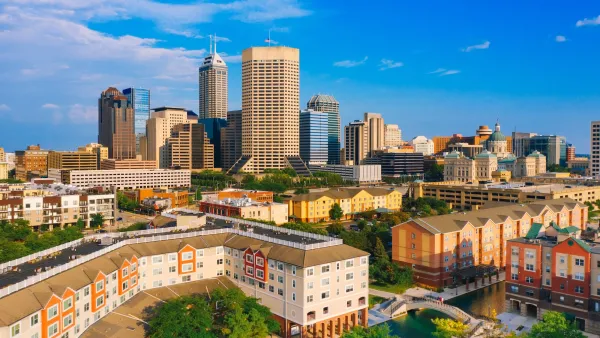
Indianapolis rents grew by 30% since 2020
The metro area has a shortage of roughly 137,000 affordable homes for the lowest-income households.

Sheryl Crow, country stars fight data center proposal near Nashville zoo
Opponents of the data center plan say it could have disruptive noise and pollution impacts on sensitive zoo animals.
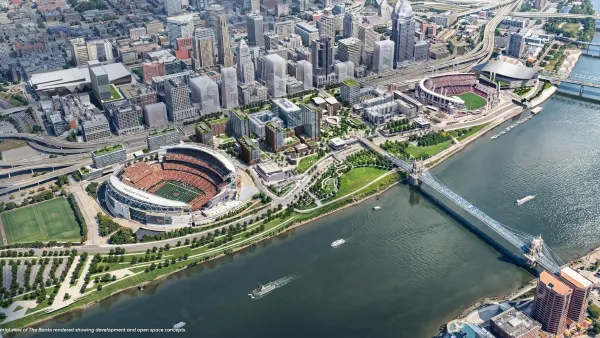
Cincinnati upzoning plan paves way for revitalized waterfront district
The city hopes to kickstart new development on five vacant lots in the riverfront entertainment district.

Planetizen Federal Action Tracker
A weekly monitor of how Trump’s orders and actions are impacting planners and planning in America.

Amtrak, CN end decades-long dispute with eight-year agreement
The new operating agreement establishes an updated framework for the companies to work together, including processes to resolve disputes.

Northwest rail fans eager for Sept. 30 debut of Amtrak’s Airo fleet
Get ready for that new train smell and more seats. But they won’t go faster or run more frequently on the Cascades route in Washington and Oregon.

Trump administration unlawfully slashed $7 billion in clean energy grants, judge rules
The Environmental Protection Agency ended the Solar For All program, which provided the grants, after President Donald Trump’s inauguration.

Record-breaking wildlife overpass in Colorado brings 91% reduction in animal collisions
Prior to the overpass, vehicles were hitting one deer per day on Colorado’s Interstate 25.

California lawmakers approve just 5% of much-needed LA28 transportation funding
State legislators appear just as unwilling as Trump to pay for Olympics-related transportation projects.

FREE Course: Walkable City 1: Why Walkability?
After describing his path towards focusing on walkability as the essence of good planning, Jeff Speck marches through his five principal reasons for making more walkable places.
Reinventing Malls: Planning Alchemy—Turning Gray Fields Into Gold
The course focuses on the opportunities and imperatives that shape reinvention of mall sites.

City of Thousand Oaks
City of Wisconsin Rapids
Harvard University Graduate School of Design
The Architects Foundation
University of Cincinnati Online
The Pocatello Development Authority
The Urban Renewal Agency of the City of Pocatello