In the Pacific Northwest, and elsewhere, excessive parking requirements dictate the form and footprint of buildings, mostly to the detriment of urban environments. In a lavish photo essay, Alyse Nelson explores the damage inflicted by parking laws.


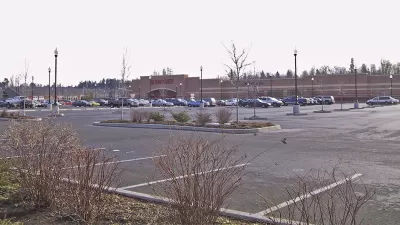
"Cars have shaped much of the North American West, including Cascadia, where drive-through restaurants, shopping centers, highway strip malls, and single-family neighborhoods miles from commercial services dominate much of the urban and suburban landscape," observes Nelson. "Less obvious to the casual observer is the impact that parking regulations have had on architectural forms."
"This photo essay looks at some of the ugly architecture in Cascadia that has resulted from parking minimums. Many of the photos were sent in by readers who responded to our request for examples from their communities."
What follows is a lengthy look at the ugly architecture found in Cascadia’s cities and towns, from "ubiquitous seas of suburban parking" to the “dingbat buildings” common throughout the West Coast.
Read the full story: Ugly by Law

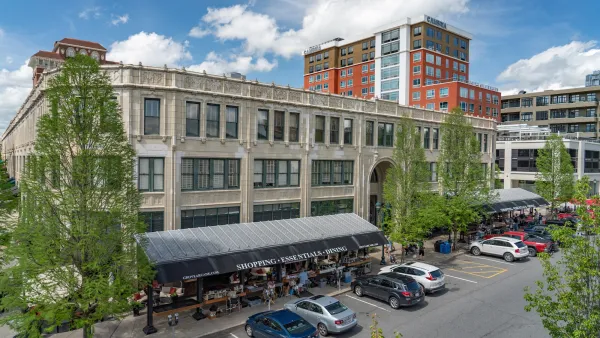
Asheville Could Eliminate Parking Minimums
The city is working on a multiyear overhaul of its Unified Development Ordinance.
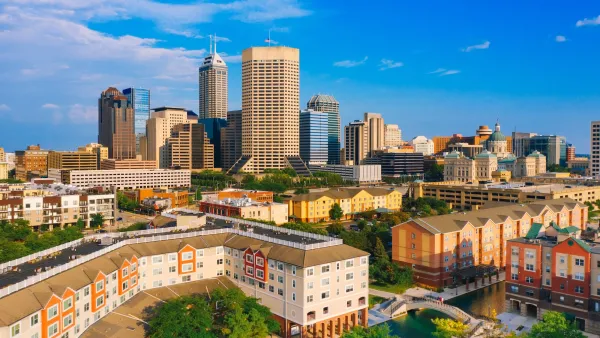
Indianapolis rents grew by 30% since 2020
The metro area has a shortage of roughly 137,000 affordable homes for the lowest-income households.
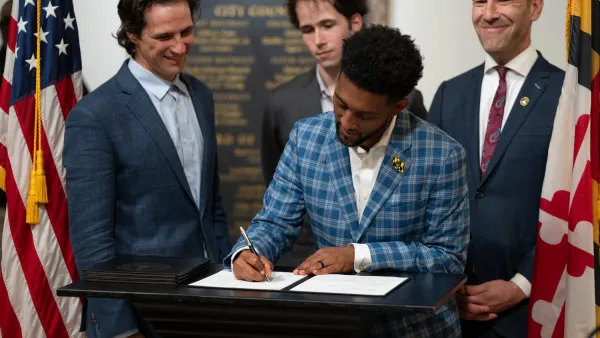
Baltimore Seeks to Stem Population Loss by Eliminating Parking Requirements, Legalizing Single-Stair Buildings
A package of zoning reforms is aimed at making it easier to build and redevelop housing to draw people back to the city, which has been losing population steadily.

Planetizen Federal Action Tracker
A weekly monitor of how Trump’s orders and actions are impacting planners and planning in America.

Amtrak, CN end decades-long dispute with eight-year agreement
The new operating agreement establishes an updated framework for the companies to work together, including processes to resolve disputes.

Northwest rail fans eager for Sept. 30 debut of Amtrak’s Airo fleet
Get ready for that new train smell and more seats. But they won’t go faster or run more frequently on the Cascades route in Washington and Oregon.

St. Louis Metro to test if single-car trains can reduce operating costs, maintain rider satisfaction
The pilot program will run from October to spring 2027, and begin with one single-car train operating on Metrolink’s Red and Blue lines.

Pennsylvania is building data centers in abandoned mines
Housing data centers in mines provides an alternative to destroying local forests and may spare residents from data centers’ noise and air pollution.

If Corpus Christi can’t revive desalination plant project, it may owe Texas $235 million
Earlier this month, city officials declined to pursue developing the plant for the second time in a year.

FREE Course: Walkable City 1: Why Walkability?
After describing his path towards focusing on walkability as the essence of good planning, Jeff Speck marches through his five principal reasons for making more walkable places.
Reinventing Malls: Planning Alchemy—Turning Gray Fields Into Gold
The course focuses on the opportunities and imperatives that shape reinvention of mall sites.

City of Thousand Oaks
City of Wisconsin Rapids
Harvard University Graduate School of Design
The Architects Foundation
University of Cincinnati Online
The Pocatello Development Authority
The Urban Renewal Agency of the City of Pocatello