Dingbats
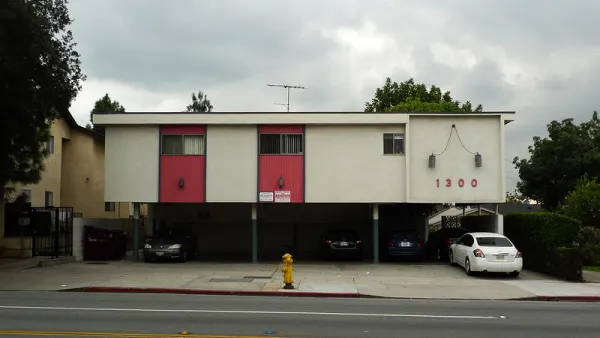
How the Iconic Dingbat Took Over Los Angeles
The low-slung, car-oriented apartment buildings represent a mid-century solution to a housing shortage and offer valuable lessons for new development.
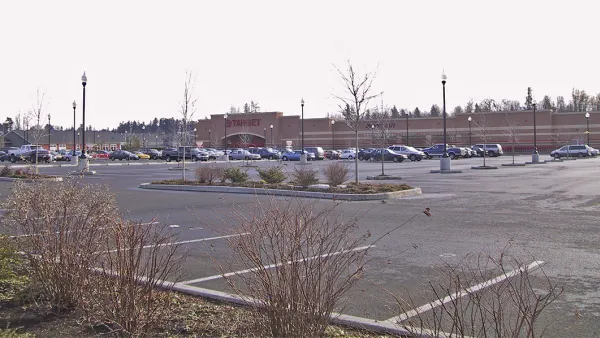
How Parking Minimums Beget Ugly Urban Environments
In the Pacific Northwest, and elsewhere, excessive parking requirements dictate the form and footprint of buildings, mostly to the detriment of urban environments. In a lavish photo essay, Alyse Nelson explores the damage inflicted by parking laws.
Why S.F.'s Parking Requirements May Cause Your Building to Crumble in an Earthquake
1960s and 70s era Dingbat buildings, which are common in many California cities, may be hazardous to more than just your design sensibilities. Their much-loathed parking-oriented designs can make buildings especially vulnerable to earthquakes.

FREE Course: Walkable City 1: Why Walkability?
After describing his path towards focusing on walkability as the essence of good planning, Jeff Speck marches through his five principal reasons for making more walkable places.
Reinventing Malls: Planning Alchemy—Turning Gray Fields Into Gold
The course focuses on the opportunities and imperatives that shape reinvention of mall sites.

City of Rosemead
Rutgers University, Edward J. Bloustein School of Planning and Public Policy
One Hundred Miles
University of Michigan School for Environment and Sustainability (SEAS)
Hunter College, City University of New York (CUNY)
The Architects Foundation
City of Cambridge
The Pocatello Development Authority
The Urban Renewal Agency of the City of Pocatello









