Crime
Putting a Price on Stigmatized Properties
Is your property the scene of a famous murder? Or perhaps a group suicide? Andrew Khouri profiles Randall Bell, a specialist real estate appraiser, who'll estimate just how much that "doom-and-gloom" is going to hurt your bottom line.

A Fight Over the Future of "America's 'Most Livable' Community"
LA's trendy Silver Lake neighborhood "is going through a full-blown, divisive identity crisis." Amid trendy boutiques and million dollar homes are bastions of poverty and crime. Activists are divided on how to define, let alone address, its problems.
Urban Revival Drains Life out of London Suburbs
In an echo of the urban inversion confronting many of America's cities, London's phenomenal economic growth over the past decade has come at the expense of the city's suburbs, where unemployment and poverty are growing. Could this be a good thing?
Denver Struggles to Reclaim Civic Center Park
A $15 million investment has so far failed to cleanse Denver's downtown park - part of the city's first National Historic Landmark - of rampant drug use and crime. What more can the city do to speed up change?
What Happens When a City Turns Out the Lights?
Strapped for cash, cities across the US have decided to save money by turning off street lights. An investigative series documents the effect of all those darkened lights on crime and economic development in San Diego - home to a $30 million backlog.
Which cities are (perceived as) safest?
A Gallup poll asked residents of each Congressional district whether they felt safe walking alone at night in their city or area. Although city residents feared crime more than suburbs, there were some surprises.
The Chemistry of Safer, Denser Cities
While the middle class sought the refuge in the suburbs in the 1960s and 1970s, it turns out that the crime they were fleeing had nothing to do with density, race, or even blight. Mother Jones magazine suggest that it was all because of lead.
New Report Challenges 'Eyes on the Street' Concept
In the fifty years since Jane Jacobs introduced the "eyes on the street" theory, it's become a commonly accepted conceit that a mix of use reduces crime. A new study calls that theory into question.
The case against mixed-use: not proven
A recent study suggesting that mixed-use zoning increases crime is not as persuasive as it might seem at first glance.
Stop Segregating the Rich! Fighting Displacement Fights Crime
Isolating poor residents from rich ones is not only bad for those being segregated, it leads to the worst outcomes for a city as a whole. Fighting displacement results in less crime and more stable and healthy communities.
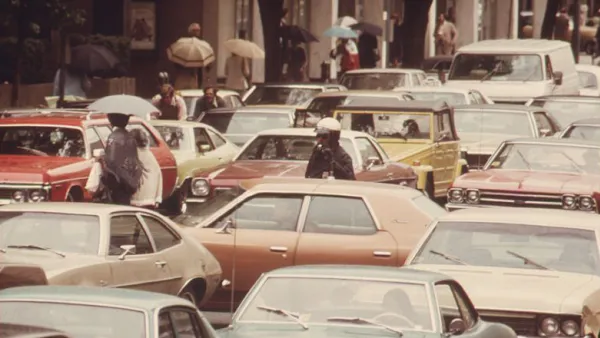
An Astounding Explanation for Why Big Cities Are More Dangerous Than Small Ones
For decades, researchers have hunted for an explanation for why big cities have been more prone to violent crime than small ones. A new hypothesis may offer a surprising answer, and prove that big cities aren't inherently much more dangerous.
As Cities Become Safer, Crime Decamps for the Suburbs
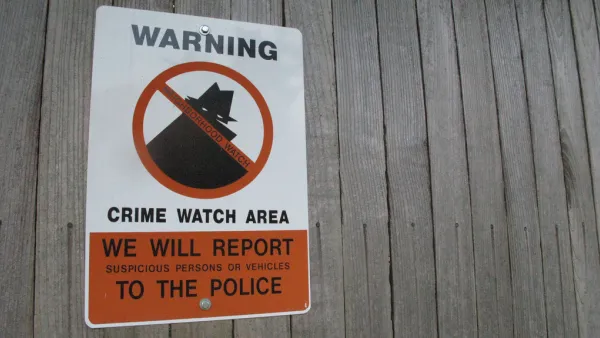
Homicides are decreasing nationwide, but a federal study reveals that the rate has decreased about 17% in cities and increased by the same rate in suburbs. Two WSJ reporters look behind the numbers for the causes with a focus on Atlanta's suburbs.
Crime: Inner Cities are Beginning to Resemble Suburbs, and Vice Versa
The Economist examines how London's inner city neighborhoods are well past an inflection point in crime rates. In many cases inner city neighborhoods are now safer than suburban neighborhoods and the trend is set to continue.
The Community-Building Power of Communal Gardens
Planted to solve a perceived food desert problem, urban gardens are harvesting more than just fresh, nutritious food. Neighborhoods surrounding gardens are seeing surprising declines in violent crime.
Urban Trees: Friend or Foe to Crime?
A new study published in the June issue of Landscape and Urban Planning intends to settle once and for all the debate about whether urban trees provide a deterrent or inducement for crime, writes Eric Jaffe.
LAPD Moves to Curb "Lawlessness" on Venice Beach
A rising tide of hostility along Venice's famous boardwalk has prompted residents to call on the LAPD for help, Martha Groves reports.
Driving out one Nuisance With Another
The American Society of Landscape Architects examines the implications of squeezing teens out of the public sphere.
Less Crime Through Urban Design
Environmental criminology may not be the most well-known field, but in this profile of Nikki Filipuzzi and her work throughout Calgary, Tamara Gignac shows how even the right amounts of shrubbery and light can make the city safer.
The Most Dangerous Cities in the United States
While many stories have been written about Detroit's turnaround, it took the top spot on Forbes list of most dangerous cities. Detroit had 1,111 violent crimes reported per 100,000 residents, which included 345 murders, writes John Giuffo.
Tenderloin National Forest
An unconventional outdoor spaces has helped transform a small part of a problem-riddled San Francisco neighborhood.

FREE Course: Walkable City 1: Why Walkability?
After describing his path towards focusing on walkability as the essence of good planning, Jeff Speck marches through his five principal reasons for making more walkable places.
Reinventing Malls: Planning Alchemy—Turning Gray Fields Into Gold
The course focuses on the opportunities and imperatives that shape reinvention of mall sites.

KFH Group Inc.
Greater Baltimore Committee
Eagle County Government
The Architects Foundation
University of Cincinnati Online
The Pocatello Development Authority
The Urban Renewal Agency of the City of Pocatello