LA's trendy Silver Lake neighborhood "is going through a full-blown, divisive identity crisis." Amid trendy boutiques and million dollar homes are bastions of poverty and crime. Activists are divided on how to define, let alone address, its problems.



What's been called the "Best Hipster Neighborhood" in the United States and one of the country's top 10 "Best Big-City Neighborhoods" is actually two very different neighborhoods, divided by Sunset Boulevard. North of the boulevard are the high-priced homes and open spaces the area is known for, but south of the street, one finds "high unemployment, troubling poverty, an education deficit and serious health and quality-of-life problems." Together they form an area with one of Los Angeles's lowest life expectancy rates; and activists divided by age and outlook are struggling to define a vision for its future.
"Behind the scenes of this urban paradise, an old-guard, liberal establishment that's been comfortable letting L.A.'s political power structure run things from downtown — such as applying new density development in once-sleepy areas — now consistently bangs heads with younger, Occupy L.A.–aligned artists, college graduates and laid-back misfits out to disrupt the old arrangement," explains Patrick Range McDonald.
"The older, more affluent baby boomers seem fixated on micro-issues such as relieving Silver Lake's parking crunch, which sparks the ire of younger folks, who tend to think of the bigger picture: They want to build a more sustainable, environmentally friendly community."
Read the full story: Silver Lake Millennials War With Boomers in America's "Most Livable" Community
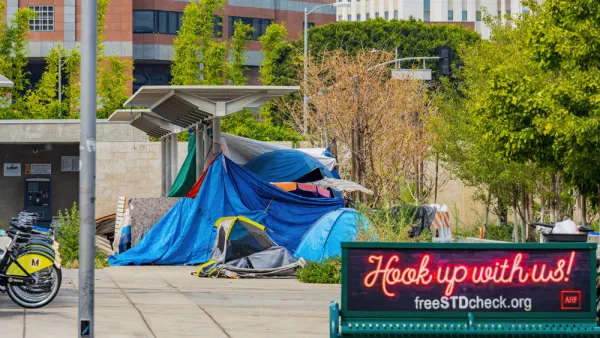
The Deepening Transit Crisis: L.A. Times Reports Drug Use on Transit
An article by the L.A. Times earlier this week has raised the temperature of the debate about drug users and crime on rail transit. Concerns about public safety on transit are a common symptom of post-pandemic transit around the country.

Still Gritty: Crime Wave in Downtown Los Angeles
As people and jobs stream into the district, downtown's long-simmering problems butt up against vigorous urban renewal. Crime is up, but so are property values.
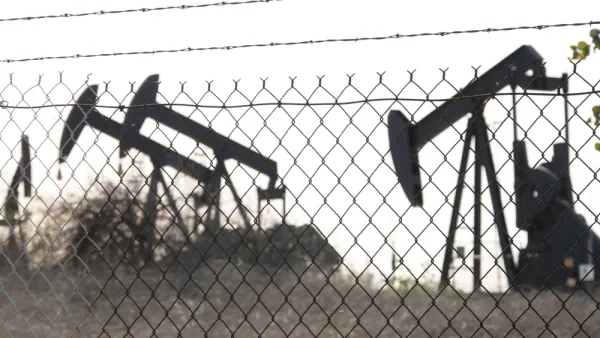
California Seals 21 Urban Oil Wells in South LA After Decades of Activism
The permanent closure of a long-troubled South Los Angeles oil site marks a hard-fought victory for residents and underscores the growing urgency of addressing hazardous idle wells in communities nationwide.

Planetizen Federal Action Tracker
A weekly monitor of how Trump’s orders and actions are impacting planners and planning in America.

California plans to bury El Niño’s downpour
If the state plays its cards right, it may be able to store a billion acre-feet of El Niño’s water in aquifers.

Desperate measures: Advocates weigh draining Lake Powell to fill Colorado River
Draining the reservoir could reduce evaporation losses by a couple hundred thousand acre-feet.

Mamdani’s pied-à-terre tax survives legal challenge
A panel of judges found that the plaintiffs failed to demonstrate injury as a result of New York City's implementation of the tax.

Eastern Nebraska is running out of electricity
Data centers and electrification are straining eastern Nebraska’s grid, throttling economic development.

Seattle passes record-breaking transit services expansion
Proposition 1 will double the city’s transit tax to add 95,000 more bus trips and preserve 180,000 bus trips annually.

FREE Course: Walkable City 1: Why Walkability?
After describing his path towards focusing on walkability as the essence of good planning, Jeff Speck marches through his five principal reasons for making more walkable places.
Reinventing Malls: Planning Alchemy—Turning Gray Fields Into Gold
The course focuses on the opportunities and imperatives that shape reinvention of mall sites.

City of Rosemead
Rutgers University, Edward J. Bloustein School of Planning and Public Policy
One Hundred Miles
University of Michigan School for Environment and Sustainability (SEAS)
Hunter College, City University of New York (CUNY)
The Architects Foundation
City of Cambridge
Montrose County
The Pocatello Development Authority