An unconventional outdoor spaces has helped transform a small part of a problem-riddled San Francisco neighborhood.


The Tenderloin is one of the city's most troubled neighborhoods, with high amounts of vagrancy, drug use and crime. One man decided to try to improve the neighborhood by adding plants and trees to a small alleyway.
"'We saw how the alley was being disrespected,' Smith said of those early years. 'It wasn't a healthy place to be, and we wanted to change that. We wanted physical and environmental safety.' With the help of fellow residents, artists and community activists, he set to work.
His approach over the decades has been consistently two-pronged. In addition to employing more conventional tactics of redefining space– from conducting surveys to lobbying city officials- he has consistently pushed boundaries rebel-style. Back in the 1980s, this meant converting Cohen Alley into a temporary performance space. The pieces of sod he and his friends dragged in to create seating littered the pavement in layers of dirt long before formal plans to change the place into a garden existed.
Read the full story: Pushing Gently: A Look at San Francisco’s Tenderloin National Forest

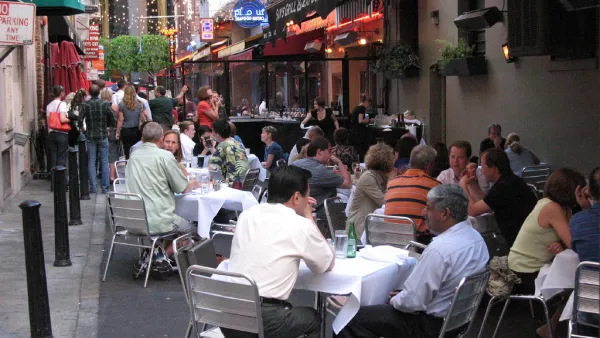
Four Cities Making the Most of Alley Spaces
Urbanful examines four cities making the most of scare public spaces by reactivating their alleys with programming and pedestrian-friendly designs.

San Francisco to Dismantle its Polarizing Brutalist Fountain
The Vaillancourt Fountain stands as a symbol of the tension between the city’s past and future.
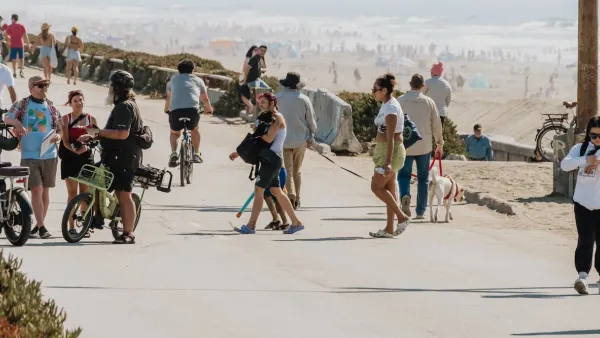
San Francisco Opens Park on Former Great Highway
The Sunset Dunes park’s grand opening attracted both fans and detractors.

Planetizen Federal Action Tracker
A weekly monitor of how Trump’s orders and actions are impacting planners and planning in America.

California plans to bury El Niño’s downpour
If the state plays its cards right, it may be able to store a billion acre-feet of El Niño’s water in aquifers.

Chicago breaks ground on $3 billion megadevelopment
The new neighborhood, titled Foundry Park, will one day host 3,700 residences.

Satanic Place Names
From streams and lakes to valleys and canyons, I mapped more than 1,000 places named after the Devil.

California High-Speed Rail Authority CEO resigns after $600,000 scandal
Under Ian Choudri, the authority used taxpayer dollars to fund first class flights and trips to nightclubs.

Want to study the Missouri River? Soon, you may need unanimous approval from 10 states
Legislation would require 10 governors’ permission to study or build projects moving water outside the basin.

FREE Course: Walkable City 1: Why Walkability?
After describing his path towards focusing on walkability as the essence of good planning, Jeff Speck marches through his five principal reasons for making more walkable places.
Reinventing Malls: Planning Alchemy—Turning Gray Fields Into Gold
The course focuses on the opportunities and imperatives that shape reinvention of mall sites.

City of Rosemead
Rutgers University, Edward J. Bloustein School of Planning and Public Policy
One Hundred Miles
Hunter College, City University of New York (CUNY)
The Architects Foundation
University of Cincinnati Online
City of Cambridge
Montrose County
The Pocatello Development Authority