Social / Demographics

Meow We're Talking: Ranking Cities by Number of Cat Ladies
Nielsen Scarborough released new market data this week that revealed the cities with the highest percentage of single women who live along with at least one cat.
Planning for Fitness in Oklahoma City
Six years ago, the 620-square-mile city had not one bike lane and forty McDonald's franchises.
How the Census Will Improve Race and Ethnicity Data for 2020
At the halfway point in the ten-year Census window, the Census Bureau undertakes research into how to improve its data collection for questions of race and ethnicity.
The U.S. Cities With the Most Children
Governing magazine digs into the data about which cities American families are more likely to call home.
Melting Pots and Shrinking Islands
Brooklyn-based artist Ekene Ijeoma newest piece shows what parts of New York City are affordable to different people across the spectrum of salaries in the form of crystalline islands called "wage islands."
Where People Choose to Live—Simple and Also Not-So-Simple
A new study confirms much of what we already suspect about the choices people make about where to live, but with a far-reaching, scientific approach.
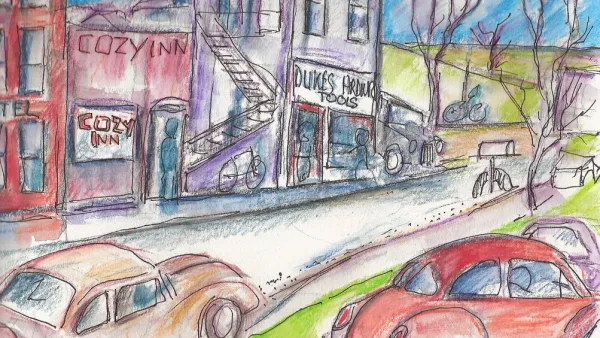
Are Small Towns the Next Arts Districts?
As rising costs expel artists from urban cores, some small towns are positioning themselves as unlikely magnets for creative expression.

Gentrification and Affordability Worries Arise Over a Proposed Vancouver Tower
A 12-story residential tower proposed for a Vancouver neighborhood is receiving pushback from housing advocates and the local Chinese community.
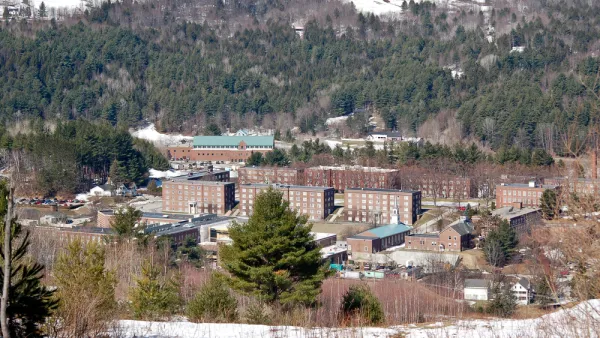
The 'Two-Body Problem' Challenges Small Town Workforces
Academia's "two-body problem" may be affecting other industries as women pursue more specialized careers and marry similarly educated men. Two-career couples are likely to gravitate toward larger metro areas with job opportunities for both partners.
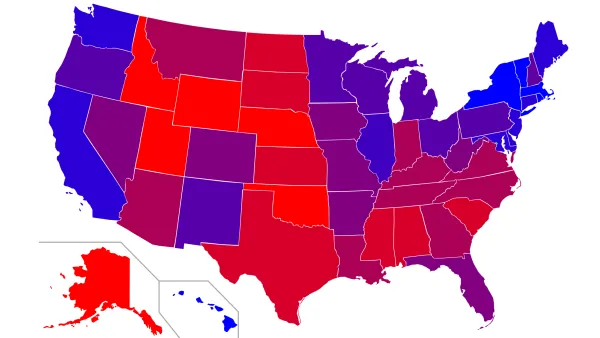
Where the Candidates Live
Some presidential candidates favor sprawl, but a surprising number live in cities or inner-ring suburbs.

Dispelling Four Myths of Houston's Growth and Affordability
A researcher at Rice University finds that proclamations of Houston’s affordability, gentrification, and growth are just myths.

5 Big Ideas for Oakland
People are looking for ideas in the Bay Area. Across the water from the calcified world of San Francisco, Oakland offers the flexibility and energy to build an equitable and dynamic resource that benefits the entire region.

Street Harassment: An Issue for Planners?
Women and men experience public spaces differently. It is all too common for women to experience street harassment when in public spaces. Nina Flores explores the ways that this issue is being combatted in the online public realm.
China Ends One-Child Policy
It's the end of an era. After 36 years, China has decided to end its restrictive one-child policy, by allowing couples to have two children. Why the change? In three words: an aging population.

12 Maps to Explain the Midwest
Aaron Renn scours the Internet to find 12 maps that attempt to do the impossible: define the geographic and cultural expanse known as the American Midwest.

Technologies for Understanding Cities
Researchers are examining technologies that can aid in understanding many aspects of our cities, from how citizens interact in plan making, where residents use social media, and how to understand our changing communities.

Op-Ed: Why Cities Need the 'Poor Door'
Drawing on a distinction between equality and equity, Rick Jacobus argues that so-called 'poor doors' are a necessary compromise to promote affordable housing and neighborhood integration.
Newark and New York
Only 10 miles separate New York City and Newark, New Jersey, but the two can seem worlds apart. Damon Rich, who moved from New York in 2008 to lead Newark's planning office, speaks about how his work there has shaped his perception of both cities.

Bicyclists and Sunday Drivers Clash in DC
To some, a protected bike lane saves lives; to others, it threatens the survival of a community.
Porchfest: Your Guide to a DIY Community-Building Good Time
Scott Doyon shares his thoughts on last week's Oakhurst Porchfest. Potentially useful for anyone looking to launch their own version.

FREE Course: Walkable City 1: Why Walkability?
After describing his path towards focusing on walkability as the essence of good planning, Jeff Speck marches through his five principal reasons for making more walkable places.
Reinventing Malls: Planning Alchemy—Turning Gray Fields Into Gold
The course focuses on the opportunities and imperatives that shape reinvention of mall sites.

City of Charlotte
City of Rosemead
Rutgers University, Edward J. Bloustein School of Planning and Public Policy
University of Michigan School for Environment and Sustainability (SEAS)
Hunter College, City University of New York (CUNY)
The Architects Foundation
University District Partnership









