Social / Demographics
Report: High Housing Costs Responsible for California's Economic Woes, Not Taxes
The Golden State attracts high-end workers, while its high housing costs cause a disproportionate number of low and middle income workers to flee the state. The non-profit think tank, Next 10, delves into this crisis in three new reports.
Homelessness Growing in Austin—For the First Time in Years
The state capital of Texas is not immune to the growing numbers of homeless in cities around the country.
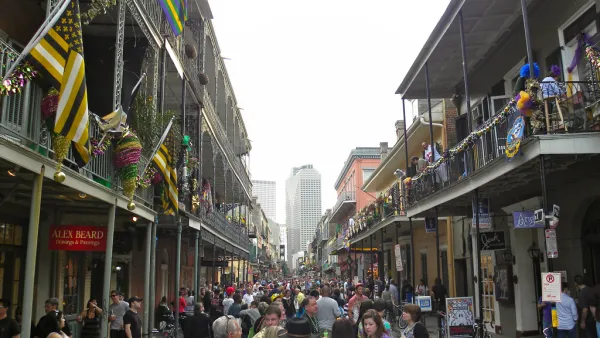
The Life and Death of Urban Hierarchies
Kristen Jeffers writes that she's changed her mind about the existence of hierarchies among U.S. cities.
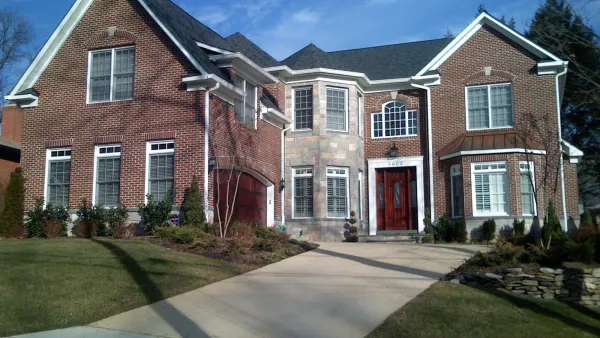
Empty Nesters Stuck in the Suburbs
Just when boomers are ready to return to the city to enjoy all its cultural offerings, they find themselves priced out. Many do downsize, however, from large single family homes to more urban areas close to home.
Making Sense of Community
Most of us Planetizen readers were inadvertently complicit in killing the term "sense of community." Scott Doyon points out where we go from here.
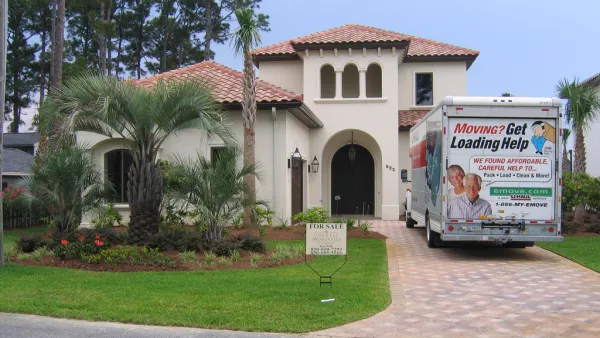
Millennials Leaving Their Mark on Suburbia
How will millennial homebuyers change suburbia, or will they? Realtors observe that millennials relocating from the city look for parts of their urban lifestyle, e.g., walkable neighborhoods, yet they also have traditional suburban tastes.
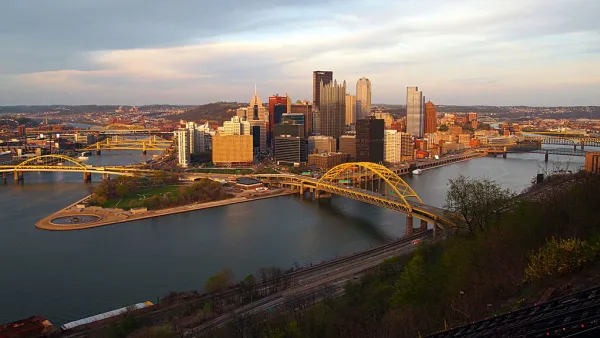
Black Residents Displaced in Pittsburgh
Rents are on the rise in Pittsburgh, prompting some longtime residents to relocate farther away. Race, as well as class, figures heavily in this narrative.
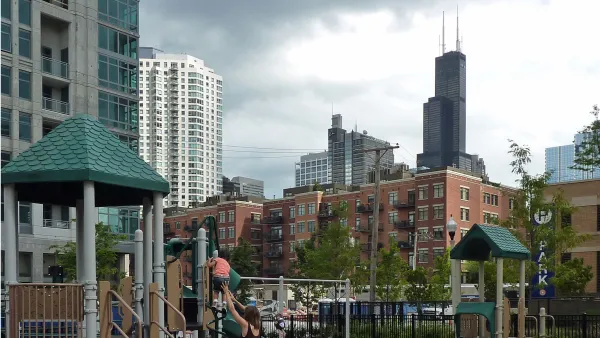
New Tool Accesses Chicago Open Data
OpenGrid gathers together Chicago's open data, letting users specify areas of focus on a map of the city. Users can also overlay different datasets on the same map.
A Map of the Most Economically Distressed Communities in the United States
The economic recovery of recent years has not reached all corners of the country—it hasn’t even reached all corners of many cities. A new report plots a new map of the nation's distressed communities.
Friday Eye Candy: Dallas, Transformed Into Poetry
Dallas is a subject in a visual experiment titled "A City is a Poem."
Smart Design = Smart Policy? Not So Fast
After a few decades watching—and sometimes helping—great ideas die of overexposure to reality, I'm convinced it's not enough to just listen to folks you're hoping to help. You have to make something happen. A well-conceived charrette helps.
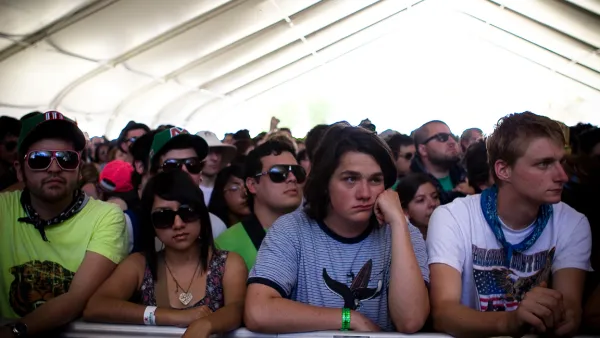
'Peak Millennial' Has Passed: What Comes Next for Cities and Suburbs?
The largest cohort of Millennials (those born in 1990) recently turned 25, leaving only smaller waves of their generational peers to follow. Are economic and generational trends primed for another, suburban shift?
Study: Location Matters for Farmers' Markets
Research conducted in Flint, Michigan, found that changing the location of the local farmers' market had a dramatic effect in how residents shopped.
Lots of Positive Signs for Pittsburgh in 2016
Good news for Pittsburgh, which is now officially reversing decades of Rust Belt trends.
Auto Repairs From Potholes Got You Down? You Are Not Alone
A new report from the AAA indicates that American motorists encounter damage from potholes three times a year, with each incident costing an average $300 to repair. Middle and working class drivers feel the pinch disproportionately.

From 'Traffic' Planning to 'Transportation' Planning: Toronto's Pivot to the Future
Ken Greenberg, the former director of architecture and urban design for the city of Toronto, sits down to discuss how Toronto needs to transform to ensure a less auto-reliant future that serves a changing demographic of younger urban dwellers.
Socially-Blind Urban Planning
In this era of increased inequality, socially-blind urban planning is morally questionable. Specifically, on the issue of homelessness in America, there are three problems to which planners need to pay particular attention.
Program Protects School Diversity in Gentrifying Neighborhoods
The benefits of diverse classroom settings are well established. How then to protect diversity in schools when the surrounding neighborhood is quickly becoming homogenous?
Is Jersey City the New York Metro Area's Next Brooklyn?
A 10-minute commute to lower Manhattan has made this once dingy city into the fastest growing in the Garden State. Yet from an historic perspective, Jersey City was a "shrinking city," not unlike Detroit or Youngstown, until 25 years ago.
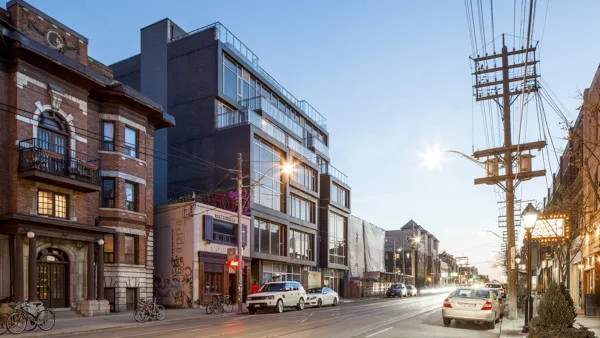
Zillow: Suburbs Becoming More Like Cities
According to the real estate website, urban home values are growing faster than those in the suburbs, bucking a longtime trend. This isn't exactly surprising, but it has serious social justice implications.

FREE Course: Walkable City 1: Why Walkability?
After describing his path towards focusing on walkability as the essence of good planning, Jeff Speck marches through his five principal reasons for making more walkable places.
Reinventing Malls: Planning Alchemy—Turning Gray Fields Into Gold
The course focuses on the opportunities and imperatives that shape reinvention of mall sites.

City of Charlotte
City of Rosemead
Rutgers University, Edward J. Bloustein School of Planning and Public Policy
University of Michigan School for Environment and Sustainability (SEAS)
Hunter College, City University of New York (CUNY)
The Architects Foundation
University District Partnership









