"Suburbia," opening today at the new Minnesota History Center in St. Paul, allows a portrait of suburban living that goes well beyond the mundane. By redefining the history suburbia, the exhibit also tracks the contemporary evolution of suburbs.


John Rash reviews the "Suburbia" exhibit, which opened today at the new Minnesota History Center.
According to the themes of the exhibit, "midcentury modern arrived with modern media, especially television" and "[f]ormal rooms gave way to family rooms, and to TVs, which gathered families with programs projecting idealized lives."
The exhibit's designers describe the simultaneous rise of the suburbs and modern media as a matter of symbiosis, not coincidence.
Rash also gives voice to a remarkable opinion that might seem like a long-time coming to fans of the suburbs—the idea that the narrative about the blandness and ennui of the suburbs, which arose as a backlash to the suburbs as the grew to national prominence during the 20th century, might be a better fit for the gentrified urban cores of contemporary times. "Dynamism, however, might be the best description of suburbs today. In fact, urban gentrification can mean that some suburbs better reflect America’s mosaic than the center cities they surround."
Rash also spoke with William Frey, author of the Diversity Explosion, to discuss the evolution of the suburbs.
FULL STORY: Suburbia and modern media in symbiosis

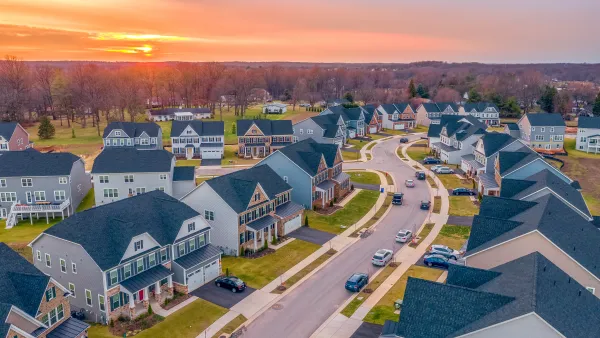
Remote Work and the Shift to Suburbia
Is the growth of working from home turning America into a ‘suburban nation?’

Homeownership—American Dream or Nightmare?
Owning a home has long been considered the ultimate aspiration. But social and economic realities mean the stories about and the path to homeownership are not simple and straightforward.
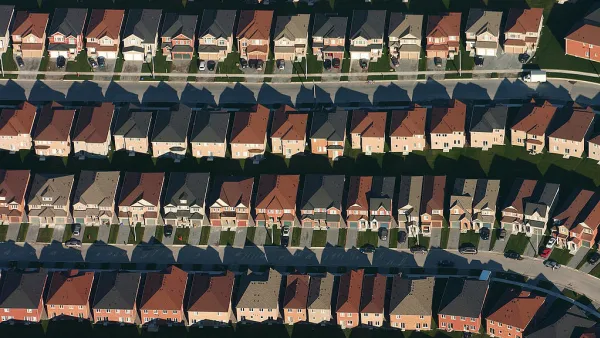
Opinion: The Old Visions of Suburbia Are an Anachronism
Low-density suburbs are on their way out, and the suburbs of the future will better address the present-day needs of the people living in them.

Planetizen Federal Action Tracker
A weekly monitor of how Trump’s orders and actions are impacting planners and planning in America.

The state-sanctioned urbicide of Austin
People don’t kill cities. Freeways do.

US to reduce Colorado River water deliveries to Mexico
A new Colorado Treaty amendment reduces Mexico’s Colorado River water allocation by 250,000 acre feet.

5 New England states march closer to 800 megawatt wind energy project
Securing federal approval for the project may be complicated under the Trump administration, which has historically been hostile towards domestic wind power.

Baltimore to break ground on $50 million Transit Priority Project
The project will bring faster bus trips, safer streets and better bike connections to Baltimore.

Airbnb launches $250 million 'last-dollar financing' housing accelerator, makes first investment in Austin
The company will put $6.4 million towards affordable housing development in Texas’ capital.

FREE Course: Walkable City 1: Why Walkability?
After describing his path towards focusing on walkability as the essence of good planning, Jeff Speck marches through his five principal reasons for making more walkable places.
Reinventing Malls: Planning Alchemy—Turning Gray Fields Into Gold
The course focuses on the opportunities and imperatives that shape reinvention of mall sites.

Eagle County Government
Harvard University Graduate School of Design
Nashville Planning Department
The Architects Foundation
University of Cincinnati Online
The Pocatello Development Authority
The Urban Renewal Agency of the City of Pocatello
Journal of the American Planning Association