The historically Latino working class neighborhood is a frequent touchstone in debates over gentrification in Los Angeles. That history goes back decades and colors residents' perceptions.


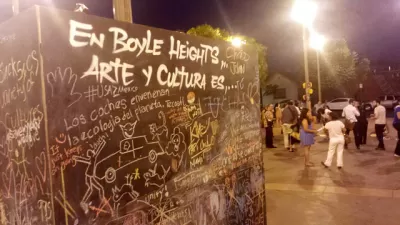
Alfredo Huante unpacks Boyle Heights' long and fraught relationship with L.A. city planning, a story that goes back to the 1960s. The memory of invasive urban renewal, he writes, lingers on despite the fact that Boyle Heights escaped the fate of neighboring "blighted" areas with largely Latino populations.
Huante discusses the rise of community planning in L.A. following the Watts Riots, an early effort to address racial disparities in land use decision making. "Although citizen participation in neighborhood planning was readily encouraged in predominantly white, non-blighted neighborhoods, community plans functioned as the first efforts to solicit and collect barrio residents' input in city planning processes."
Despite those moves, a shift of focus to downtown development under Mayor Tom Bradley again sidelined community planning in Boyle Heights, setting the stage for today's acrimonious debates over development and neighborhood heritage.
Through the late 20th century and into the 21st, Haunte writes, "overarching policies of exclusionary land uses prevailed even if political inclusion improved. With downtown redevelopment jumping the L.A. River into Boyle Heights, ongoing discussions and framing over anti-displacement movements are better understood within this history of dispossession."
Read the full story: Is Boyle Heights “Worth Saving”?

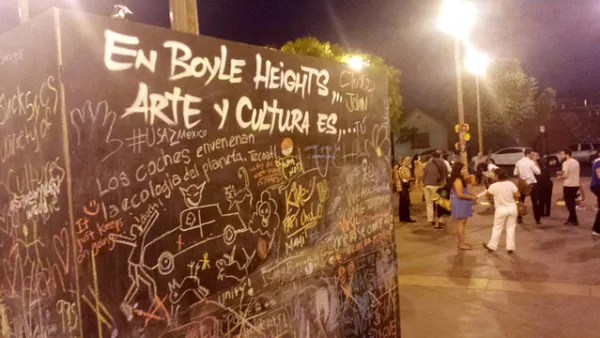
East Los Angeles Community Groups Prove that Community Planning Matters
The landscape of community development in Los Angeles today differs vastly from even a few years ago. Two groups in East L.A. are developing solutions to accelerating gentrification and displacement and a compounding affordable housing crisis.
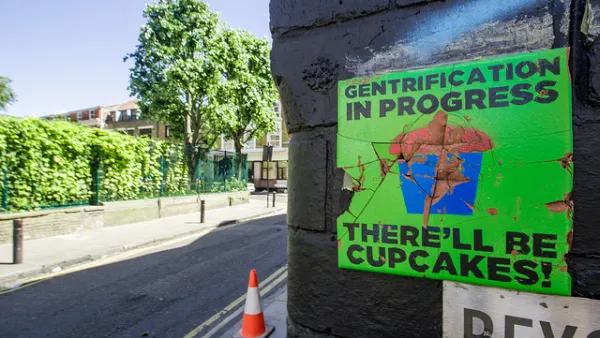
Lessons for YIMBYs From Boyle Heights
In the wake of a very pro-development March election, Los Angeles seems ready to embrace change. But not everywhere. In low-income Boyle Heights, residents have been more militant than most against encroaching gentrification.
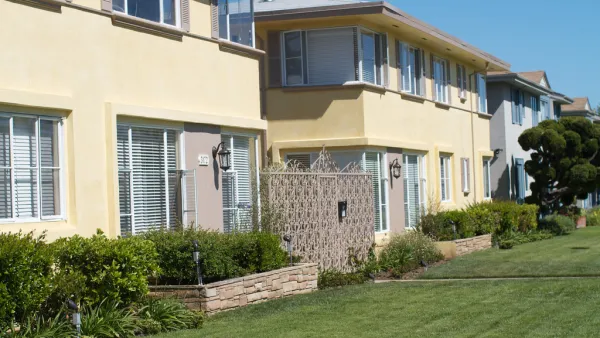
Clash Over Garden City Apartments in Los Angeles
The Wyvernwood Garden Apartments, a large-scale low-rise development opened in 1939, are at the center of a preservation debate. Lauren Walser gives us the case for keeping them.

Planetizen Federal Action Tracker
A weekly monitor of how Trump’s orders and actions are impacting planners and planning in America.

California plans to bury El Niño’s downpour
If the state plays its cards right, it may be able to store a billion acre-feet of El Niño’s water in aquifers.

Desperate measures: Advocates weigh draining Lake Powell to fill Colorado River
Draining the reservoir could reduce evaporation losses by a couple hundred thousand acre-feet.

How a Chicago-sized wind farm beat the odds and powered on
The project spanned five presidential administrations and a standoff with a U.S. military base.

MTA gives itself 30 days to transform pit into basketball court
The site has been under construction since 2022; the city originally estimated it would finish the court in 2024.

Non-stop party: Chicago voters weigh permanent festival grounds
A stable place for bleachers, stages and drainage may streamline the setup and teardown of large events.

FREE Course: Walkable City 1: Why Walkability?
After describing his path towards focusing on walkability as the essence of good planning, Jeff Speck marches through his five principal reasons for making more walkable places.
Reinventing Malls: Planning Alchemy—Turning Gray Fields Into Gold
The course focuses on the opportunities and imperatives that shape reinvention of mall sites.

City of Rosemead
Rutgers University, Edward J. Bloustein School of Planning and Public Policy
One Hundred Miles
Hunter College, City University of New York (CUNY)
The Architects Foundation
University of Cincinnati Online
City of Cambridge
Montrose County
The Pocatello Development Authority