The city of Philadelphia shows that not all affordability crises are created with the same mix of supply and demand.


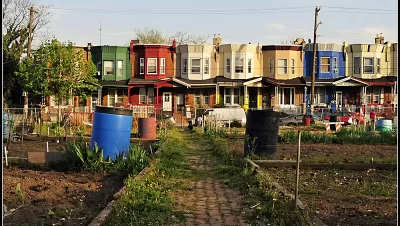
Anna Kramer writes of the specifics of Philadelphia's housing shortage—specifics that are likely common in other cities as well.
According to Kramer, "in Philadelphia, it’s not just a shortage of affordable housing that’s causing the crunch. Instead, poor-quality houses and an unusually high poverty rate — about 400,000 Philadelphians are living in poverty — tilt the equation so that demand far outstrips supply here, making affordable homes hard to obtain and difficult to manage."
Kramer calls on data from "The State of the Nation’s Housing 2018" report released in June by the Harvard University Joint Center for Housing Studies to illustrate the point.
"Among other statistics, the report states that affordable units for low-income renters both nationwide and in the 11-county Philadelphia-Camden-Wilmington region have become 50 percent more scarce over the last 10 years," according to Kramer. "The data point to a regional deficit of 117,132 affordable rentals."
Stull, the city of Philadelphia is the most affordable city other than Baltimore on the Northeast Corridor. So how can Philadelphia be both affordable and have a lack of affordable housing? As Philadelphia proves, affordable is a relative term.
Read the full story: Old homes, high poverty make Philadelphia housing less than affordable for some

How the ‘Housing Trap’ Keeps Housing Unaffordable
The financialization of housing uncouples housing prices from local supply and demand. Fixing this requires a new approach.
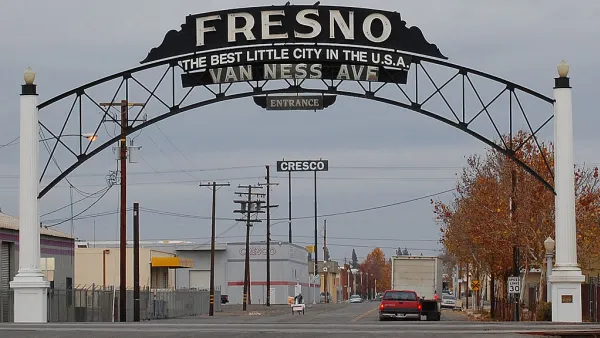
The Nation's Fastest-Rising Rents Are in California's Central Valley
Fresno's skyrocketing housing costs and inadequate supply are putting strain on the city's low-income households.

Double-Digit Housing Price Increases Tied to Supply Imbalance in Denver
Expensive homes dominated the metro Denver real estate market in 2020.

Planetizen Federal Action Tracker
A weekly monitor of how Trump’s orders and actions are impacting planners and planning in America.

California plans to bury El Niño’s downpour
If the state plays its cards right, it may be able to store a billion acre-feet of El Niño’s water in aquifers.

Desperate measures: Advocates weigh draining Lake Powell to fill Colorado River
Draining the reservoir could reduce evaporation losses by a couple hundred thousand acre-feet.

California city breaks ground on transit connector
The project includes three mobility hubs and a pedestrian bridge.

After public outcry, Massachusetts city releases housing development tracker
Cambridge’s tracker currently shows 250 housing projects in various stages of development.

40 years after approval, Chicago breaks ground on new park
The park honors Jean Baptiste Point du Sable, the city’s first permanent non-native settler.

FREE Course: Walkable City 1: Why Walkability?
After describing his path towards focusing on walkability as the essence of good planning, Jeff Speck marches through his five principal reasons for making more walkable places.
Reinventing Malls: Planning Alchemy—Turning Gray Fields Into Gold
The course focuses on the opportunities and imperatives that shape reinvention of mall sites.

City of Rosemead
Rutgers University, Edward J. Bloustein School of Planning and Public Policy
One Hundred Miles
Hunter College, City University of New York (CUNY)
The Architects Foundation
University of Cincinnati Online
City of Cambridge
Montrose County
The Pocatello Development Authority