The California Water Commission made an historic commitment to new water storage projects. Many of the largest projects planned in the state will require additional funding before construction can commence.


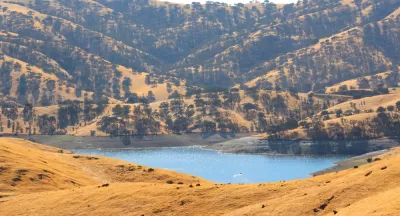
"For the first time since California’s dam-building boom ended nearly a half century ago, state officials on Tuesday approved a windfall of cash for new water storage projects, setting the stage for at least a mini-resurgence of reservoir construction," reports Kurtis Alexander.
In all, the state awarded $2.7 billion of money generated by Proposition 1, approved by voters in 2014 at the height of the state's historic drought. The money will elevate two existing dams, at Los Vaqueros Reservoir near Livermore and Pacheco Reservoir east of Gilroy, and build two much larger dams in the Central Valley, the 13-mile-long Sites Reservoir along the Sacramento River and 18-mile-long Temperance Flat Reservoir on the San Joaquin River. In all, eight projects received funding, including some underground water storage projects.
In a separate article, Dale Kaslow and Ryan Sabalow report on the details of the Site Reservoir. The California Water Commission gave $816 million to the Site Reservoir, but "[d]espite the nine-figure award, Sites’ project managers weren’t pleased with the amount of funding for their $5.2 billion project. The decision by the Water Commission represents about half of what Sites’ backers originally had sought." The article also notes that the project's remaining funding will come from individual water agencies. "Sacramento Valley agricultural districts are the reservoir’s primary supporters, but farm and urban water agencies from Fresno to Los Angeles also have pledged tentatively to invest."
Yet another article by Sean Bothwell, policy director of the California Coastkeeper Alliance, pens an opinion piece about the side of the water supply equation that doesn't include building above-ground storage facilities. In Bothwell's take, Proposition 1 is responsible for investments in "brackish water desalination, sustainable groundwater management, agricultural water efficiency, recycled water and stormwater capture." That article expresses optimism for the future of California water supply in a future defined by extreme weather—all without mentioning the new water storage the state has committed this week.
Read the full story: California funds new dams to protect against future drought

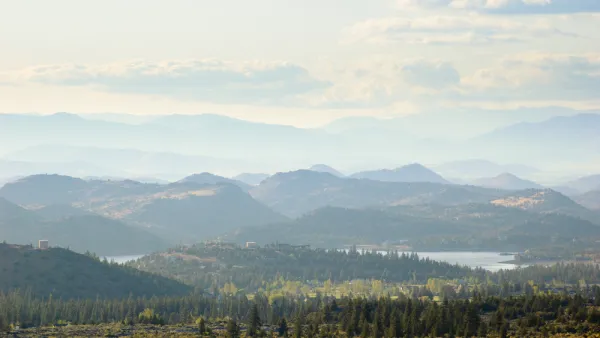
A New Wave of Reservoir Construction Set to Begin in California
Two massive water storage projects have been awarded $2.6 billion in funding from Proposition 1.
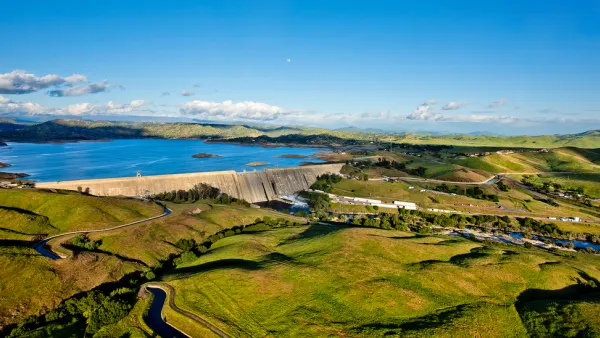
California Reservoir Project at Risk of Forfeiting $171 Million in State Funding
The Temperance Flat Reservoir Project might be falling too far behind schedule to maintain a huge chunk of state funding, according to reports.
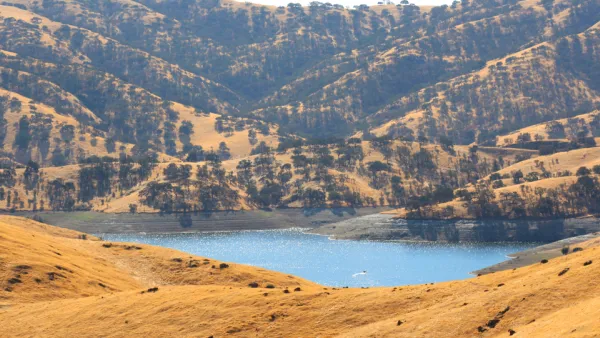
Surface Storage Skepticism
California has used all its good dam sites, according to this column. And dams are unaffordable.

Planetizen Federal Action Tracker
A weekly monitor of how Trump’s orders and actions are impacting planners and planning in America.

California plans to bury El Niño’s downpour
If the state plays its cards right, it may be able to store a billion acre-feet of El Niño’s water in aquifers.

Desperate measures: Advocates weigh draining Lake Powell to fill Colorado River
Draining the reservoir could reduce evaporation losses by a couple hundred thousand acre-feet.

California’s ‘unrecognizable’ water plan may go down the drain
After four years of regulatory processes, water agencies say the plan to overhaul how cities and farms take water from the Sacramento-San Joaquin Delta has changed dramatically.

Chicago Avenue bridge construction delays enrages city leaders
The bridge has been closed since 2025. The city originally aimed to re-open it in December, and now expects to finish construction in 2027.

NYC bus network redesign speeds up Queens buses
Rush routes have seen a 4.6% speed increase after the redesign.

FREE Course: Walkable City 1: Why Walkability?
After describing his path towards focusing on walkability as the essence of good planning, Jeff Speck marches through his five principal reasons for making more walkable places.
Reinventing Malls: Planning Alchemy—Turning Gray Fields Into Gold
The course focuses on the opportunities and imperatives that shape reinvention of mall sites.

City of Rosemead
Rutgers University, Edward J. Bloustein School of Planning and Public Policy
One Hundred Miles
Hunter College, City University of New York (CUNY)
The Architects Foundation
University of Cincinnati Online
City of Cambridge
Montrose County
The Pocatello Development Authority