With New York City on the verge of reorganizing the private sanitation industry, union organizer Allan Henry connects the dots between street safety, worker rights, and environmental impacts.


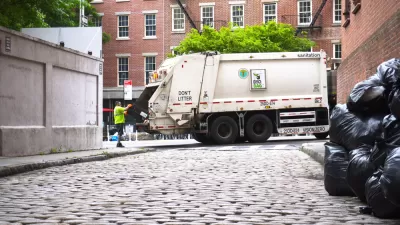
Each day, in the daylight, employees of the Department of Sanitation pick up 12,000 tons of trash generated by homes and residences. But the waste generated by businesses, offices, and restaurants — roughly 5.5 million tons annually — is someone else’s business. Those who work for “hauling” or “carting” companies in the private sanitation industry must lift, sling, transport, and dump commercial trash at night. Their convoluted routes crisscross the five boroughs, shaping our urban environment through noise, exhaust, and too-frequent accidents that injure passersby and haulers alike.
Allan Henry, a former hauler himself, now spends his nights organizing with the Transform Don’t Trash coalition to push for an exclusive zone franchise system, which would limit how many companies collect trash in each section of the city. The system could strengthen government oversight on safety violations, and reduce greenhouse gas emissions associated with waste removal by close to 70 percent. So what’s the hold up? As Henry described during a ride-along this spring, one block on the road to change is workers’ fear that the existing system is stacked against them. But with companies fighting reorganization tooth and nail, it’ll take a united front to get the private waste industry to clean up its act.
Read the full story: Haul Together

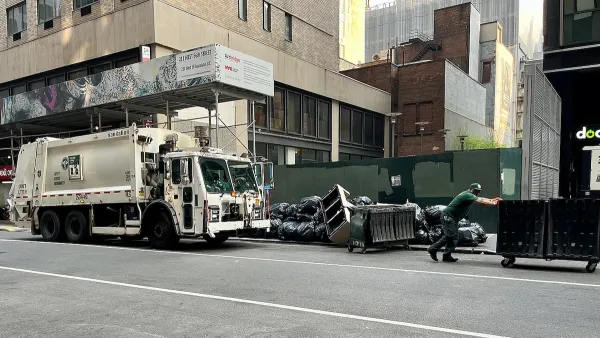
Parked Cars Hamper NYC Trash Containerization Effort
Sanitation workers must manually collect bags from containers blocked by parked cars, slowing a process that is meant to be safer and more efficient.
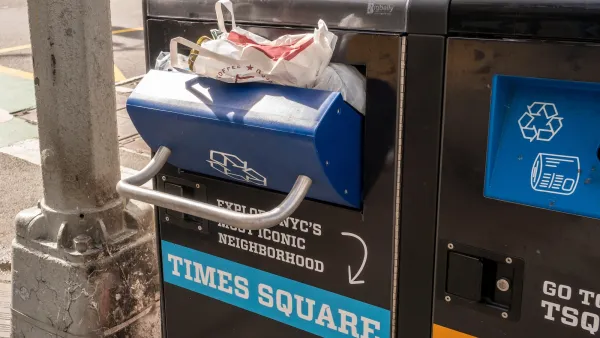
Why is Public Sanitation so Hard?
U.S. cities struggle to keep streets and sidewalks clean. Some are turning to high-tech trash cans to help.
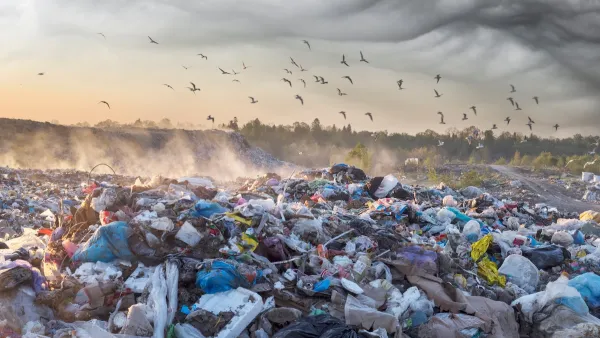
Colorado Landfills Emit as Much Pollution as 1M Cars
Landfills are the third-largest source of methane pollution in Colorado, after agriculture and fossil fuel extraction.

Planetizen Federal Action Tracker
A weekly monitor of how Trump’s orders and actions are impacting planners and planning in America.

Amtrak, CN end decades-long dispute with eight-year agreement
The new operating agreement establishes an updated framework for the companies to work together, including processes to resolve disputes.

Judges permit Denver to divert 77,000 acre feet from the Colorado River for reservoir expansion
Overuse and climate change have caused the Colorado River’s water levels to plummet.

Philadelphia to invest $2 billion into upgrading city airports as PHL places last in customer satisfaction
Modernizations to Philadelphia's airports will include baggage system upgrades and a new automated parking garage guidance system.

The LA housing policies making developers turn away from the city
Despite LA’s housing shortage, developers say the city’s "mansion-tax" and pandemic-era policies make it an unappealing place to build housing.

New density bill would require 7 California cities to establish regional transit hubs
The bill would also require major cities in California to permit high-rise residential buildings.

FREE Course: Walkable City 1: Why Walkability?
After describing his path towards focusing on walkability as the essence of good planning, Jeff Speck marches through his five principal reasons for making more walkable places.
Reinventing Malls: Planning Alchemy—Turning Gray Fields Into Gold
The course focuses on the opportunities and imperatives that shape reinvention of mall sites.

City of Wisconsin Rapids
Harvard University Graduate School of Design
KFH Group Inc.
The Architects Foundation
University of Cincinnati Online
The Pocatello Development Authority
The Urban Renewal Agency of the City of Pocatello