Development around the University of Texas at Dallas is already complete in anticipation of a commuter rail line scheduled for completion in 2022.



"The University of Texas at Dallas isn't waiting for a train," reports Ray Leszcynski. "Near the planned UTD stop along the prospective $1.1 billion Cotton Belt commuter rail line, apartments with ground-floor retail are now open. Thai food and bubble tea are already here, even though the train won't be until at least 2022."
According to Leszcynski the development in advance of the arrival of the Cotton Belt rail line "represents a convergence of DART's, [the city of] Richardson's and UTD's interests." Dallas Area Rapid Transit expects the UTD stop to a major hub on the Cotton Belt line, and UTD is working to become a less commuter-centric school.
The article includes details about the remaining vacant parcels that the city plans to position for development, with a potential large corporate anchor like Amazon.
FULL STORY: How UT-Dallas is preparing for DART's Cotton Belt stop

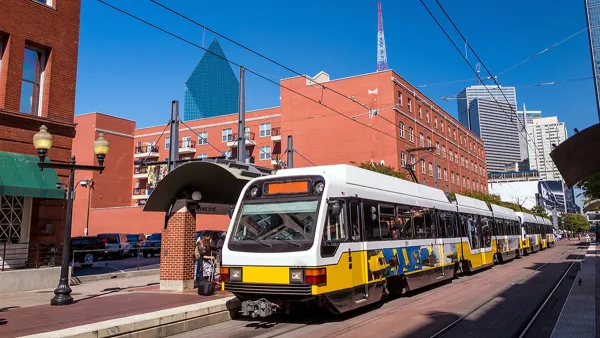
The Right Planning Consultant Could Make All of the Difference
Between DART service optimization and deciding the fate of I-345, Dallas has big of decisions to make. The right consultant, who understands accurate framing of planning issues, could help choose a route that best serves Dallasites.

Dallas area transit prepares for World Cup, asks locals to drive
DART is adding a special shuttle service and creating back-up mechanisms to ensure it can serve all of this summer's World Cup attendees.
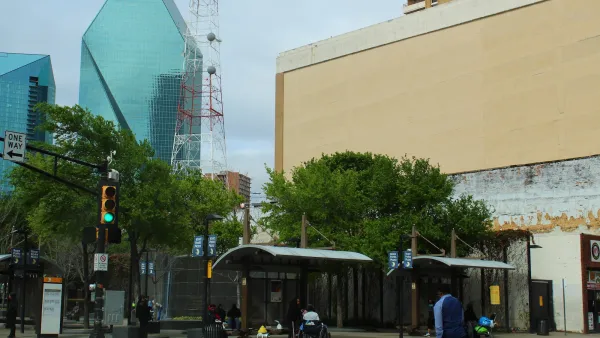
Dallas transit to invest up to $71.5M in upgraded bus shelters
The new shelters will feature solar-powered lighting and materials designed to protect riders from extreme weather.

Planetizen Federal Action Tracker
A weekly monitor of how Trump’s orders and actions are impacting planners and planning in America.

The state-sanctioned urbicide of Austin
People don’t kill cities. Freeways do.

US to reduce Colorado River water deliveries to Mexico
A new Colorado Treaty amendment reduces Mexico’s Colorado River water allocation by 250,000 acre feet.

5 New England states march closer to 800 megawatt wind energy project
Securing federal approval for the project may be complicated under the Trump administration, which has historically been hostile towards domestic wind power.

Baltimore to break ground on $50 million Transit Priority Project
The project will bring faster bus trips, safer streets and better bike connections to Baltimore.

Airbnb launches $250 million 'last-dollar financing' housing accelerator, makes first investment in Austin
The company will put $6.4 million towards affordable housing development in Texas’ capital.

FREE Course: Walkable City 1: Why Walkability?
After describing his path towards focusing on walkability as the essence of good planning, Jeff Speck marches through his five principal reasons for making more walkable places.
Reinventing Malls: Planning Alchemy—Turning Gray Fields Into Gold
The course focuses on the opportunities and imperatives that shape reinvention of mall sites.

Eagle County Government
Harvard University Graduate School of Design
Nashville Planning Department
The Architects Foundation
University of Cincinnati Online
The Pocatello Development Authority
The Urban Renewal Agency of the City of Pocatello
Journal of the American Planning Association