"Everything we've heard about global urbanization turns out to be wrong."



"Widely accepted numbers on how much of the world's population lives in cities are incorrect, with major implications for development aid and the provision of public services for billions of people, researchers say."
Gregory Sruggs shares the news about the new analysis from the European Commission, which directly contradicts widely cited figures from the United Nations that half the world's population lives in cities.
"Using a definition made possible by advances in geospatial technology that uses high-resolution satellite images to determine the number of people living in a given area, they estimate 84 percent of the world's population, or almost 6.4 billion people, live in urban areas," according to Scruggs.
The article gets into the reasons for the discrepancy—caused by what the article describes as inaccuracies of the reporting used by the United Nations, caused in part by varying definitions of what defines an urban area. "For example, India defines a city as a place where at least 75 percent of males are not working in the agricultural sector," explains Scruggs.
While increasing the percentage and total number of people who live in urban areas, the point raised in a 2016 article still stands: talking about how many people live in urban areas in such broad and general terms reduces the differences between places (like the suburbs).
FULL STORY: ‘Everything we’ve heard about global urbanization turns out to be wrong’ - researchers


Stop Saying 50 Percent of Humans Live in Cities
The idea that half the world's population has moved to cities, with more coming soon, misses a fundamental fact about cities: many of them are actually suburbs.
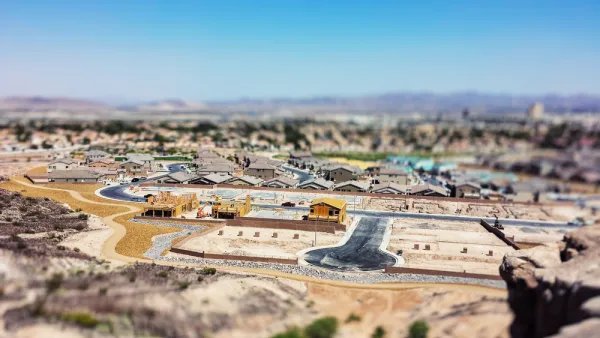
Public Perceptions of Sprawl and Greenhouse Gas Emissions
Urban density has a bad reputation.
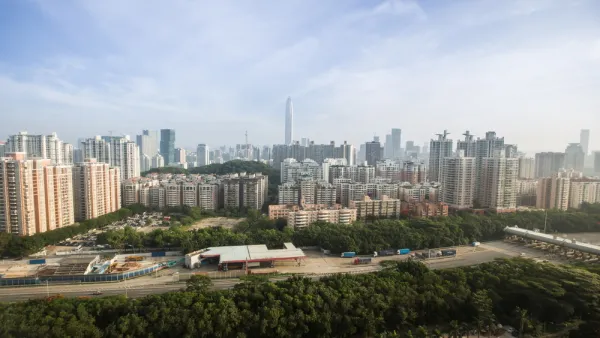
10,000 Cities—and Counting
A novel approach to quantifying the world's urban population provides insight into a changing world.

Planetizen Federal Action Tracker
A weekly monitor of how Trump’s orders and actions are impacting planners and planning in America.

The state-sanctioned urbicide of Austin
People don’t kill cities. Freeways do.

US to reduce Colorado River water deliveries to Mexico
A new Colorado Treaty amendment reduces Mexico’s Colorado River water allocation by 250,000 acre feet.

Mamdani overhauls NYC's Vision Zero plan with 100 new policy goals
The overhaul aims to reduce traffic deaths and make streets safer for pedestrians, cyclists and drivers through lower speed limits, new safety infrastructure and more.

Amtrak not solely to blame for New Jersey commuter rail's unreliability, report finds
A new study from the Garden State Initiative found that NJ Transit’s budget grew 20% across a 4 year period, but reliability declined significantly over the same period.

EPA erases limits on planet-warming pollution from power plants
Under Monday’s plan, power plants would still have some limits on how much mercury, arsenic and other contaminants they can emit.

FREE Course: Walkable City 1: Why Walkability?
After describing his path towards focusing on walkability as the essence of good planning, Jeff Speck marches through his five principal reasons for making more walkable places.
Reinventing Malls: Planning Alchemy—Turning Gray Fields Into Gold
The course focuses on the opportunities and imperatives that shape reinvention of mall sites.

Eagle County Government
Harvard University Graduate School of Design
Nashville Planning Department
The Architects Foundation
University of Cincinnati Online
The Pocatello Development Authority
The Urban Renewal Agency of the City of Pocatello
Journal of the American Planning Association