The transit map is useful, but doesn't always capture the scale of the engineering feat that produced the world's subways systems.


An article by David Montgomery starts with a simple enough question: "[W]hat would it look like if, high above the skyline, you could actually see where trains were shuttling people around?"
That is, what if subway lines were visible from high above?
"A group of digital artists is revealing just that, using photos taken from airplane windows to highlight the real footprint of metro systems in cities around the world," writes Montgomery. Artists began creating the images and posting them online in 2013, starting with an image of New York by a Serbian artist going by the username "Arnorrian."
A new image of Paris gained viral popularity on Reddit, and now transit fans have created similar images of Budapest, Milan, Cologne, and London.
Montgomery includes the best examples in the source article.
Read the full story: Getting a Bird’s Eye View of the World’s Subway Systems
Friday Eye Candy: The World's Subway Systems, If You Could See Them From Above
Have you ever flown over a city and imagined all the subway lines running beneath the surface?
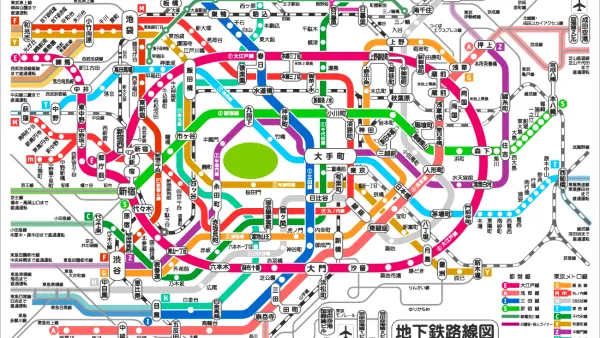
Friday Eye Candy: Subway-Style Maps That Explain Everything
Ok maybe not everything, everything—but the recognizable tropes of subway maps do make it easier to explain everything from the development of cities to musical styles to interstellar scale.
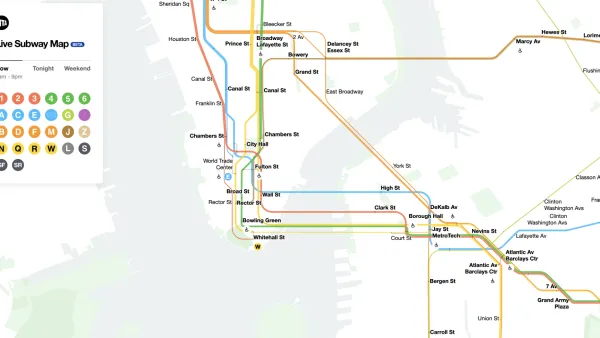
The New New York Subway Map Works in Real Time
There's a new chapter, and maybe an end, for the "Great Subway Map Debate."

Planetizen Federal Action Tracker
A weekly monitor of how Trump’s orders and actions are impacting planners and planning in America.

California plans to bury El Niño’s downpour
If the state plays its cards right, it may be able to store a billion acre-feet of El Niño’s water in aquifers.

Desperate measures: Advocates weigh draining Lake Powell to fill Colorado River
Draining the reservoir could reduce evaporation losses by a couple hundred thousand acre-feet.

US buildings threatened, destroyed by fires set to triple by 2060
Researchers found a high fire risk for socioeconomically vulnerable neighborhoods in the American West.

LA residents may be allowed to paint their own crosswalks
Councilwoman Katy Yaroslavsky put out a motion instructing the Los Angeles Department of Public Transportation to study the feasibility of allowing volunteers to paint crosswalks.

Dallas moves to overhaul its zoning code
The city's zoning reform will allow more multi-family and mixed-use developments.

FREE Course: Walkable City 1: Why Walkability?
After describing his path towards focusing on walkability as the essence of good planning, Jeff Speck marches through his five principal reasons for making more walkable places.
Reinventing Malls: Planning Alchemy—Turning Gray Fields Into Gold
The course focuses on the opportunities and imperatives that shape reinvention of mall sites.

City of Rosemead
Rutgers University, Edward J. Bloustein School of Planning and Public Policy
One Hundred Miles
Hunter College, City University of New York (CUNY)
The Architects Foundation
University of Cincinnati Online
City of Cambridge
Montrose County
The Pocatello Development Authority