Plans for a sizable eco-friendly development on the site of St. Paul's Twin Cities Assembly Plant have drawn support from many, including the city's young mayor. But density opponents remain unconvinced.


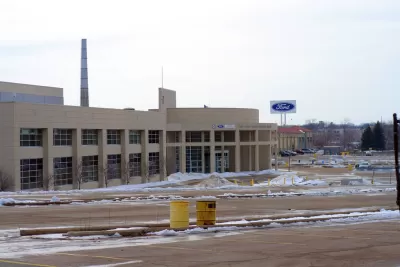
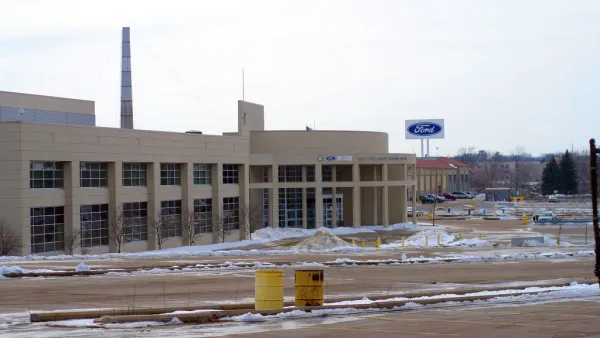
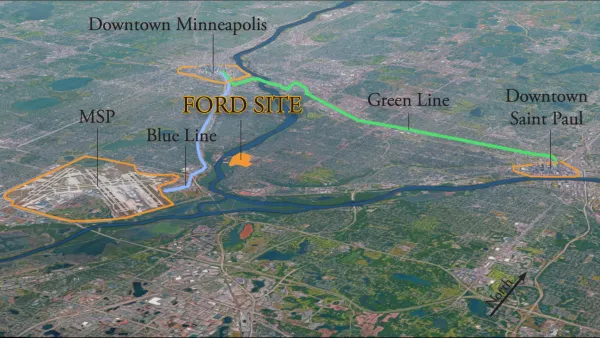
Jay Walljasper gives us an update on redevelopment plans for the site of Ford's former Twin Cities Assembly Plant in St. Paul, Minnesota. "Over the next 20 years, these 122 acres overlooking the Mississippi River are slated to grow into a dense mixed-use neighborhood designed to be a showpiece of energy efficiency, smart design, ecological stormwater management, and enlightened economic development."
Urbanists should find a lot to like in the the plan, which calls for "a transit-accessible community for up to 7,200 residents, an eco-village within the city that boasts a grid of bike- and pedestrian-friendly streets, abundant green space, and jobs for 1,500 workers [...] Twenty percent of the development's housing will be priced for lower-income residents."
It will also pursue net-zero status, an ambitious goal given Minnesota's harsh winters. The site's former use notwithstanding, it will also be "optimized for car-free and car-lite lifestyles," with ample bike lanes and a woonerf-style roadway.
However, opposition to the project continues as neighborhood groups take issue with the development's density. Walljasper notes that the debate follows generational lines, with younger voices like that of St. Paul's 39-year-old mayor Melvin Carter supporting the project.
FULL STORY: How an Ambitious Minnesota Eco-Project Became a Density Battleground

Plans for Massive St. Paul Mixed-Income Development Revealed
Occupying a site where Ford once manufactured automobiles, the eco-friendly, mixed-income development seeks to add 3,800 units of housing over the next decade.
Opponents Want Less Development at S. Paul's Mega-Redevelopment Plan for the Ford Site
A master plan for the redevelopment of Ford's former Twin Cities Assembly Plant, set on 122 acres along the Mississippi River in St. Paul, is challenged by controversy.
Former Ford Plant in St. Paul Taking Shape as a Massive Mixed-Use Development
A long-awaited plan for the former Ford plant along the Mississippi River is now open for public comment.

Planetizen Federal Action Tracker
A weekly monitor of how Trump’s orders and actions are impacting planners and planning in America.

The state-sanctioned urbicide of Austin
People don’t kill cities. Freeways do.

US to reduce Colorado River water deliveries to Mexico
A new Colorado Treaty amendment reduces Mexico’s Colorado River water allocation by 250,000 acre feet.

5 New England states march closer to 800 megawatt wind energy project
Securing federal approval for the project may be complicated under the Trump administration, which has historically been hostile towards domestic wind power.

Baltimore to break ground on $50 million Transit Priority Project
The project will bring faster bus trips, safer streets and better bike connections to Baltimore.

Airbnb launches $250 million 'last-dollar financing' housing accelerator, makes first investment in Austin
The company will put $6.4 million towards affordable housing development in Texas’ capital.

FREE Course: Walkable City 1: Why Walkability?
After describing his path towards focusing on walkability as the essence of good planning, Jeff Speck marches through his five principal reasons for making more walkable places.
Reinventing Malls: Planning Alchemy—Turning Gray Fields Into Gold
The course focuses on the opportunities and imperatives that shape reinvention of mall sites.

Eagle County Government
Harvard University Graduate School of Design
Nashville Planning Department
The Architects Foundation
University of Cincinnati Online
The Pocatello Development Authority
The Urban Renewal Agency of the City of Pocatello
Journal of the American Planning Association