Good Jobs First put a price tag on the lucrative deals local and state officials throw at flashy tech companies. It's a trend that is only growing with deals like Foxconn in Wisconsin and the expected Amazon HQ2 announcement.



Dominic Rushe reports:
Giant technology companies in the US, which include some of the world’s most profitable firms, have been pledged at least $9.3bn in state and local subsidies over the last five years – much of it coming from the coffers of cities and states with failing infrastructure, struggling schools and broken budgets.
With deals like the one that brought Foxconn to Wisconsin, the size of the deals is only growing, according to the report. For the Amazon HQ2 deal, still awaiting an announcement from the company, "[o]ne region alone – Montgomery County, Maryland – offered tax breaks and infrastructure improvements worth more than $8.5bn," according to Rushe.
"States and cities argue the tax breaks are necessary to attract the high-paying jobs that technology companies provide," explains Rushe of the political debate surrounding this approach to economic development. "But the list of the biggest giveaways so far shows that the handouts rarely result in significant job creation – and the jobs that are created come with a high price tag."
Read the full story: US cities and states give big tech $9.3bn in subsidies in five years
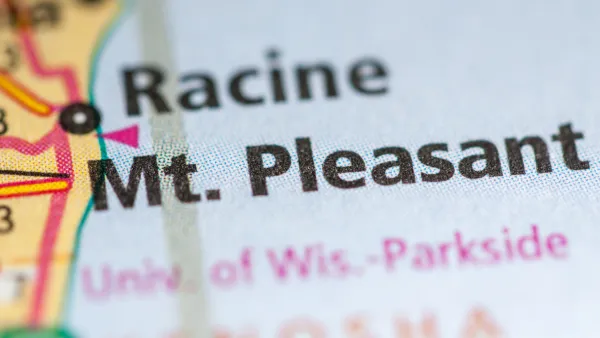
Revisiting Wisconsin's Foxconn Deal, Now Called a 'Boondoggle'
Wisconsin taxpayer will be paying the bill for the deal to bring Foxconn to Racine "for decades, if not generations, to come."

The Rippling Effects of Bike-to-Work Subsidies
A European movement to incentivize people to commute by bicycle is changing travel patterns and making mobility more sustainable.
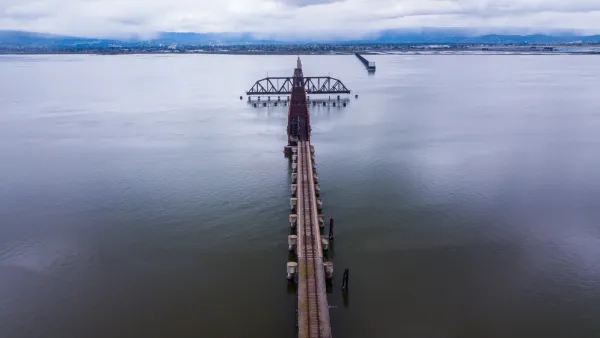
Meta’s Plans to Revive an Old Rail Bridge Halted During the Pandemic
The company formerly known as Facebook’s once planned to revive the Dumbarton Rail Bridge across the San Francisco Bay. Those plans are as derelict as the bridge.

Planetizen Federal Action Tracker
A weekly monitor of how Trump’s orders and actions are impacting planners and planning in America.

California plans to bury El Niño’s downpour
If the state plays its cards right, it may be able to store a billion acre-feet of El Niño’s water in aquifers.

Desperate measures: Advocates weigh draining Lake Powell to fill Colorado River
Draining the reservoir could reduce evaporation losses by a couple hundred thousand acre-feet.

Mamdani’s pied-à-terre tax survives legal challenge
A panel of judges found that the plaintiffs failed to demonstrate injury as a result of New York City's implementation of the tax.

Eastern Nebraska is running out of electricity
Data centers and electrification are straining eastern Nebraska’s grid, throttling economic development.

Seattle passes record-breaking transit services expansion
Proposition 1 will double the city’s transit tax to add 95,000 more bus trips and preserve 180,000 bus trips annually.

FREE Course: Walkable City 1: Why Walkability?
After describing his path towards focusing on walkability as the essence of good planning, Jeff Speck marches through his five principal reasons for making more walkable places.
Reinventing Malls: Planning Alchemy—Turning Gray Fields Into Gold
The course focuses on the opportunities and imperatives that shape reinvention of mall sites.

City of Rosemead
Rutgers University, Edward J. Bloustein School of Planning and Public Policy
One Hundred Miles
University of Michigan School for Environment and Sustainability (SEAS)
Hunter College, City University of New York (CUNY)
The Architects Foundation
City of Cambridge
Montrose County
The Pocatello Development Authority