The need to slash emissions from buildings is increasingly urgent, and critics say LEED won't get us there.



Green building is a $1 trillion global industry, and in it, LEED is king. Many states link tax incentives to achieving LEED certification, and new federal buildings are now required to attain the Gold standard. In 2017, Washington, D.C. became the world's first LEED Platinum city.
But as LEED and its administrator, the U.S. Green Building Council, have grown, so has criticism of the program. Its impacts are said to be exaggerated, with calculations based on ideal design impacts rather than real-life operations. Even one of LEED's creators, Bob Berkebile, calls the certification "a failure."
In CityLab, Brian Barth looks into the shortcomings of the LEED empire, weighing the merits of the more common critiques and charting attempts to dethrone the far-reaching program (the Living Building Challenge, for example.) Ultimately, though, we may not yet have the tool that can spur the decarbonization of the world's building stock—one that has both the high standards to achieve a truly sustainable footprint, and the mass appeal to penetrate the global building industry.
FULL STORY: Is LEED Tough Enough for the Climate-Change Era?

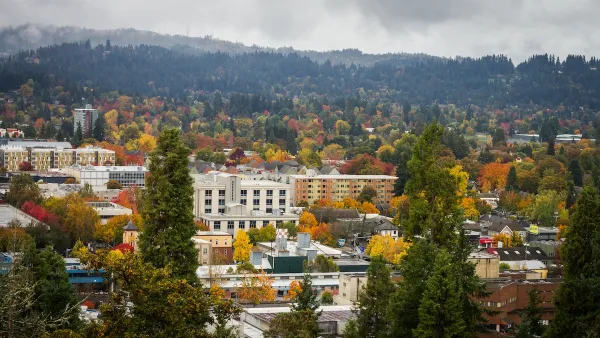
Eugene Explores New Decarbonization Strategies
The city is considering new decarbonization strategies, including carbon impact fees and educational programs, after the failure of a natural gas ban due to a federal court ruling.
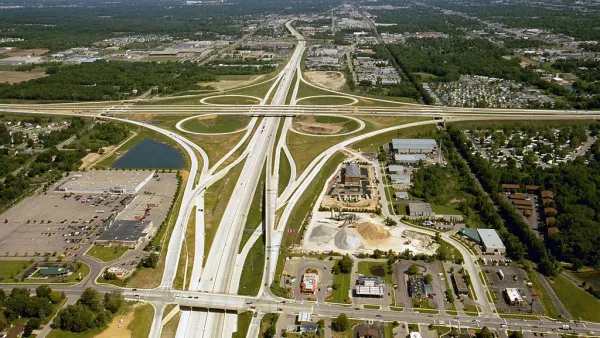
Op-Ed: Michigan Needs a New Transportation Strategy
One writer calls on the state to stop expanding roads and channel funding to projects that support Michigan’s sustainability goals.
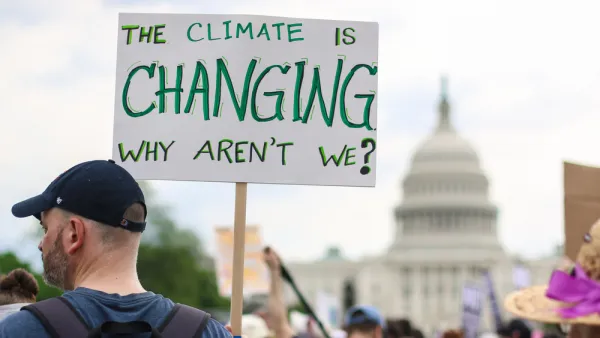
How Cities Can Curb Climate Change and Protect Vulnerable Residents
A new U.N. report urges cities to upgrade their infrastructure to bolster climate resilience and build more sustainable, climate-friendly places.

The state-sanctioned urbicide of Austin
People don’t kill cities. Freeways do.

US to reduce Colorado River water deliveries to Mexico
A new Colorado Treaty amendment reduces Mexico’s Colorado River water allocation by 250,000 acre feet.

New Jersey’s second-largest city bans standalone data centers
Jersey City will continue to allow co-location facilities, such as those meant for research institutions that store their own data.

Amtrak not solely to blame for New Jersey commuter rail's unreliability, report finds
A new study from the Garden State Initiative found that NJ Transit’s budget grew 20% across a 4 year period, but reliability declined significantly over the same period.

EPA erases limits on planet-warming pollution from power plants
Under Monday’s plan, power plants would still have some limits on how much mercury, arsenic and other contaminants they can emit.

Phoenix announces new on-demand transit service, more frequent RAPID buses
Both new services will launch in October, and are part of Phoenix's Project Effective Access Solutions for Easing Congestion.

FREE Course: Walkable City 1: Why Walkability?
After describing his path towards focusing on walkability as the essence of good planning, Jeff Speck marches through his five principal reasons for making more walkable places.
Reinventing Malls: Planning Alchemy—Turning Gray Fields Into Gold
The course focuses on the opportunities and imperatives that shape reinvention of mall sites.

Eagle County Government
Harvard University Graduate School of Design
Nashville Planning Department
The Architects Foundation
University of Cincinnati Online
The Pocatello Development Authority
The Urban Renewal Agency of the City of Pocatello
Journal of the American Planning Association