The president hopes to revitalize the nation's sagging coal industry by forcing utilities to purchase power from aging coal and nuclear power plants in the name of national defense. The news is already paying dividends for coal companies.



Jennifer A. Dlouhy, an energy reporter for Bloomberg News, describes a directive from President Donald to Department of Energy Secretary Rick Perry to order grid operators to purchase electricity from coal and nuclear power plants that may be uncompetitive with newer plants burning natural gas and using renewable energy.
The department’s strategy, outlined in a memo [dated May 29] obtained by Bloomberg News, would use authority granted under a pair of federal laws to establish a “strategic electric generation reserve” and compel grid operators to buy electricity from at-risk plants. The steps are necessary, the memo says, to protect national security.
The memo's contents were essentially confirmed by White House spokeswoman Sarah Sanders in a June 1 emailed statement:
“Impending retirements of fuel-secure power facilities are leading to a rapid depletion of a critical part of our nation’s energy mix and impacting the resilience of our power grid." Trump has directed Perry “to prepare immediate steps to stop the loss of these resources and looks forward to his recommendations.”
The plants are considered “fuel-secure” because they house coal and nuclear material on site and are not dependent on pipelines that can be disrupted, wind that stops blowing or a sun that sets.
The news is already having a positive effect on the coal industry, shown by rising stock prices for Peabody Energy Corp, Arch Coal Inc. and Consol Energy Inc.
Under the Energy Department’s draft plan, the administration would take action under two laws: the Federal Power Act that allows the government to guarantee profits for power plants amid grid emergencies, and the 68-year-old Defense Production Act, a Cold War-era statute once invoked by President Harry Truman to help the steel industry.
Legal challenge inevitable
"The Energy Department and the administration is routing its argument here [in] national security probably partly for legal reasons to help buffer them from a legal challenge down the road," Dlouhy tells Hari Sreenivasan, anchor of PBS NewsHour Weekend (video and transcript) on June 2. "But the Energy Department’s own analysis has found that the grid is more reliable because it has power coming from a wider array of sources."
Cost?
On June 3, the Bloomberg editorial board asked what the directive will cost.
Not in climate terms, although here the indirect costs could be greatest in the long run.
And not in terms of public health, although air pollution from a single coal plant causes hundreds of asthma attacks and dozens of premature deaths every year.
They suggest that the Trump administration determine the costs, which isn't noted in the memo, and that it should be of national concern as it will be paid by directly American ratepayers, unlike the aforementioned externalities.
The chief beneficiaries of Trump’s plan would be coal-plant operators and their suppliers, a group that includes some of the president’s top supporters. The losses for everybody else — in higher emissions of carbon, additional premature deaths, and higher outlays on electricity — would be far greater. Dirty energy at higher cost: That’s some deal.
FULL STORY: Trump Orders Action to Stem Coal, Nuclear Plant Shutdowns

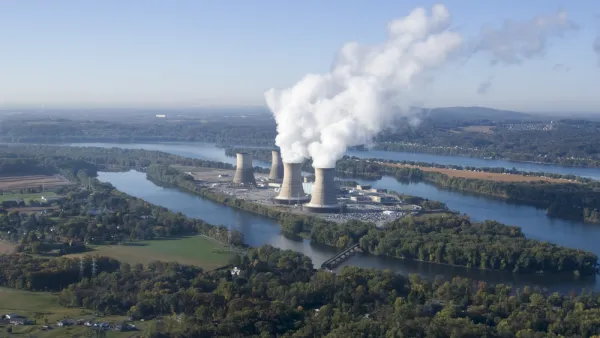
Trump Rebuffed by Federal Energy Commissioners on Coal and Nuclear Power Bailout
Last month the Trump administration directed Energy Secretary Rick Perry to require grid operators to purchase power from aging coal and nuclear power plants, enabling them to keep operating as a matter of "national security." Regulators disagree.
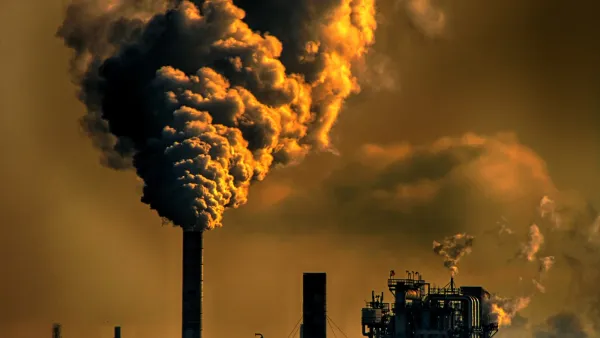
EPA Targets Co-Benefits in Rulemaking—Public Health to Suffer
The Environmental Protection Agency proposed a critical change in the cost-benefit analysis used in the mercury rule that applies to coal-fired power plants. By eliminating the principle of co-benefits, public health impacts would be severe.
The Far-Reaching Consequences of Remaking the Mercury Emissions Rule
The EPA intends to review the rulemaking process behind the mercury rule, the subject of a landmark Supreme Court ruling in 2015, to place more value on a rule's compliance cost to industry and less to its beneficial impact on human health.

Planetizen Federal Action Tracker
A weekly monitor of how Trump’s orders and actions are impacting planners and planning in America.

The state-sanctioned urbicide of Austin
People don’t kill cities. Freeways do.

US to reduce Colorado River water deliveries to Mexico
A new Colorado Treaty amendment reduces Mexico’s Colorado River water allocation by 250,000 acre feet.

5 New England states march closer to 800 megawatt wind energy project
Securing federal approval for the project may be complicated under the Trump administration, which has historically been hostile towards domestic wind power.

Baltimore to break ground on $50 million Transit Priority Project
The project will bring faster bus trips, safer streets and better bike connections to Baltimore.

Airbnb launches $250 million 'last-dollar financing' housing accelerator, makes first investment in Austin
The company will put $6.4 million towards affordable housing development in Texas’ capital.

FREE Course: Walkable City 1: Why Walkability?
After describing his path towards focusing on walkability as the essence of good planning, Jeff Speck marches through his five principal reasons for making more walkable places.
Reinventing Malls: Planning Alchemy—Turning Gray Fields Into Gold
The course focuses on the opportunities and imperatives that shape reinvention of mall sites.

Eagle County Government
Harvard University Graduate School of Design
Nashville Planning Department
The Architects Foundation
University of Cincinnati Online
The Pocatello Development Authority
The Urban Renewal Agency of the City of Pocatello
Journal of the American Planning Association