San Diego has the fewest number of beds for homeless per capita in the nation and must directly intervene to increase the stock of both temporary and permanent beds, according to planning activist Murtaza Baxamusa.


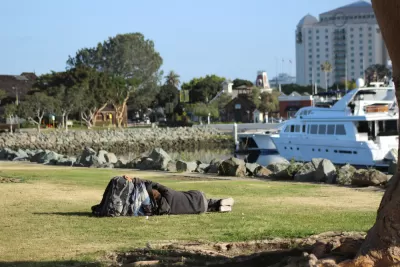
San Diego is known for its beaches, sunshine, and zoo. However, tourists are often shocked by the number of homeless sleeping on its downtown streets. The city has been known to 'sweep its homeless under the rug' for major events. For example, just before the 2016 Major League Baseball All-Star Game, the city "posted signs instructing hundreds of homeless people living on the streets near Petco Park that they had just 72 hours to vacate the area," as well as other measures.
San Diego has the lowest number of “housing beds for the homeless in San Diego relative to the population size of the region,” writes planning activist Murtaza Baxamusa. Homelessness is a pervasive problem, he continues:
Schools are broadly impacted by homelessness too. Last year, 23,800 students in San Diego’s schools were either unsheltered, or were in unstable living arrangements, such as shelters, couch surfing, or doubled up with another family.
Baxamusa goes on to explore some of the more successful programs around the world, including:
- Baltimore, San Francisco and Portland have considerably increased their proportional stock of Permanent Supportive Housing.
- [A]dopt a “Right to Shelter” law which guarantees shelter with varying degrees of regulations similar to those in the state of Massachusetts, Washington, D.C., and New York City, and has resulted in a considerable stock of temporary accommodations.
- The People’s Policy Project suggests constructing a large number of government-owned municipal housing developments. Unlike traditional American public housing, all city residents will be eligible to live there. (This strategy has been a mainstay in several European countries.)
Baxamusa concludes:
[W]e must explore public options to provide affordable homes for all. We cannot wait for the private sector lured by government subsidies to solve this problem alone.
For more information, please read the source article.
FULL STORY: ‘America’s Finest City’ is Worst in Nation in Housing the Homeless

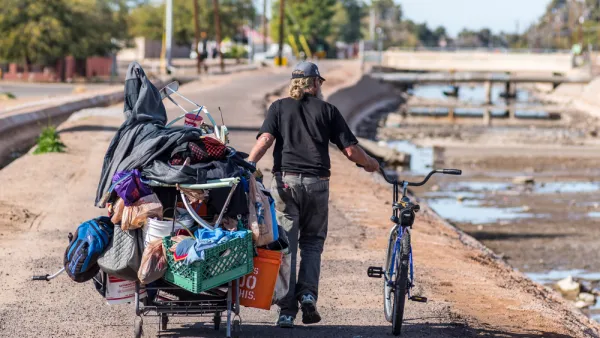
Phoenix Takes a New Approach on Homelessness
Phoenix is centering housing—affordable housing, permanent supportive housing, and eviction protections—in a new planning framework designed to reduce the number of homeless people living on the streets of the city.
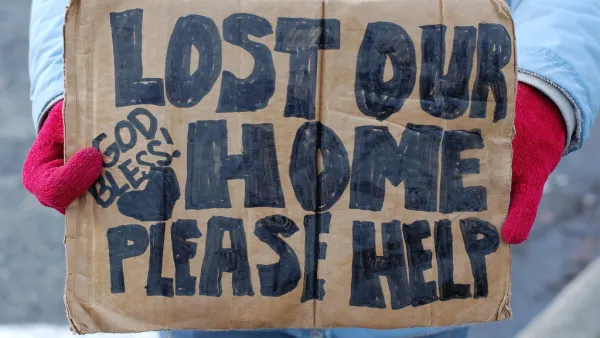
The Four Kinds of Housing that Help the Homeless
Projects to add housing resources to help give homeless people a roof over the head have run into all sorts of public opposition—often times fueled by ignorance of how different kinds of homeless housing options work.

Planetizen Federal Action Tracker
A weekly monitor of how Trump’s orders and actions are impacting planners and planning in America.

The state-sanctioned urbicide of Austin
People don’t kill cities. Freeways do.

US to reduce Colorado River water deliveries to Mexico
A new Colorado Treaty amendment reduces Mexico’s Colorado River water allocation by 250,000 acre feet.

Mamdani overhauls NYC's Vision Zero plan with 100 new policy goals
The overhaul aims to reduce traffic deaths and make streets safer for pedestrians, cyclists and drivers through lower speed limits, new safety infrastructure and more.

Amtrak not solely to blame for New Jersey commuter rail's unreliability, report finds
A new study from the Garden State Initiative found that NJ Transit’s budget grew 20% across a 4 year period, but reliability declined significantly over the same period.

EPA erases limits on planet-warming pollution from power plants
Under Monday’s plan, power plants would still have some limits on how much mercury, arsenic and other contaminants they can emit.

FREE Course: Walkable City 1: Why Walkability?
After describing his path towards focusing on walkability as the essence of good planning, Jeff Speck marches through his five principal reasons for making more walkable places.
Reinventing Malls: Planning Alchemy—Turning Gray Fields Into Gold
The course focuses on the opportunities and imperatives that shape reinvention of mall sites.

Eagle County Government
Harvard University Graduate School of Design
Nashville Planning Department
The Architects Foundation
University of Cincinnati Online
The Pocatello Development Authority
The Urban Renewal Agency of the City of Pocatello
Journal of the American Planning Association