Concerns about congestion or parking aren't the only obstacles to street reconfiguration projects intended to improve traffic safety.


"The District Department of Transportation (DDOT) is backpedaling on plans to calm traffic on First Street NW," reports Edward Russell.
DDOT made its intentions (or lack thereof) known at a recent Bloomingdale Civic Association (BCA). Instead of the promised curb extensions or mini-roundabouts, the project will now consist of electronic signage that shows drivers how fast they are traveling.
Unlike the situation in Los Angeles, where political outcry from local agitators forced the city to undo street safety projects already in place, the DDOT's reticence to the First Street project has to do with challenges posed by infrastructure.
"Calming traffic on First Street has to take into account the recent drainage work done by DC Water as part of the First Street Tunnel project, as well as access to MedStar Washington Hospital Center for DC Fire and EMS, a notoriously conservative agency when it comes to altering streetcapes [sic] to slow vehicles," according to Russell. And Leon Anderson, a transportation safety manager at DDOT, told the BCA as much.
FULL STORY: DC slows plans to calm traffic on First Street in Bloomingdale

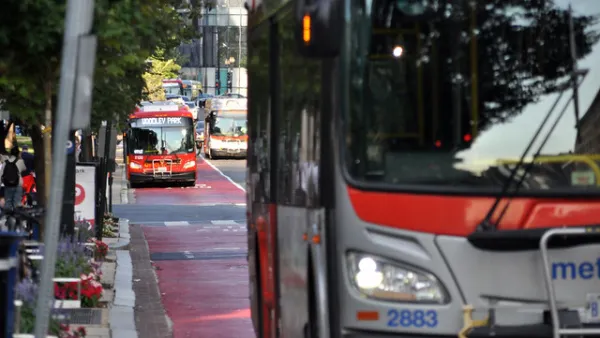
Watch D.C.'s New Red Bus Lanes in Action
Streetfilms documents the early results of an ambitious transit pilot project in Washington, D.C.
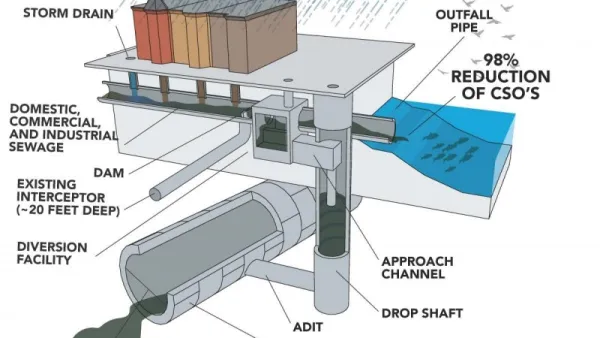
How to Keep Billions of Gallons of Sewage Out of a Waterway
The Anacostia River Tunnel is just one component of DC Water's Clean River Project, but it's already making a huge difference.
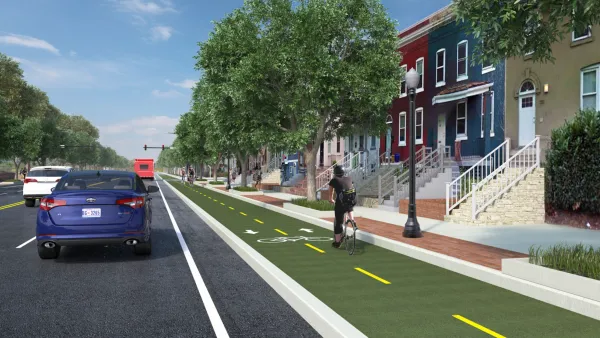
Another Protected Bike Lane Proposed for Washington, D.C.
An early look at designs for a protected bike lane on Florida Avenue shows the District Department of Transportation keeping pace with its tradition of ambitious bike infrastructure projects.

The state-sanctioned urbicide of Austin
People don’t kill cities. Freeways do.

US to reduce Colorado River water deliveries to Mexico
A new Colorado Treaty amendment reduces Mexico’s Colorado River water allocation by 250,000 acre feet.

New Jersey’s second-largest city bans standalone data centers
Jersey City will continue to allow co-location facilities, such as those meant for research institutions that store their own data.

Amtrak not solely to blame for New Jersey commuter rail's unreliability, report finds
A new study from the Garden State Initiative found that NJ Transit’s budget grew 20% across a 4 year period, but reliability declined significantly over the same period.

EPA erases limits on planet-warming pollution from power plants
Under Monday’s plan, power plants would still have some limits on how much mercury, arsenic and other contaminants they can emit.

Phoenix announces new on-demand transit service, more frequent RAPID buses
Both new services will launch in October, and are part of Phoenix's Project Effective Access Solutions for Easing Congestion.

FREE Course: Walkable City 1: Why Walkability?
After describing his path towards focusing on walkability as the essence of good planning, Jeff Speck marches through his five principal reasons for making more walkable places.
Reinventing Malls: Planning Alchemy—Turning Gray Fields Into Gold
The course focuses on the opportunities and imperatives that shape reinvention of mall sites.

Eagle County Government
Harvard University Graduate School of Design
Nashville Planning Department
The Architects Foundation
University of Cincinnati Online
The Pocatello Development Authority
The Urban Renewal Agency of the City of Pocatello
Journal of the American Planning Association